
Oct 12, 2026Packaging Knowledge
Why Does the Bulk Hang Tag Look Different from the Approved Sample?
Why do bulk hang tags sometimes look different from approved samples? Learn what causes color, foil, cutting and material variations and how buyers can reduce production risks.
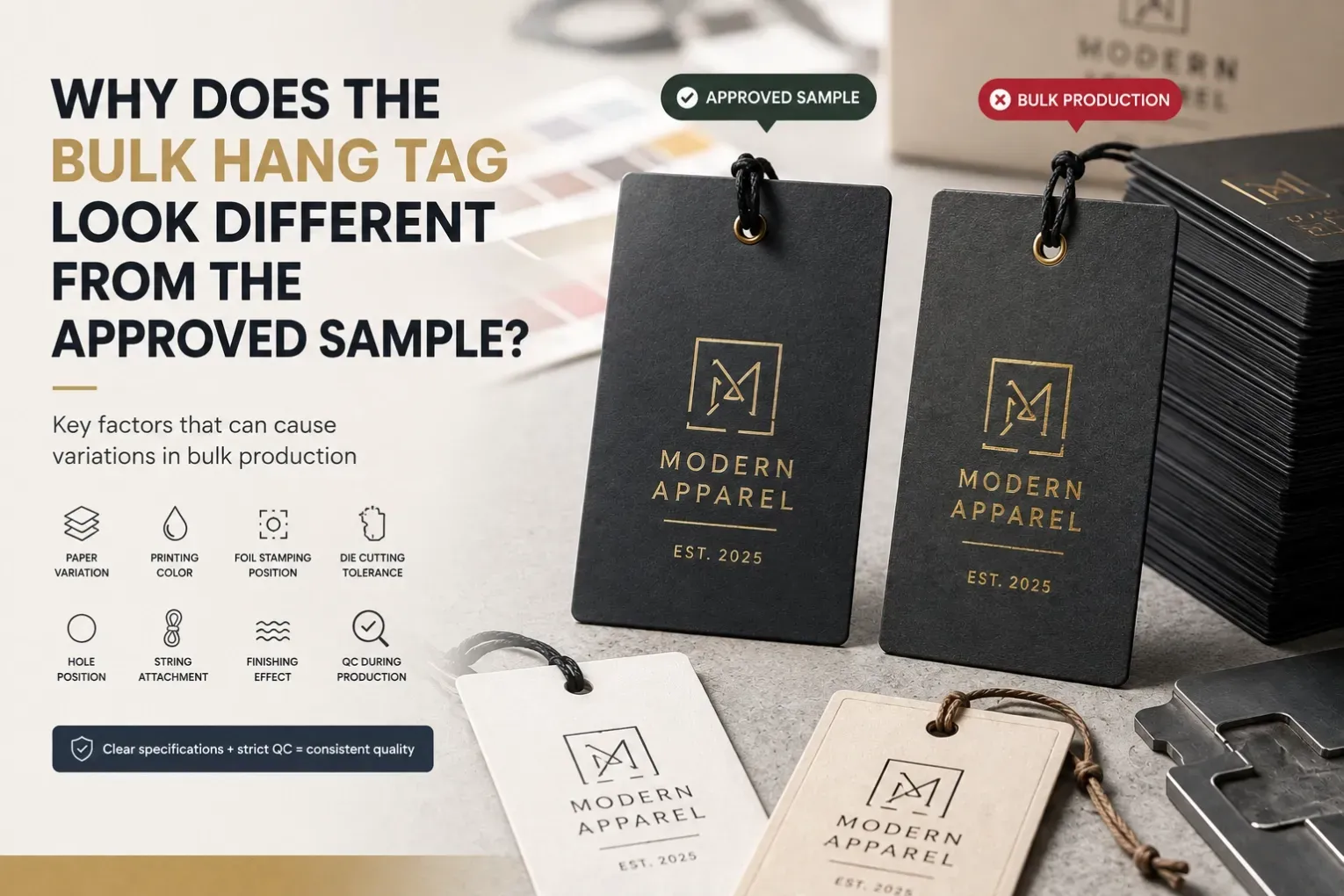
You've approved the hang tag sample.
The paper feels right. The color looks good. The foil stamping is clean. The hole position is correct.
Everything is ready for production.
But when the bulk order arrives, you notice something:
"Why doesn't the bulk hang tag look exactly like the sample I approved?"
This is one of the most important questions buyers should ask when ordering custom garment hang tags.
A sample is an important reference for production, but paper, printing, finishing, die cutting and other manufacturing processes can all introduce variations during mass production.
The goal isn't simply to approve a beautiful sample.
It's to understand which details need to be controlled during bulk production and which variations may need to be evaluated against the approved sample.
1. Paper Can Vary Between Batches
Paper is one of the first things buyers should check.
Even when the same paper specification is ordered, different production batches can sometimes show slight differences in:
- Color
- Texture
- Thickness
- Surface feel
- Absorption
This can be particularly noticeable with kraft paper, recycled paper, textured paper and specialty papers.
For premium garment hang tags, even a small change in paper tone or texture may affect the final appearance.
What Buyers Should Do
If paper consistency is critical to your brand, confirm the paper specification before mass production.
For repeat orders, keeping a physical approved sample can also provide a useful reference for future production.
2. Printed Colors Can Look Slightly Different
Color is one of the most common areas where buyers notice differences.
The color you see on your computer screen isn't necessarily the color that will appear on printed paper.
Even after approving a physical sample, bulk printing can still be influenced by:
- Paper color
- Paper absorption
- Ink density
- Printing conditions
- Surface finishing
This is especially important when your garment hang tags use specific brand colors.
CMYK vs. Pantone
For general artwork and photographic designs, CMYK printing is commonly used.
If maintaining a specific brand color is particularly important, a Pantone reference may provide a clearer production target.
The key is to define the expected color standard before bulk production begins.
3. Foil Stamping Can Shift Slightly
Gold foil, silver foil and other metallic finishes are widely used on luxury hang tags.
They look simple, but foil stamping requires accurate positioning.
During bulk production, small variations in registration can affect the relationship between the foil and printed artwork.
This becomes especially noticeable when:
- Foil is placed around very small text
- Foil needs to align precisely with printed elements
- The design contains thin lines
- Multiple finishing processes overlap
A small movement that is almost invisible on a simple design can become obvious on detailed artwork.
Buyer's Tip
If precise foil alignment is important, make sure the approved sample clearly establishes the expected position and finishing result.
4. Embossing and Debossing Depend on More Than the Artwork
Embossing and debossing are increasingly popular for premium clothing hang tags because they create a tactile effect without relying heavily on ink.
However, the final result depends on several factors:
- Paper thickness
- Paper density
- Die depth
- Pressure
- Artwork size
- Fine details in the logo
A deep debossed logo on thick cardstock will behave differently from the same artwork on thinner paper.
This is why buyers shouldn't evaluate embossing or debossing only from a digital proof.
A physical sample is much more useful when the tactile effect is important.
5. Die Cutting Has Production Tolerances
Custom shapes can make garment hang tags much more distinctive.
But die cutting is a mechanical process.
During mass production, slight movement can occur between the printed artwork and the cutting line.
This matters particularly when:
- Borders are very close to the edge
- Artwork follows the exact shape of the tag
- Text is positioned near the cutting line
- The design uses narrow margins
This is also why correct bleed and safe areas are important when preparing hang tag artwork.
Related Guide
Before You Approve Your Hang Tag Artwork, Check These 8 Things
6. Hole Position Can Affect the Finished Design
The hole may look like a tiny detail, but it can have a surprisingly large impact.
If the hole is positioned too close to:
- A logo
- QR code
- Barcode
- Product information
- Foil stamping
even a small production variation can interfere with the artwork.
For this reason, important design elements should always have enough safe space around the hole position.
7. The String Is Part of the Finished Hang Tag
Buyers often spend most of their time checking the printed tag and forget about the string.
However, the string affects both appearance and usability.
Check:
- String material
- String color
- String thickness
- Length
- Knot style
- Attachment method
A premium printed hang tag paired with the wrong string can make the finished product feel less premium.
For fashion and apparel brands, the tag and string should be evaluated as one complete product, not as two separate components.
8. A Perfect Sample Isn't Enough — Bulk Quality Control Matters
This is perhaps the most important point.
A perfect sample proves that the desired result can be produced.
It doesn't automatically guarantee that every piece in a large production run will be identical.
That's where hang tag quality control becomes important.
During bulk production, suppliers should monitor key areas such as:
- Paper consistency
- Printing color
- Foil position
- Embossing or debossing
- Die cutting
- Hole position
- String attachment
- Overall appearance
For large orders, quality control during production is just as important as approving the original sample.
What Should Buyers Confirm Before Approving Bulk Production?
Before giving final approval for your custom hang tags, make sure the sample confirms the specifications that matter most to your project.
These may include:
- Paper material and thickness
- Final size
- Printing colors
- Pantone references if required
- Foil color and position
- Embossing or debossing
- Die-cut shape
- Hole position
- String material and length
- QR code and barcode readability
Don't approve a sample based only on whether it "looks good."
Approve it because the important production specifications are clearly understood.
Keep the Approved Sample
One simple practice can prevent many future misunderstandings:
Keep an approved physical sample.
For repeat orders, the original sample becomes a valuable reference.
Instead of relying only on descriptions such as:
"Same as last time."
the buyer and supplier have something physical to compare against.
This is particularly useful for long-term packaging programs where garment hang tags are reordered regularly.
Some Variation Is Normal — But Standards Should Be Clear
Mass production involves paper, ink, machines, finishing processes and human inspection.
Expecting every piece to be microscopically identical isn't realistic.
But that doesn't mean large differences should be accepted.
The important question is:
What level of variation is acceptable for your brand?
For a basic retail tag, minor differences may not matter.
For a luxury fashion brand with strict color and finishing requirements, tolerances may need to be much tighter.
These expectations should be discussed before production—not after the goods arrive.
Final Thoughts
When bulk garment hang tags look different from an approved sample, the reason isn't always one single production mistake.
Paper, printing, foil stamping, embossing, die cutting, hole punching and string attachment can all influence the final result.
That's why sample approval should be treated as more than a simple "looks good" decision.
A good approval process establishes a clear production standard.
And a good supplier doesn't just make a beautiful sample.
They work to maintain that standard throughout bulk production.
Planning Your Next Garment Hang Tag Project?
If you're developing custom garment hang tags for your clothing or fashion brand, send us your artwork and specifications.
We can help review:
- Paper selection
- Printing
- Foil stamping
- Embossing & debossing
- Die cutting
- Hole position
- String options
- Production details
before moving into bulk production.