
Jul 16, 2026Blog
Designing Outside the Box: Die Cut Custom Shape Clothing Tags that Enhance Brand Identity
Discover how to design die cut custom shape clothing tags that are both creative and production-ready. Learn practical die cutting tips to improve quality and avoid costly manufacturing issues.
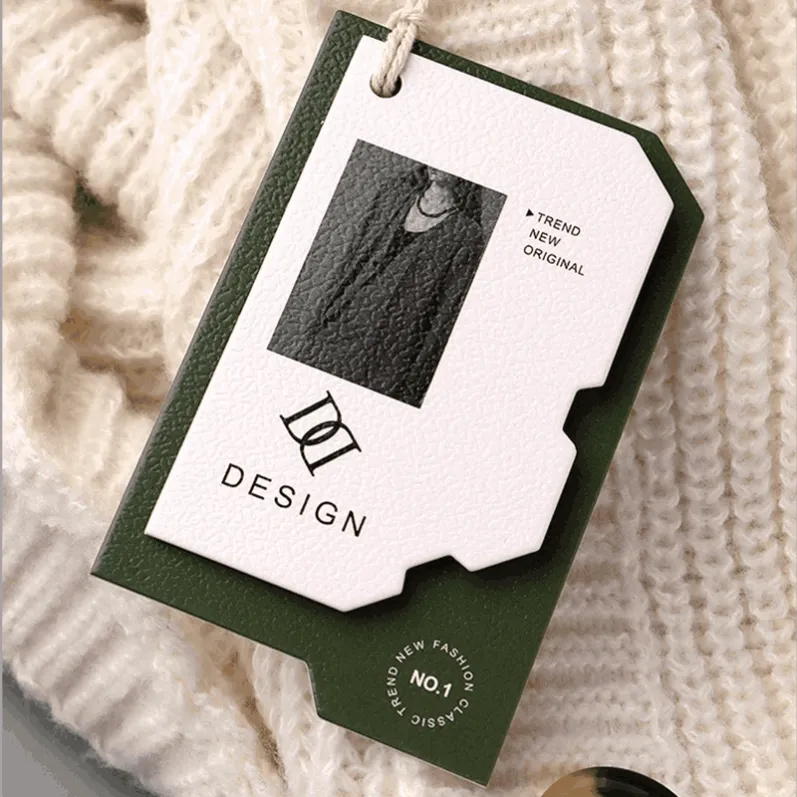
Designing Outside the Box: Die Cut Custom Shape Clothing Tags that Enhance Brand Identity
When customers pick up a garment, the hang tag is often one of the first physical touch-points with the brand. While printing, embossing, and foil stamping all contribute to a premium appearance, the overall shape of the tag can be just as memorable.
Today, more fashion brands are moving beyond traditional rectangular tags and choosing custom die-cut shapes to express their identity. Rounded corners, curved silhouettes, logo-inspired outlines, and unique geometric forms all help create stronger visual recognition.
However, creating a custom-shaped clothing tag is not simply a matter of drawing an interesting outline.
A shape that looks perfect on a computer screen may become difficult to manufacture consistently during mass production. Small curves, narrow edges, and overly complex outlines can increase production risks, affect cutting accuracy, and even lead to damaged edges.
In this guide, we'll explain how die cutting works, what designers should consider before finalizing artwork, and how thoughtful structural design can help create luxury garment tags that are both visually distinctive and production-friendly.
Why More Fashion Brands Are Choosing Custom Shape Clothing Tags
Luxury branding today is about creating memorable details.
Many premium brands no longer rely solely on logos or colors to stand out. Instead, they use structural design to create a stronger first impression.
A distinctive clothing tag can:
Increase brand recognition
Differentiate products from competitors
Reinforce brand personality
Create a more premium unboxing experience
Encourage customers to remember the packaging
For example, an outdoor brand may choose a mountain-inspired silhouette, while a children's clothing label may prefer playful rounded shapes. A minimalist fashion brand might use smooth arch-top tags that communicate simplicity and elegance.
The shape itself becomes part of the brand story.
Understanding the Die Cutting Process
Before discussing design recommendations, it helps to understand how custom-shaped clothing tags are actually produced.
Unlike standard rectangular tags that can often be trimmed automatically, custom shapes require a dedicated die-cutting process.
A typical production workflow includes:
Artwork preparation
Die line development
Steel rule die manufacturing
Sample production
Mass production
Final quality inspection
Every step influences the final cutting accuracy.
Although the finished tag may look simple, achieving clean edges and consistent shapes requires careful planning before production even begins.
From Artwork to Finished Tag: How Die Cutting Works
Step 1: Reviewing the Artwork
Production begins with a vector artwork file.
Before creating the cutting die, manufacturers review:
Overall tag dimensions
Corner radius
Internal cut-outs
Hanging hole position
Distance between artwork and cutting line
At this stage, small adjustments can significantly improve production stability.
Step 2: Creating the Steel Rule Die
After the artwork is approved, a custom steel rule die is manufactured.
The die follows the exact cutting outline of the tag.
Its design must consider:
Paper thickness
Cutting pressure
Shape complexity
Production speed
A well-designed die helps produce clean, repeatable results throughout large production runs.
Step 3: Sample Production
Sampling is an essential step.
Rather than checking only dimensions, experienced manufacturers evaluate:
Edge cleanliness
Corner quality
Shape consistency
Paper deformation
Registration with printed artwork
Physical samples often reveal issues that cannot be seen on screen.
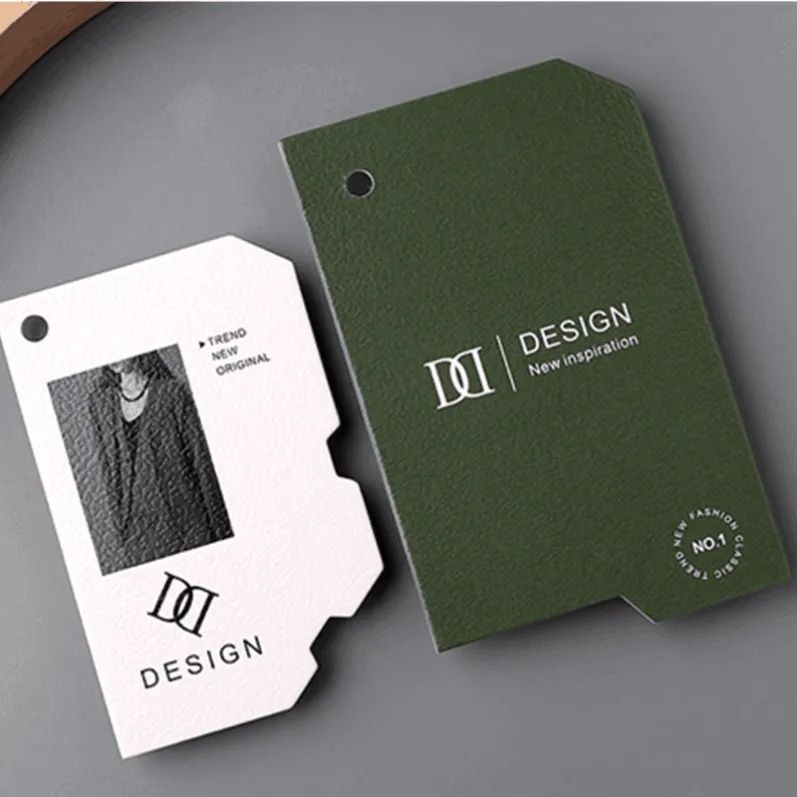
Production Rules for Better Die Cut Custom Shape Clothing Tags
Creative design is important, but successful production depends on understanding manufacturing limitations.
Below are several recommendations we regularly share with customers during project development.
Rule 1: Avoid Extremely Small Curves
Designers often create intricate curves to make a tag look unique.
Unfortunately, very small curves can become difficult to cut consistently.
Problems may include:
Rough cutting edges
Fibre tearing
Uneven curves
Paper cracking
Whenever possible, use smooth, natural curves rather than extremely tight radii.
Simple adjustments often improve both appearance and production quality.
Rule 2: Keep a Safe Distance from the Cutting Edge
One of the most common production issues occurs when logos or text are placed too close to the cutting line.
Although die cutting is highly accurate, every production process includes small manufacturing tolerances.
If important artwork sits too close to the edge, slight movement during cutting may result in:
Cropped text
Uneven margins
Foil extending beyond the edge
Visual imbalance
As a general guideline, keep important design elements a safe distance away from the cutting line.
Planning for production tolerances helps achieve cleaner finished products.
Rule 3: Consider Paper Thickness Before Designing Complex Shapes
Paper thickness influences cutting performance.
Thicker luxury papers provide a premium feel but require greater cutting pressure.
Very detailed shapes that work well on thin paper may become difficult to produce cleanly on heavyweight paperboard.
When selecting materials, designers should consider both appearance and production requirements.
Rule 4: Simplify Internal Cut-Outs
Internal windows, decorative openings, and complex negative spaces can create beautiful designs.
However, excessive internal cut-outs increase die complexity and production time.
Whenever possible:
Reduce unnecessary internal cuts
Avoid extremely narrow bridges
Maintain sufficient structural strength
Balanced designs generally achieve better production consistency.
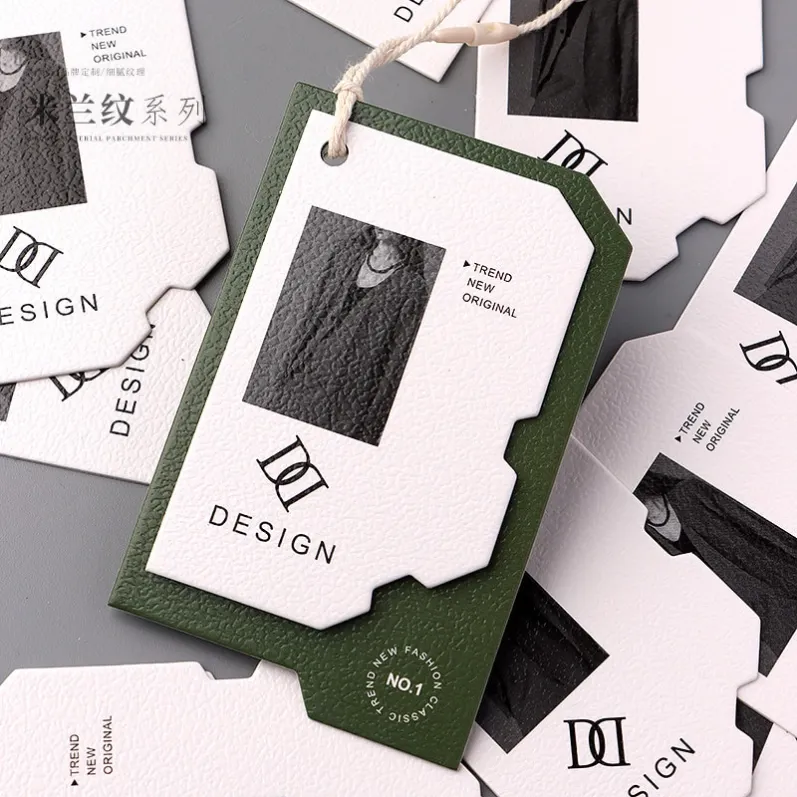
Common Design Mistakes We Often See
After producing thousands of custom garment tags, several design issues appear repeatedly.
Designing Only for Appearance
Some shapes look impressive digitally but become difficult to manufacture.
Good packaging design balances creativity with production reality.
Using Extremely Sharp Corners
Sharp angles are more vulnerable to edge damage during cutting, packing, and shipping.
Rounded corners usually improve durability without changing the overall design.
Ignoring Production Tolerances
Perfect alignment on screen does not always translate to physical production.
Leaving reasonable safety margins helps ensure consistent quality across large production runs.
Adding Too Many Decorative Details
Complex outlines often increase tooling costs while providing little additional branding value.
Simple, recognizable shapes are usually more memorable than highly complicated designs.
Case Study: Improving a Custom Shape Tag Before Production
A European fashion label approached us with a concept for a premium clothing tag featuring a flowing wave-shaped outline.
The digital design looked elegant and distinctive.
However, during artwork review, we identified several production concerns.
The Challenge
The original design included:
Multiple extremely small curves
Narrow connection points
Logo positioned very close to the cutting edge
Although technically possible, these features increased the likelihood of edge damage during mass production.
Our Recommendation
Rather than changing the overall appearance, we made several small adjustments.
We:
Increased the curve radius in several areas
Moved the logo slightly inward
Added a larger safety margin around the cutting line
Optimized the die line for smoother cutting
These changes were almost invisible visually but greatly improved production stability.
The Result
After optimization, the customer approved the revised sample.
The final production achieved:
Cleaner edges
More consistent shapes
Reduced material waste
Better overall product appearance
The customer maintained the original design concept while improving manufacturing efficiency.
Combining Die Cutting with Premium Finishing Techniques
Custom shapes become even more effective when combined with premium finishing techniques.
Popular combinations include:
Die cutting + embossing
Die cutting + debossing
Die cutting + gold foil stamping
Die cutting + spot UV
Die cutting + edge colouring
Rather than using every available finishing process, many luxury brands achieve stronger results by combining one distinctive shape with one carefully selected premium finish.
The result feels refined instead of over-designed.
Buyer Checklist Before Ordering Die Cut Custom Shape Clothing Tags
Before approving your final artwork, consider the following questions.
Is the overall shape suitable for mass production?
Are curves smooth enough for consistent cutting?
Is there enough safety distance around the artwork?
Have paper thickness and material been considered?
Has a physical sample been reviewed?
Does the supplier have experience producing complex die-cut tags?
Answering these questions early helps avoid unnecessary sampling revisions later.
Why Manufacturing Experience Matters
Many suppliers can produce custom-shaped clothing tags.
Fewer suppliers help customers improve their designs before production begins.
At Jeeli Packaging, we look beyond the design itself. We review every artwork to make sure it not only looks great but also runs smoothly in production.
Before making the cutting die, we evaluate:
Shape complexity
Cutting tolerance
Paper characteristics
Finishing compatibility
Production efficiency
By identifying potential issues early, we help customers reduce production risks while preserving their original design intent.
Frequently Asked Questions
What are die cut custom shape clothing tags?
They are garment tags produced using custom cutting dies instead of standard rectangular trimming. The process allows brands to create unique tag shapes that reinforce brand identity.
Does a custom shape increase production cost?
A custom die requires an initial tooling cost, but once the die is created, large production runs remain highly efficient.
Can every shape be produced?
Most shapes are possible, but extremely small curves, sharp angles, and complex internal cut-outs may require design adjustments for reliable production.
What file format should designers provide?
Vector files such as AI, PDF, or EPS are recommended because they preserve accurate cutting paths.
Can die cutting be combined with foil stamping and embossing?
Yes.
Many premium fashion brands combine die cutting with embossing or gold foil stamping to create luxury garment tags with greater visual impact.
Final Thoughts
A custom-shaped clothing tag is more than a decorative detail.
When thoughtfully designed, it becomes an extension of your brand identity.
The most successful projects combine creative design with practical manufacturing knowledge. Small decisions—such as increasing a curve radius, leaving more edge clearance, or simplifying a cutting line—can make a significant difference during mass production.
Whether you're developing a new fashion collection or refreshing an existing brand, investing time in production-friendly structural design helps ensure your custom garment tags look as impressive in the final shipment as they do in the original concept.
At Jeeli Packaging, we work closely with fashion brands to transform creative ideas into production-ready luxury garment tags, combining distinctive structural design with consistent manufacturing quality.