
Labels for Labeling Machines: Roll Direction, Core Size, and What to Specify
Learn how to specify label rolls for a labeling machine: roll direction, core size, roll diameter, gaps, materials and adhesives, plus a supplier checklist.
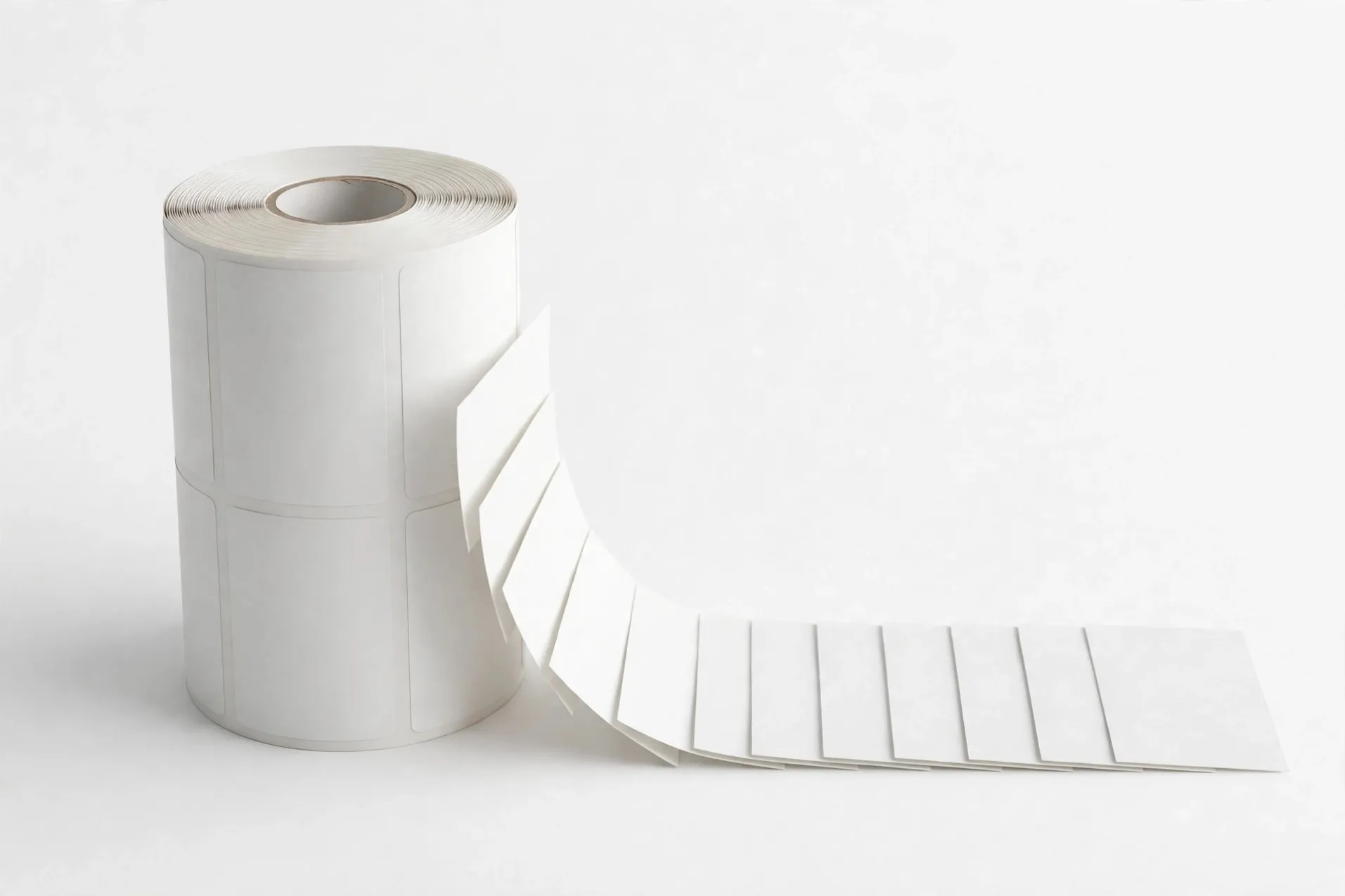
A label that looks perfect on a sheet can still fail on a packaging line. Once labels are applied by machine, the roll itself becomes part of the machine: how it unwinds, how the labels are wound, how far apart they sit, and how stiff the material is all affect whether each label lands in the right place, at the right speed, without stopping the line.
Buying labels for a labeling machine is therefore a specification job, not just a print job. This guide explains roll direction, core size, roll diameter, gaps, materials and adhesives, and what to send your supplier before production.
Why Machine-Applied Labels Need Different Specifications
Hand-applied labels are forgiving: a person can peel a label from a sheet, line it up by eye and move on. A machine cannot. It peels, places and presses at a fixed speed, and relies on the roll to present every label in exactly the same position, time after time.
Machine-ready labels are therefore supplied on rolls, not sheets, with a consistent gap and a backing paper, often called the liner, that the machine can grip. The label must release cleanly at the peel point, without tearing or curling. If the material is too floppy, too stiff or too strongly stuck, the machine may misplace labels or stop.
Roll Direction and Unwind Direction
Roll direction, also called unwind direction, describes which way the label comes off the roll and which edge leads as it reaches the applicator, and whether the printed face is on the outside or the inside of the roll. It decides whether the label arrives at the bottle, jar or box the right way up, with the right edge first.
Most labeling machines are set up for one direction. If the roll unwinds the other way, labels may apply upside down or back to front, or the operator may have to rewind the roll. A roll that is perfect in other respects can be unusable simply because it unwinds the wrong way.
How to Describe Roll Direction to a Supplier
Do not describe direction with words alone. Ask your machine supplier or operator for the required unwind direction, then pass that description on to your label supplier, in writing, before production. A short video or a marked sample roll showing the label leaving the roll and the printed face can prevent a costly misunderstanding.
Core Size, Maximum Roll Diameter and Labels per Roll
The core is the tube at the centre of the roll, and it must fit the spindle or holder on your machine. In general industry terms, small cores of about 1 inch and larger cores of about 3 inches are both commonly used. The right choice depends on the machine, so confirm with your supplier which core yours takes.
Maximum roll diameter is the widest roll, measured across the outside, that your machine can accept without rubbing or jamming. A larger roll holds more labels, so the line stops less often, but only if the machine can take that diameter. Labels per roll then follows from label size, gap and roll diameter. Ask your supplier to confirm the labels per roll for your size, and use that figure to plan how many rolls a run will need.
Gap Between Labels and Label Position on the Web
The gap is the space between one label and the next on the liner. Many machines use a sensor to detect that gap, so a gap that is too small, uneven or hard to see can cause missed or double labels. Labels are usually placed in a straight line along the web, and how far they sit from the edge should be confirmed with your supplier before production.
Material and Adhesive Choices for Machine Application
Paper and film behave differently on a line. Paper labels, including kraft and coated paper, suit many dry, indoor products. Film labels, such as vinyl, suit bottles, chilled products and damp conditions, because they resist water, scuffing and tearing. For colour, see our guide to CMYK vs Pantone printing and barcodes.
The adhesive must hold the label in place through storage, transport and use, yet release cleanly from the liner at the peel point. A label that lifts at the edges, slides on a curved bottle or peels in the cold will look like a print fault, even when the print is perfect. Tell your supplier where the product will be stored and used.
See our custom roll labels for paper and film options, and custom stickers for hand-applied seals.
Common Problems When Specifications Are Wrong
The most common failure is also the most avoidable: one big roll arrives instead of machine-ready rolls, and it does not fit the machine, its core or its roll-diameter limit. The line then stops while the roll is rewound or replaced. Paper that is too soft or too weak can jam the machine, tear at the peel point or curl after application. Wrong roll direction or an uneven gap can cause the same stoppages, with labels applied crooked or upside down.
Specification Checklist: What to Send Your Supplier
Send your supplier one written specification covering every item below, and confirm each point with your supplier.
| Item | What to specify |
|---|---|
| Label size and shape | Width, height and shape |
| Roll direction | Unwind direction and leading edge |
| Core size | Core diameter for your machine |
| Maximum roll diameter | Widest roll your machine accepts |
| Labels per roll | Labels on each roll |
| Gap and position | Gap and distance from the edge |
| Material and adhesive | Paper or film, and adhesion |
| Print and quantity | Artwork, colours, barcode and total labels |
Frequently Asked Questions
What is roll direction?
The direction labels come off the roll, including which edge leads and whether the printed face is outside or inside.
What core size should I specify?
The core your machine takes. Cores of about 1 inch and about 3 inches are both commonly used.
How many labels are on a roll?
It depends on label size, gap and roll diameter. Ask your supplier to confirm the figure for your size.
Can I use the same labels for hand and machine application?
Not always. Machine application needs rolls with a consistent gap, a suitable core and a liner that releases cleanly.
How Jeeli Can Help
Jeeli can help you turn a machine specification into finished custom labels, with sampling, artwork revision and progress updates during production. Prices are quoted per specification, so send us your label size, roll direction, core size and quantity for a quote. Contact Susan Hou, Business Development Director, to start with a sample and check the labels on your own machine.