
Packaging Knowledge
Amazon FBA Packaging Requirements for Custom Boxes (2026): FNSKU, Drop Test and SIPP Explained
What a custom box has to satisfy before it reaches an Amazon fulfilment centre: barcode placement, the 3-foot drop test, SIPP rules and the checks to run before bulk production.
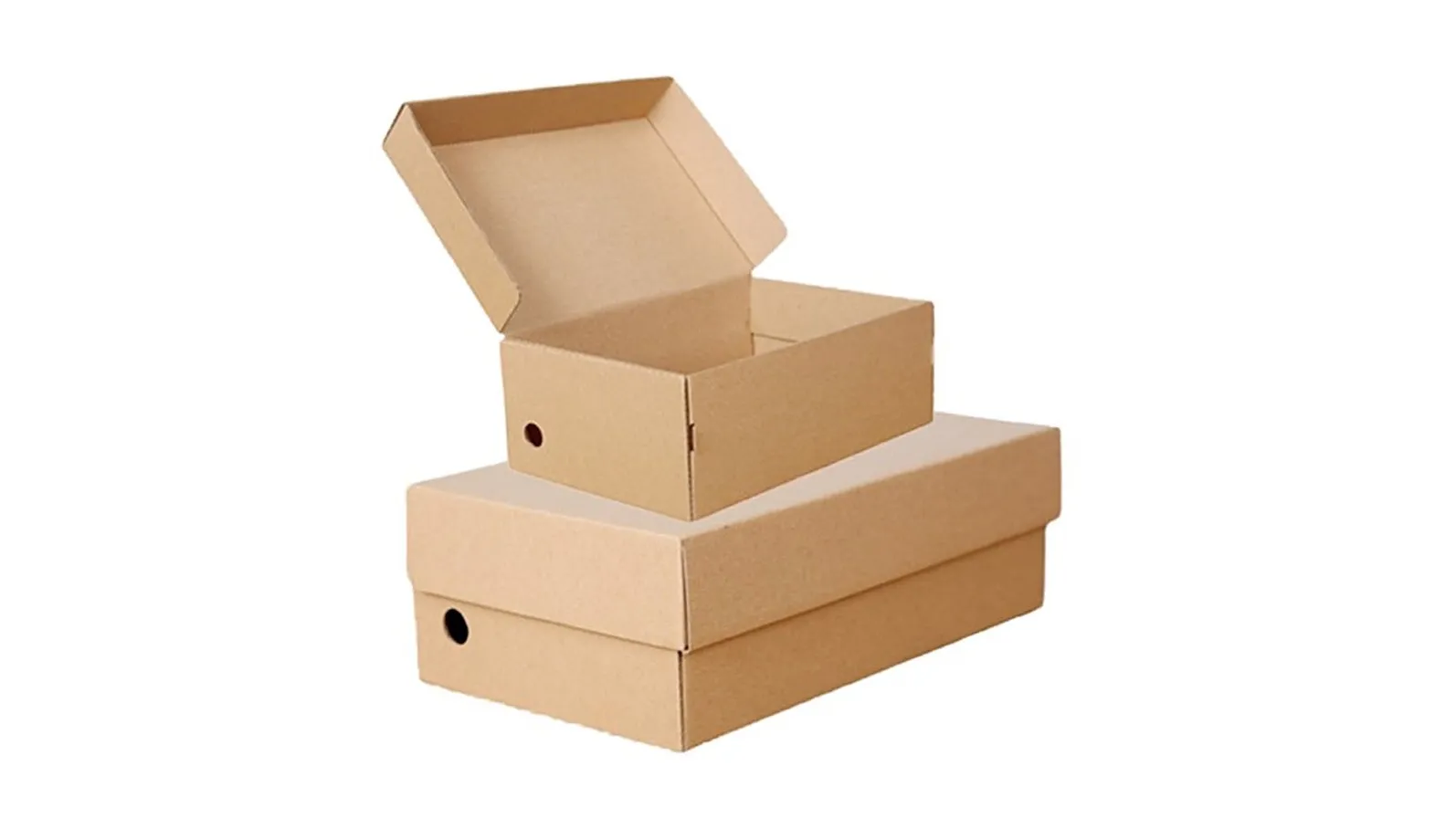
Amazon rejects or repackages a shipment for reasons decided months earlier, at the packaging factory. A box that fits the product, carries one readable barcode in the right place and survives a 3-foot drop arrives as planned; a box with a second barcode under the label, or a lid that pops open in a tote, arrives as a chargeback.
Below is what a custom box must satisfy before it reaches a fulfilment centre, in the order the factory should be told. Amazon's requirements change - treat these as the working version and confirm current policy in Seller Central before committing a production run.
What does Amazon check on a custom box?
Four things, in practice:
- Size and weight - a standard parcel has an upper bound around 25 inches on the longest side and 50 lb billable weight; above that it moves into a different handling tier and fee
- One scannable barcode - the FNSKU must be readable on arrival and must not be obscured by another code
- Containment - the product must not be able to escape the box during normal handling
- Protection - the product must survive the drop test in its own packaging, without loose fill spilling
The commercial reason to settle all four at design stage is that a box failing any of them gets charged, repacked or returned - and the fee lands after the goods have already crossed an ocean.
Where does the FNSKU go, and where must it not go?
Barcode placement is the most common avoidable defect in custom packaging, and the rules are short:
- One FNSKU label per unit, on a flat surface that does not bend, fold or cross a seam
- Cover or remove any existing retail barcode - a UPC visible next to an FNSKU is a scannable conflict and a rejection reason
- Keep the label away from edges, lid lines and corners where it will crease in handling
- Keep it clear of the opening seam, so opening the box does not tear the code
For custom boxes there is a better option: specify the FNSKU position in the artwork and print it with the rest of the design. Printed codes do not fall off and cannot be applied crooked, and they remove a labour step at the warehouse. The constraint is flexibility - a printed code fixes the box to one SKU.
What is the 3-foot drop test?
Amazon's drop test is a 3-foot (about 91 cm) drop, applied to the package as it will ship with the product inside. The usual protocol drops it once on each face, each edge and each corner - ten impacts - then inspects both package and product.
- A lid or tuck flap that opens on impact and lets the product out
- An insert that holds the product at the base but lets it rotate on the second impact
- A box wall that creases and loses its strength after the first corner impact
The test is cheap to run before tooling is committed: pack three units by hand, drop them from 91 cm onto a hard floor - once per face, edge and corner - and open them. If the product moves, the insert is wrong, and no amount of printing will fix it.
What is SIPP, and when is it worth it?
SIPP means Ships In Product Packaging: the product ships in its own retail box with no outer carton, and Amazon treats that box as the shipping container. It is tested against the ISTA 6-Amazon.com series, a harder protocol than the standard drop test - it adds vibration, compression and repeated drops on the same unit.
Shipping without an outer carton removes a layer of material, packing labour and dimensional weight, and the fee structure rewards it. But a SIPP box must be strong enough to be the shipping container: heavier board, a better insert, and a surface that still looks presentable after handling. It suits e-commerce brands with one or two high-volume SKUs, not a gift box meant to look untouched.
Which box type should you use for a given product?
- Corrugated mailer box - the default for direct-to-consumer. Strong enough to ship alone, opens to a presentable interior, and the best SIPP candidate
- Folding carton - retail shelf packaging, or an inner box that goes into an outer carton; not strong enough to ship alone in most cases
- Rigid box - the worst fit for single-unit FBA shipments: heavy, bulky and it adds no shipping strength for the volume it takes. Use it for gift sets sold through retail or shipped inside a protective outer carton
For mailer boxes the flute has to match the journey; our comparison of E-flute and B-flute mailer boxes covers which one holds up in a parcel network and which only looks the part.
What should be settled before mass production?
- FNSKU printed into the artwork or applied as a label - and if a label, exactly where, with the retail barcode suppressed
- Box dimensions against the product and any inner packing, measured on a real unit rather than a drawing
- Insert that holds the product through ten drops without rotation
- Closure that stays shut without tape, or a taped seam that will not split
- Whether the SKU is a SIPP candidate - decided before the board grade is chosen, not after
The list is short because most of it is settled on the sample. Our mailer box quote checklist covers the specification side of the same conversation.
Frequently asked questions
Can Amazon print the FNSKU for me? Not as a rule - FBA shipments are expected to arrive already labelled and prepped. Printing the code into the box artwork, or applying labels at the factory, is the reliable route. Confirm the current policy for your marketplace first.
Does a custom printed box still need a poly bag? Only if the product itself needs one - a liquid, a powder, or anything that can leak or shed. A box does not replace a bag and a bag does not replace a box; they solve different problems.
Is SIPP worth it for a small brand? Usually not at first. It needs a stronger box, a tested insert and a formal ISTA 6 report, and the savings come from volume. Start with a mailer that passes the standard drop test.
How Jeeli can help
Tell us the product, the SKU count and the marketplace, and whether you intend to ship in the retail box, and we will recommend a structure, an insert and a board grade that survive the journey - with the FNSKU position set into the artwork if you want it printed. We manufacture corrugated mailer boxes, custom mailer boxes and printed folding cartons; minimum 1,000 pieces, sampling 7-10 days, bulk 15-25 days. Send your dimensions and marketplace here and we will confirm what the packaging needs before the first carton is made.