
Oct 5, 2026Blog
What Information Should You Send for a Custom Mailer Box Quote?
Need a custom mailer box quote? Learn what box size, product, quantity, material, printing, insert and shipping information to send your packaging supplier.
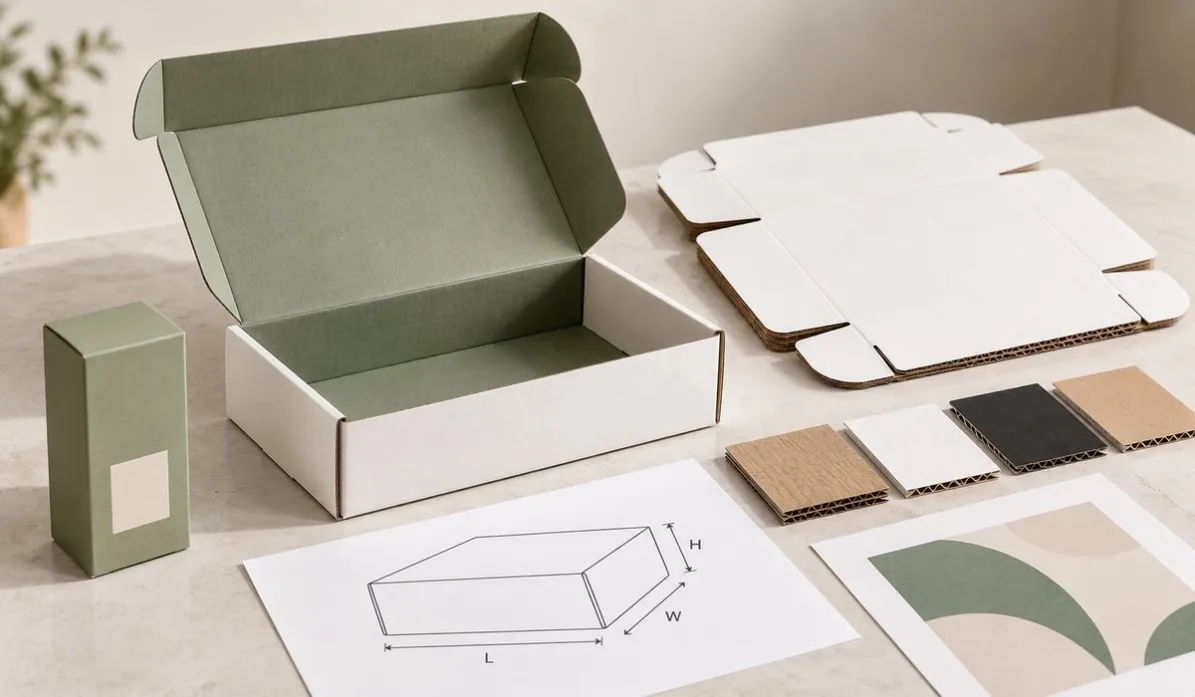
You need custom mailer boxes and want to ask a supplier for a quotation.
What should you send?
Some buyers send only:
“Please quote 3,000 custom mailer boxes.”
Others try to specify every technical detail before contacting a supplier.
Neither approach is necessary.
You do not need to know every corrugated material, flute type or box structure before requesting a quote.
But the supplier does need enough information to understand what the packaging needs to do.
A useful starting point is:
Product → Box Size → Quantity → Material → Printing → Insert → Shipping → Delivery
The clearer these details are, the easier it becomes to compare quotations on the same packaging specification.
1. Start With the Product
If the mailer box is being developed for a specific product, tell the supplier what will go inside it.
Useful information includes:
- product name or type
- product dimensions
- product weight
- product photos
- number of products packed in each box
- whether the product is fragile
- whether accessories are packed together
Why does this matter?
Because a mailer box for a lightweight T-shirt does not have the same requirements as a mailer box for a cosmetic set, electronics accessory or heavier product.
The product can affect:
- box dimensions
- corrugated material
- flute selection
- internal clearance
- insert requirements
- shipping protection
So if you are unsure about the box specification, start with the product.
2. Provide the Box Size — If You Already Know It
If you already have an existing mailer box, provide the finished dimensions.
Normally this is written as:
Length × Width × Height
Also tell the supplier whether the dimensions refer to the inside or outside of the box if this is important to the project.
If you are replacing existing packaging, photos of the current box can also help.
But what if you do not know the box size yet?
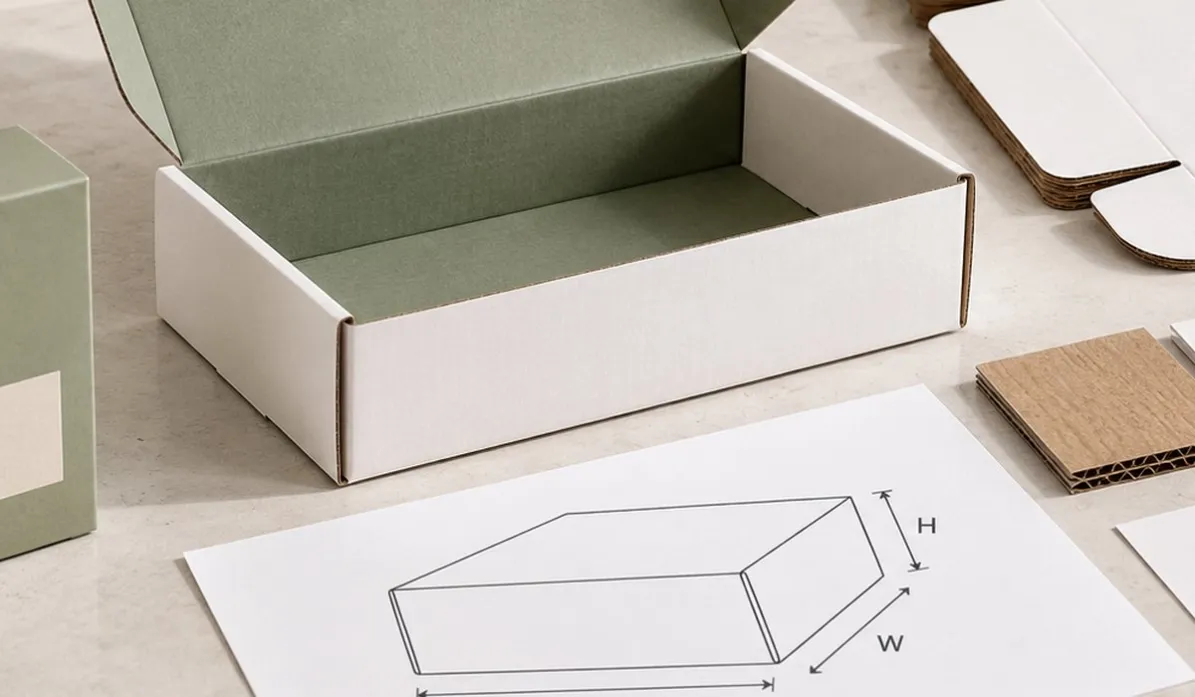
That is not necessarily a problem.
Send:
- product dimensions
- product photos
- packed orientation
- quantity of products per box
- any tissue paper or accessories
- insert requirements
The supplier can then evaluate a practical starting size.
This is particularly useful for apparel.
A clothing box should be developed around the garment in its folded and packed condition, not simply around the dimensions of the garment before folding.
3. Confirm the Quantity
Quantity is essential for a custom mailer box quotation.
For example:
- 500 pcs
- 1,000 pcs
- 3,000 pcs
- 5,000 pcs
If you want to compare different quantities, say so clearly.
For example:
Please quote 1,000 / 3,000 / 5,000 pcs.
This can be more useful than asking only:
What is your MOQ?
Why?
Because custom packaging pricing depends on the actual project specification and production quantity.
Different quantities can affect production efficiency and unit cost.
If this is a first order but you expect larger repeat orders later, you can also tell the supplier.
4. You Don't Need to Choose E-Flute or B-Flute Yourself
Buyers sometimes think they must specify the exact corrugated board before asking for a price.
Not necessarily.
If you already know the material, provide it.
If you do not, provide the information the supplier needs to recommend it:
- product weight
- product dimensions
- box dimensions
- product fragility
- insert requirement
- shipping method
- required presentation
For custom corrugated mailers, E-Flute and B-Flute are common starting options, but thicker is not automatically better.
Our E-Flute vs B-Flute mailer box guide explains how product weight, box size, protection and shipping conditions affect this decision.
A useful RFQ can therefore say:
Material: Please recommend according to the product and shipping requirements.
That is better than guessing a specification simply to complete the inquiry.
5. Tell the Supplier How You Want the Box Printed
Printing can change both the appearance and quotation.
Tell the supplier whether you need:
- logo printing
- one-color printing
- CMYK full-color printing
- Pantone colors
- outside printing
- inside printing
- inside and outside printing
If artwork is already available, send it.
For an initial quotation, a PDF or reference image may help the supplier understand the design.
Final production artwork can be confirmed later according to the approved dieline and printing requirements.
Do You Need Inside Printing?
Do not add inside printing simply because it looks more premium.
For some e-commerce brands, inside printing creates a stronger unboxing experience.
For other projects, the budget may be better spent on box fit, material or exterior printing.
6. Confirm Any Finishing Requirements
If your design includes special finishing, mention it during quotation.
Depending on the material and printing construction, options may include:
- matte lamination
- gloss lamination
- spot UV
- foil stamping
- embossing
- debossing
Do not assume that the quotation automatically includes every finish shown in a reference photo.
If you send a reference image, explain which features you actually want.
For example:
We like this box structure, but only need full-color printing without foil.
That can prevent a supplier from quoting a more complicated specification than you need.
7. Does the Mailer Box Need an Insert?
An insert can help:
- hold the product
- reduce movement
- separate multiple products
- improve presentation
- protect selected components
But an insert is not automatically necessary.
Sometimes the real issue is simply that the outer box is too large.
Before adding an insert, consider:
Product Size → Box Fit → Product Movement → Protection → Presentation
If an insert is required, send:
- product dimensions
- product photos
- number of products
- packed orientation
- accessory information
For irregular products, a physical sample may eventually be useful for final fitting.
8. Tell the Supplier How the Mailer Box Will Be Shipped
This is easy to forget, but it can affect the recommended specification.
There are two very different situations.
Situation A — Packed Inside a Master Carton
The printed mailer box contains the product, and multiple mailer boxes are then packed inside a larger shipping carton.
The master carton provides additional protection during transportation.
Situation B — Shipped Directly to the Customer
The printed mailer box itself travels through the courier or e-commerce delivery network.
It may experience:
- stacking
- compression
- repeated handling
- surface abrasion
- drops
- labels applied directly to the box
The packaging requirement may therefore be different.
When requesting a quotation, tell the supplier:
Will the mailer box be packed inside a master carton or shipped directly?
This can be more useful than simply asking for “strong corrugated material.”
9. Provide the Shipping Destination
A product quotation and a delivered quotation are not the same thing.
If you need shipping included, provide at least:
- destination country
- city or postcode if available
- required delivery method if known
Also clarify the quotation term when necessary, such as whether you need:
- EXW
- FOB
- delivered freight estimate
- another agreed shipping term
The box price alone does not show the complete landed packaging cost.
This becomes especially important with corrugated packaging because finished boxes occupy volume.
Mailer boxes are commonly supplied flat to reduce storage and transportation volume before assembly.
10. Tell the Supplier Your Target Date
If your packaging is connected to:
- a product launch
- seasonal collection
- exhibition
- retail opening
- promotional campaign
tell the supplier the required date early.
A packaging project may involve:
Quotation → Dieline → Artwork → Sample → Approval → Production → Packing → Shipping
So “we need the boxes on November 1” is much more useful than mentioning the deadline after sampling has already started.
The supplier can then evaluate whether the project timeline is realistic.
11. Send a Reference Box or Photo If You Have One
Reference photos can save a lot of communication.
They can help explain:
- box style
- opening direction
- printing appearance
- finishing
- insert
- presentation
But a reference image should be treated as a starting point — not a complete production specification.
Two boxes can look similar in a photo while using different:
- dimensions
- corrugated boards
- structures
- printing methods
- finishes
So if you send a reference, also explain what you like about it.
For example:
We like the opening structure and inside printing, but our box size will be different.
That is much clearer than:
Please make this.
12. What If You Don't Have Artwork Yet?
You can still request an initial quotation.
Tell the supplier:
- whether printing is required
- approximate number of colors
- whether inside printing is needed
- whether special finishing is planned
For example:
Full-color exterior printing, no inside printing, no special finishing. Final artwork will be provided later.
This gives the supplier a much better starting point than simply saying:
Custom printed box.
Final pricing may still need confirmation after the artwork and complete specification are reviewed.
A Practical Custom Mailer Box RFQ Checklist
Before sending your inquiry, check whether you can provide the following:
Information | What to Send |
|---|---|
Product | Type, photo and application |
Product Size | Length × Width × Height |
Product Weight | Approximate finished weight |
Box Size | If already confirmed |
Quantity | Required order quantity |
Material | Known specification or ask supplier to recommend |
Printing | Colors and printed sides |
Artwork | Logo, PDF or reference if available |
Finishing | Lamination, foil, UV, embossing etc. |
Insert | Yes / No / Unsure |
Shipping Use | Master carton or direct shipping |
Destination | Country / city / postcode |
Target Date | Required delivery date |
Reference | Existing box or packaging photo |
You do not need every field to be complete before contacting a supplier.
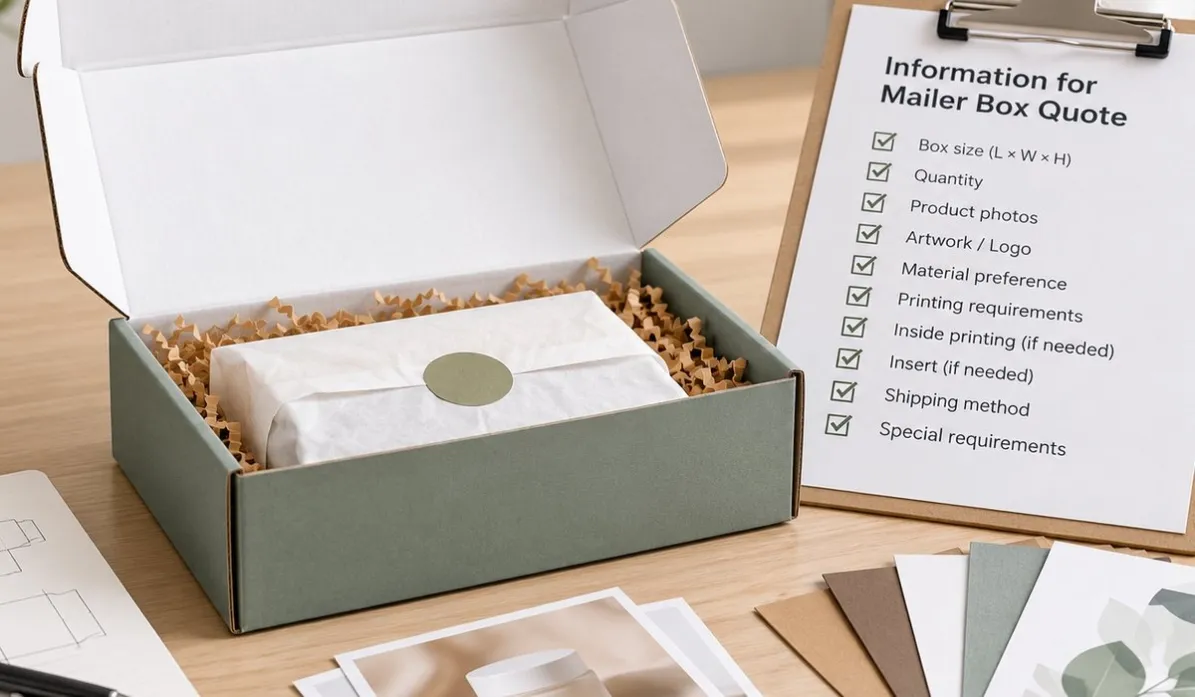
The objective is to provide enough information to begin the packaging discussion accurately.
Example: A Weak RFQ vs a Useful RFQ
Too Little Information
Please quote 3,000 custom mailer boxes with our logo.
The supplier still needs to ask:
- What size?
- What product?
- What material?
- How heavy is the product?
- What printing?
- Inside printing?
- Insert?
- Where will the boxes be shipped?
More Useful
We need 3,000 custom mailer boxes for an apparel brand.Folded garment size: approximately 300 × 220 × 40 mm.One garment per box.Full-color exterior printing with our logo. No inside printing.We are not sure whether E-Flute or B-Flute is more suitable, so please recommend.The mailer boxes will be packed inside master cartons for shipping.Delivery destination: Germany.Artwork and reference photos attached.
Now the supplier understands the project much more clearly.
Don't Guess Technical Specifications Just to Get a Quote
This is probably the most important point.
A buyer should provide accurate information about the product and packaging requirement.
But you do not necessarily need to decide every technical specification yourself.
If you are unsure about:
- flute type
- board combination
- final box size
- insert
- structure
say so.
A packaging supplier should be able to review the application and recommend a suitable starting solution.
The quotation can then be refined as the structure, material and artwork are confirmed.
Planning a Custom Mailer Box Project?
Jeeli Packaging produces custom mailer boxes for e-commerce, apparel, cosmetics, electronics, retail and branded product packaging.
If you already know the specification, send us your box size, quantity and artwork.
If you do not, start with:
Product + Dimensions + Weight + Quantity + Photos + Printing + Shipping Requirements
and we can review the suitable box structure and corrugated material before quotation.