
Oct 9, 2026Blog
Two Packaging Quotes, Same Price: What Should Buyers Compare?
Two packaging suppliers offer the same price—but are you getting the same product? Ask these four questions before choosing a custom packaging manufacturer.
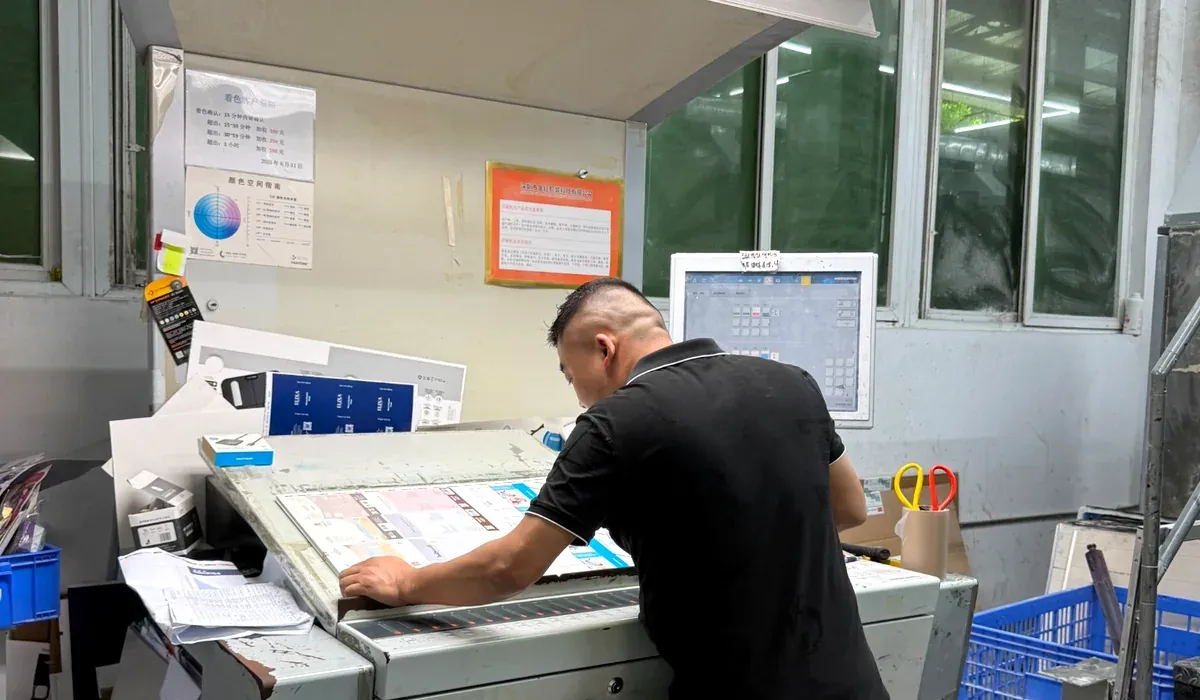
Two packaging suppliers quote exactly the same unit price.
Does that mean you are getting the same product?
Not necessarily.
One supplier may be quoting a different paperboard grade. Another may have allowed for a more complicated finishing process, stronger reinforcement, or additional packing requirements.
Even when the specifications appear identical, the way each supplier manages samples, production risks, quality checks, and problems can make a difference.
The price tells you what you will pay. It does not always tell you what you will receive.
Before choosing a custom packaging manufacturer, here are four questions worth asking.
1. What Exactly Is Included in Your Packaging Quote?
This is the first question because two quotations are only comparable when they are based on the same requirements.
For example, imagine you are sourcing a custom printed folding carton.
Both suppliers offer the same price, but one quotation is based on a specified paperboard grade and finish, while the other simply says "300gsm white card."
That leaves several questions unanswered.
Material specifications
Ask the supplier to confirm:
- Paperboard type and grade
- Grammage (GSM) and relevant thickness specifications
- Surface characteristics, where applicable
- Corrugated flute type and board construction, if used
- Any material substitutions that may be proposed
GSM alone does not tell you everything about a paperboard. Two materials with the same grammage can have different stiffness, thickness, surface properties, and folding performance.
Printing and finishing
A quotation should make clear whether it includes:
- CMYK or spot-color printing
- Printing on one or both sides
- Matte varnish or lamination
- Foil stamping, embossing, debossing, or spot UV
- Special inserts, windows, or other components
For example, "gold logo" is not a complete finishing specification. It could refer to metallic ink, foil stamping, or another effect, each with different appearance and production considerations.
Structure, packing, and delivery terms
Do not overlook the details outside the printed surface.
Check whether the quotation includes structural development, gluing, inserts, individual packing, master cartons, sampling charges, and the agreed delivery terms.
You do not need the supplier's confidential internal cost breakdown.
You need a quotation detailed enough to understand what is included, what is excluded, and what assumptions have been made.
Ask your supplier:
"Can you confirm the material, structure, printing, finishing, packing method, and delivery terms included in this price?"
2. How Will You Make Sure Bulk Production Matches the Approved Sample?
A sample may look excellent, but the real test is whether the agreed requirements can be maintained during production.
This is especially important for branded packaging, where color, finishing, dimensions, and assembly all affect the customer experience.
What is the approved reference?
Before mass production, clarify which physical sample, artwork revision, color reference, and material specification will be used for approval.
A sample is much more useful when everyone agrees on what it represents.
How will color consistency be checked?
Color can be affected by paper surface, ink, printing conditions, finishing, and measurement methods.
Rather than asking every supplier to promise one universal color tolerance, ask how color will be evaluated and what acceptance criteria will apply to your project.
For important brand colors, an approved physical reference and an agreed measurement method can help reduce misunderstandings.
What inspections will be carried out?
Ask about the inspection plan, such as:
- First-piece approval before the main run
- Checks during printing and finishing
- Finished size and folding checks
- Visual inspection for print and finishing defects
- Final inspection before shipment
The appropriate inspection frequency depends on the product, quantity, manufacturing process, and agreed quality requirements.
A supplier does not need to promise that every single carton will be inspected to demonstrate a responsible quality process.
Ask your supplier:
"What will you use as the approved production reference, and how will you check consistency throughout the order?"
3. What Happens If Something Goes Wrong?
Most buyers ask about lead time.
Fewer ask what happens when the original plan cannot be followed.
Paper delivery may be delayed. A finishing process may need adjustment. A quality issue may be discovered before shipment.
The important question is not whether a supplier can promise that problems will never occur.
It is how problems will be communicated, evaluated, and resolved.
If production is delayed
Ask when you will be informed, whether the supplier can explain the cause, and what realistic recovery options may be available.
A useful response should include an updated schedule rather than an unsupported promise.
If a quality issue is found
Clarify how the supplier will identify affected goods, determine whether the issue falls outside the approved specification, and propose a resolution.
Depending on the circumstances and the agreed terms, possible actions may include sorting, reworking, replacing affected units, or another mutually agreed solution.
If a problem is discovered after delivery
Ask how claims are documented and reviewed.
Photos, quantity records, carton labels, approved samples, and inspection information can all help establish what happened.
A dependable supplier should be willing to discuss these procedures before the order is placed.
Ask your supplier:
"If we discover a production or quality problem, how will you communicate it, investigate it, and agree on the next steps with us?"
4. What Potential Problems Do You See in My Packaging Design?
This may be the most revealing question of all.
A supplier can follow a drawing and produce a box.
A more useful manufacturing partner can also explain where the design may create difficulties before production begins.
Consider a few examples.
A folding carton that looks good but is difficult to close
A short tuck flap, unsuitable crease arrangement, or overly stiff material may make assembly less reliable.
The right response is not always to change the entire design. Sometimes a small structural adjustment can improve closure without noticeably changing the appearance.
A printed box that may crack along the fold
Heavy ink coverage, board characteristics, and crease design can influence how a printed surface behaves when folded.
The supplier should review the material and finishing combination and recommend suitable testing before bulk production.
A paper bag that needs reinforcement
A large shopping bag may look elegant in a rendering, but the product weight, handle attachment, and bottom construction still need to be considered.
The right paper GSM alone does not guarantee adequate carrying performance.
A mailer box that needs to survive distribution
For custom mailer boxes, the board construction, locking design, product fit, and intended shipping conditions should be considered together.
An attractive exterior does not automatically mean the contents are adequately protected.
A premium finish that is difficult to reproduce consistently
Foil stamping, deep embossing, soft-touch surfaces, and other decorative processes can produce excellent results.
But their suitability depends on the artwork, material, coverage, and production conditions.
Sometimes adjusting the design slightly can improve consistency without sacrificing the intended appearance.
These are the kinds of conversations worth having before the final artwork and production files are approved.
Ask your supplier:
"Looking at our packaging design, what would you change to improve production reliability, assembly, or cost?"
A supplier who identifies a real limitation and explains a practical alternative may be offering more value than one who immediately agrees to everything.
A Simple Way to Compare Two Packaging Quotations
You do not need a complicated supplier evaluation system for every project.
Start by comparing the information that could materially affect the final result.
What to compare | Supplier A | Supplier B |
|---|---|---|
Material and board construction | Confirmed? | Confirmed? |
Printing and finishing | Clearly specified? | Clearly specified? |
Box structure and inserts | Included? | Included? |
Sample approval process | Defined? | Defined? |
Quality acceptance criteria | Agreed? | Agreed? |
Packing and delivery terms | Clear? | Clear? |
Problem-resolution procedure | Discussed? | Discussed? |
Manufacturing risks | Identified? | Identified? |
If one quotation is missing important information, request clarification before treating it as the cheaper or better offer.
The objective is not to find a supplier who answers every question with "yes."
It is to find one whose answers are specific, realistic, and consistent with your packaging requirements.
What If One Supplier Is More Expensive?
A higher price does not automatically mean better quality.
Likewise, a lower price does not automatically mean poor quality.
One supplier may offer a more suitable material or include a process that another has excluded. Another may have a more efficient production method that legitimately reduces cost.
The useful question is:
Are the differences in price supported by differences in specification, process, service, or risk?
When those differences are clear, buyers can make a better-informed decision.
When they are unclear, comparing unit prices alone can be misleading.
Packaging Supplier FAQs
Why do custom packaging quotations vary between manufacturers?
Quotations may differ because of material specifications, box structures, printing methods, finishing, order quantities, packing requirements, production methods, and delivery terms. Always compare the underlying specifications before comparing prices.
Should I choose the lowest packaging quotation?
Not automatically. First confirm that the suppliers are quoting comparable products and services. The lowest unit price may be suitable, but it should be evaluated alongside quality requirements, packing costs, delivery conditions, and project risks.
What information should I provide to get an accurate packaging quote?
Provide the box or bag dimensions, product details, quantity, preferred material, printing and finishing requirements, reference images or artwork, and any special packing or delivery needs. If a structure is not finalized, explain that the quotation is based on a concept and may need revision.
Can a packaging manufacturer help improve my design?
Yes. An experienced manufacturer can review material suitability, folding and closure details, printing limitations, assembly requirements, and potential production difficulties. Proposed changes should be confirmed through the appropriate drawings, samples, and approvals.
Final Thoughts
Price matters. It always will.
But when two packaging suppliers offer the same price, the real comparison should go beyond the number on the quotation.
Ask what is included, how the approved sample will be matched, what happens if something goes wrong, and which manufacturing risks the supplier can identify before production.
These questions will not eliminate every risk.
They will help you understand what you are buying and how the supplier approaches your project.
At Jeeli Packaging, we work with brands on custom paper packaging, including folding cartons, mailer boxes, paper shopping bags, and other printed packaging.
If you have a packaging concept or specifications ready, contact our team. We can review the requirements, discuss material and structural options, and prepare a quotation based on a clearer understanding of your project.