
Sep 23, 2026Blog
When Does Packaging Need an Insert?
Learn when packaging needs an insert, when it may be unnecessary, and how box size, product protection, presentation and cost affect the decision.
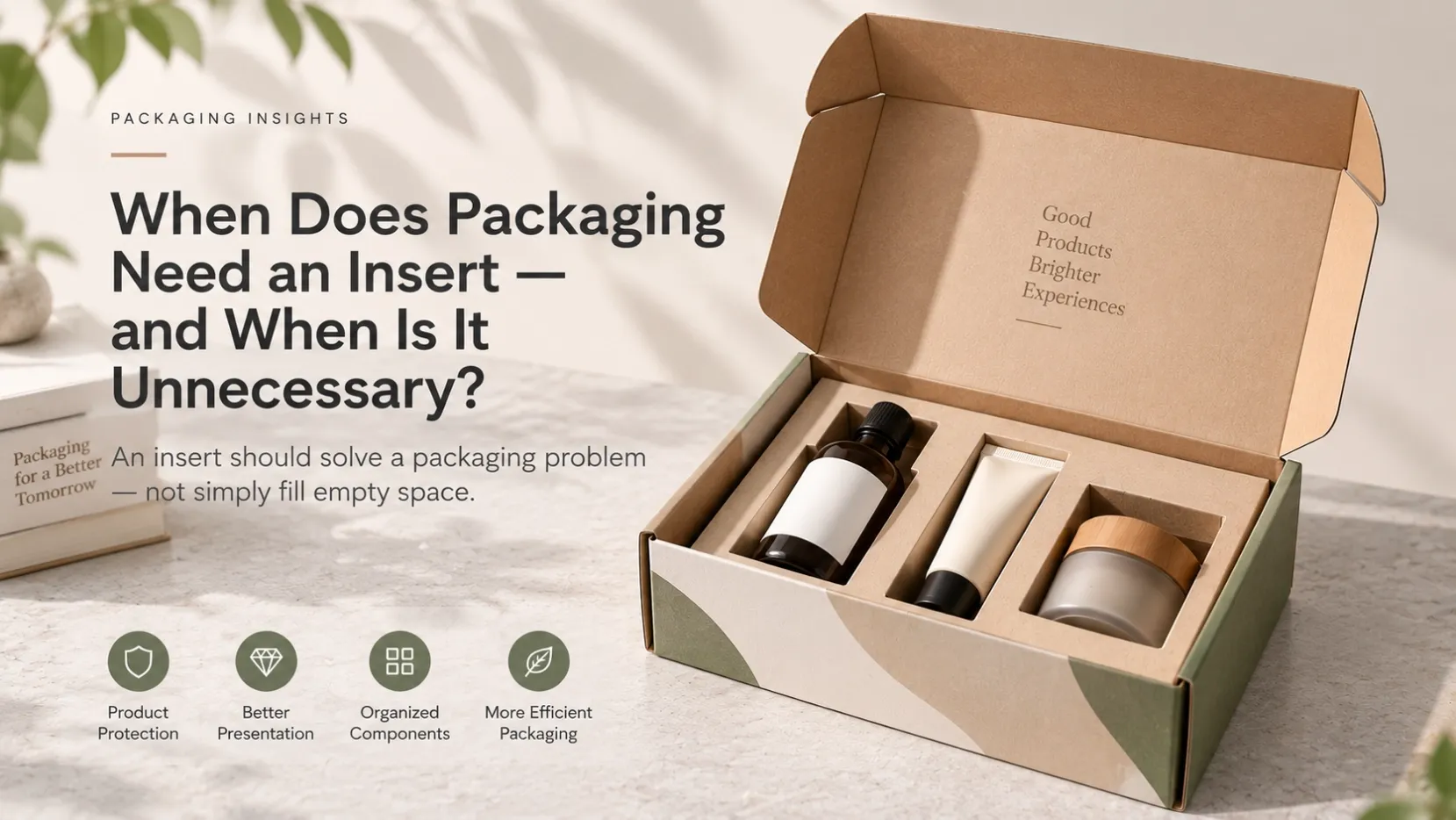
Packaging inserts can make a box feel more organized, protective and professional. But an insert is not automatically needed for every packaging project.
For buyers, the real question is not “Can we add an insert?” It is:
“What problem does the insert solve?”
An insert should solve a packaging problem — not simply fill empty space.
Sometimes a product moves inside the box because it truly needs support. But sometimes the real problem is simpler: the box is too large.
Before adding an insert, buyers should first check the product dimensions, final internal box size, required clearance, product shape and shipping requirements.
What Does a Packaging Insert Do?
A packaging insert is an internal structure placed inside a box to hold, separate, protect or present the product.
In custom paper packaging, inserts are often used to:
- Keep the product in position
- Separate multiple items
- Reduce movement during shipping
- Support fragile or irregular product shapes
- Improve product presentation
- Organize accessories, samples or product sets
For Jeeli Packaging projects, the most relevant insert options are usually paper-based inserts, especially for folding cartons, rigid boxes, mailer boxes, cosmetic packaging and electronics accessory packaging.
When Does Packaging Need an Insert?
Packaging usually needs an insert when the product cannot stay safely or neatly in position by box structure alone.
For example, a cosmetic bottle, glass jar, electronic accessory set or gift set may shift inside the box if there is too much open space. A fitted insert can help keep the product in place and make the package look more intentional.
An insert can also help when one box contains several parts, such as a main product, cable, charger, instruction card or small accessory. In this case, the insert separates the components and makes the packaging easier to open and inspect.
For retail packaging, inserts can also improve presentation. Products that sit neatly inside the box often feel more finished than products placed loosely in empty space.
Relevant examples include cosmetic folding cartons, electronics folding cartons, window folding cartons, rigid boxes and some mailer box structures.
When Is an Insert Unnecessary?
An insert may be unnecessary when the box already fits the product correctly.
If the product is simple, lightweight and not fragile, a well-sized folding carton or mailer box may be enough. Adding an insert may only increase material use, assembly time and cost without improving protection or presentation.
An insert may also be unnecessary when the product movement can be solved by reducing the box size. If there is too much empty space, the better solution may be to adjust the box dimensions instead of adding another packaging component.
This is why buyers should not add an insert just because the box looks empty.
First check whether the insert improves protection, presentation, organization or handling.
Is the Box Too Large?
This is one of the most common packaging development issues.
A buyer receives a sample box, puts the product inside and sees that the product moves. The first reaction may be to request an insert.
But before adding one, check the basic fit.
Start with the product dimensions. Measure the length, width, height and any special parts such as caps, pumps, handles or accessories.
Then check the final internal box dimensions. Internal size matters more than outside size because it determines how the product sits inside the packaging.
Next, review the required clearance. Some products need a little space for loading or surface protection. Other products need a closer fit to reduce movement.
Our related article, Your Folding Carton Looks Right — So Why Doesn’t the Product Fit?, focuses on box dimensions and clearance.
This article focuses on the next decision: whether an insert is actually needed.
Paperboard, Corrugated, Molded Pulp and Foam Inserts
Paperboard inserts are often used for lightweight products, retail packaging, cosmetics, accessories and gift packaging. They are useful when the product needs clean presentation but not heavy-duty support.
Corrugated inserts provide stronger support. They are often used for ecommerce packaging, electronics accessories, heavier product sets or mailer boxes that need more internal strength.
Molded pulp inserts may be considered when the product needs shaped protection and the project is suitable for molded tooling.
Foam or EVA inserts may still be used for certain fragile, luxury or high-value products. However, they should be chosen only when the protection or presentation requirement justifies the material.
Jeeli Packaging focuses mainly on custom paper packaging and printing, so paper-based insert structures are usually the first option to review.
How Inserts Affect Cost
Adding an insert can affect packaging cost, but the impact depends on the structure.
An insert may require:
- Extra material
- Die-cutting
- Folding
- Gluing
- Hand assembly
- Additional packing time
It can also affect the final box size and shipping volume.
However, inserts are not always expensive. A simple paperboard insert can be practical if it helps reduce movement, improve presentation or prevent avoidable damage.
Before deciding, compare the insert cost against the problem it solves.
If the insert only fills empty space, resizing the box may be a better solution.
What Should Buyers Check First?
Before adding an insert, prepare these details:
- Product dimensions
- Product weight
- Product photo or sample
- Number of items inside the box
- Internal box dimensions, if available
- Required clearance
- Shipping method
- Retail display needs
- Artwork and branding requirements
- Quantity
- Material preference
- Protection or presentation concerns
These details help the supplier judge whether an insert is needed and which structure may work best.
Need Help Choosing a Packaging Structure?
If you are not sure whether your packaging needs an insert, send Jeeli Packaging your product dimensions, product photo, box dimensions if available, quantity, artwork, material preference and protection or presentation requirements.
Our team can help review whether the issue is product movement, box size, structure, shipping protection or presentation.
From there, we can suggest whether a paperboard insert, corrugated insert, adjusted box size or simpler structure is the more practical choice.