
How Long Does Custom Packaging Take? A Realistic Production Timeline
The custom packaging timeline: quote, dieline approval, printing, finishing, inspection and delivery — plus delays you can prevent.
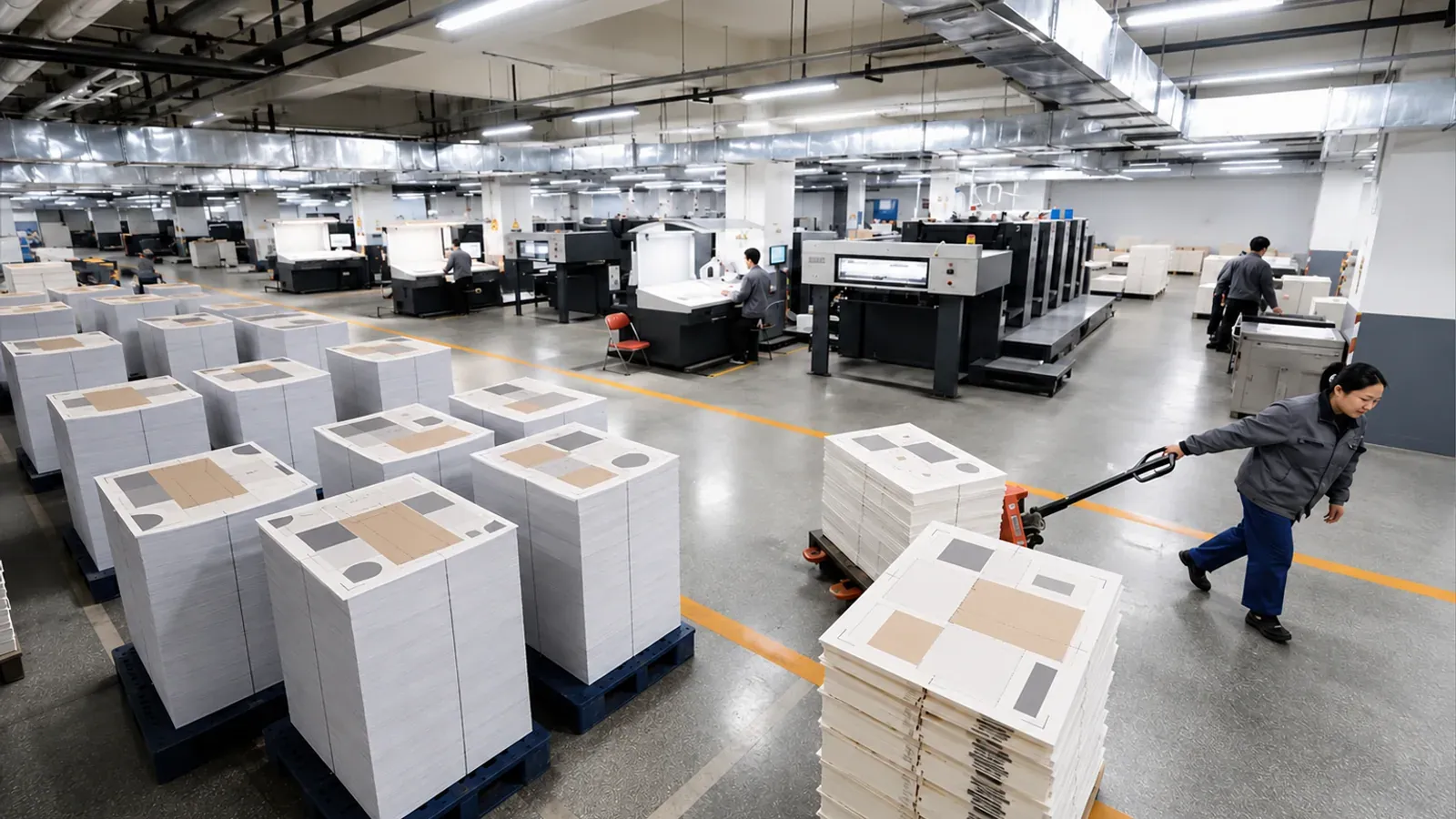
Custom packaging lead time is not one fixed number. A simple repeat order with approved artwork may move quickly, while a new rigid box with a custom insert, foil stamping and international delivery can take much longer.
The useful question is not only “How many days does production take?” It is “Which stages are included, and what must be approved before the next stage can begin?” This guide explains the timeline from initial specification to delivery and shows where delays most often occur.
Typical Custom Packaging Timeline
A new project commonly includes specification review and quotation, structure and dieline development, artwork preparation, sampling and approval, material preparation, production scheduling, printing, finishing, die-cutting, gluing, inspection, packing and freight.
For a straightforward folding carton or mailer box, manufacturing may take roughly two to four weeks after final approval. Complex structures, specialty materials, several finishing processes or peak-season capacity can extend the schedule. Sampling and shipping are separate stages.
Specification Review and Quotation
The supplier needs product size and weight, packaging dimensions, structure, quantity, material, printing, finishing, insert, packing method and delivery destination. When details are missing, time is lost asking questions and revising assumptions. A complete RFQ is one of the easiest ways to shorten the project.
Structure, Dieline and Artwork
A dieline defines cut lines, crease lines, glue areas, panels and bleed boundaries. Standard structures may only need a size adjustment; unusual opening methods and custom inserts need more development. Approve the structure before finalizing artwork. Production files should include correct bleed, color settings, image resolution, fonts and clearly separated foil or spot-UV layers.
Sampling and Approval
A white sample checks size, fit and assembly. A digital printed sample checks layout and approximate appearance. A production-grade sample is closer to the final print and finishing, but usually takes longer. Review product fit, board stiffness, print position, finishing, insert performance and packing method. Consolidated, specific feedback prevents another revision cycle.
Material Preparation and Scheduling
After approval, the manufacturer confirms paper, board, inks, films, foil, accessories and tooling. Stock materials are easier to schedule than custom-dyed or imported specialty materials. Capacity can tighten before retail seasons and holidays, so reserve time early when the delivery date is fixed.
Printing, Finishing and Conversion
Printed sheets may require drying, lamination, varnish, foil stamping, embossing, debossing, spot UV or window patching. Every extra process adds setup, inspection and queue time. Sheets are then die-cut and creased. Folding cartons may be glued and packed flat, while rigid boxes and custom inserts often require manual assembly.
Inspection, Packing and Freight
Quality checks may cover dimensions, material, print registration, color, finishing position, glue strength, folding, product fit and packing quantity. Production completion is not the same as delivery: express, air, rail and sea freight have different transit times, while customs and final-mile delivery also require time. Confirm whether a quoted date means ex-factory completion, port departure or delivery to your address.
What Commonly Delays an Order?
Frequent causes include incomplete specifications, artwork changes after dieline approval, slow sample feedback, specialty material availability, too many artwork versions, complex hand assembly, peak-season capacity and unclear shipping responsibility.
How to Shorten Lead Time Without Increasing Risk
Send complete information in the first inquiry, separate confirmed requirements from preferences, approve the structure before artwork, consolidate feedback, nominate one decision-maker and confirm delivery terms early. For urgent orders, ask which changes genuinely save time. Choosing an available material or removing one nonessential finish can help more than simply demanding faster production.
Frequently Asked Questions
Does lead time start when I pay the deposit?
Not always. Many factories count production lead time only after the deposit, final artwork, sample approval and all technical details are confirmed. Ask for the exact starting point.
Is a repeat order faster?
Usually, if the specification, artwork, material and tooling remain unchanged. Material availability and capacity still need confirmation.
Should I add buffer time?
Yes. Allow time for revisions, inspection, freight variability and customs, especially around holidays and seasonal peaks.
Request a Production Timeline
Send Jeeli Packaging your product details, structure, quantity, artwork status, finishing requirements and delivery destination. We can map the required stages and provide a realistic schedule before sampling and bulk production.
Explore our custom packaging manufacturing capabilities or contact Jeeli Packaging for a project-specific timeline.