
Industry News & Trends
EU PPWR for Paper Packaging: What Buyers Must Ask in 2026
PPWR (EU) 2025/40 applies since 12 August 2026: heavy-metal limits, PFAS rules and a Declaration of Conformity. What paper packaging buyers should ask their supplier.
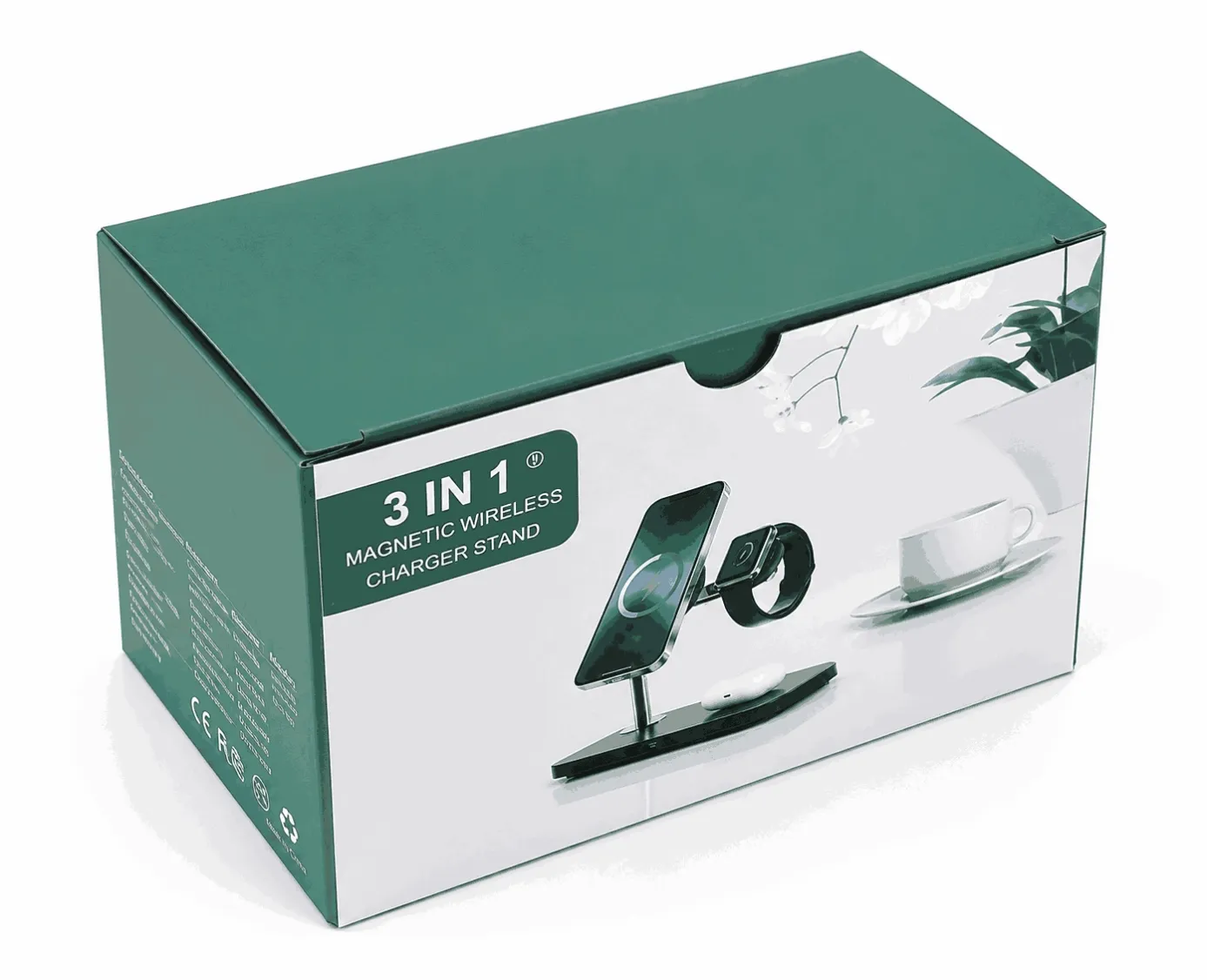
Since 12 August 2026, any packaging placed on the EU market - including a paper box made in China - falls under Regulation (EU) 2025/40, the Packaging and Packaging Waste Regulation (PPWR). It replaces the 1994 Packaging Directive with a single rulebook that applies directly in all 27 member states, to every company that places packaging on the EU market, wherever that company is based.
For a buyer of paper packaging, the change on the ground is documentary more than physical. Three obligations already bite: a heavy-metal limit that applies to all packaging, PFAS limits for food-contact packaging, and a Declaration of Conformity (DoC) for each packaging type. A kraft mailer was always recyclable; what is new is that the files behind it - test results, the material stack, a signed declaration - are now a condition of market access. This guide walks through each obligation, what it means for the boxes, bags and tags you buy, and the five questions to put to your supplier before the next EU order.
What changed on 12 August 2026?
The PPWR entered into force on 11 February 2025; 12 August 2026 is when the first block of obligations switched on. Four points define the day:
- It replaces Directive 94/62/EC - no national transposition, the same rules in every member state, enforced by national market-surveillance authorities
- It reaches manufacturers, importers, distributors and online sellers - EU-based or not
- Three requirements apply immediately: heavy metals at or below 100 mg/kg in all packaging, PFAS limits in food-contact packaging, and a DoC with technical documentation per packaging type; every packaging must also meet the basic recyclability requirement
- There is no sell-through period: packaging produced before 12 August 2026 but not yet placed on the market must still comply when it is placed
Separately, the EPR (extended producer responsibility) registration duty now lands on the "producer" - often the importer or the brand selling into the member state, with non-EU companies needing an authorised representative. That is the buyer's side of the ledger, and it is exactly why the supplier's paperwork suddenly matters: customs and platform checks start from documents.
Which PFAS limits apply - and why will a non-food box be asked about them?
From 12 August 2026, food-contact packaging may not be placed on the market with PFAS at or above 25 ppb for any single PFAS, 250 ppb for the sum of targeted PFAS, or 50 ppm including polymeric PFAS. If total fluorine exceeds 50 mg/kg, the operator must be able to prove whether that fluorine comes from PFAS or from a non-PFAS source.
- The restriction itself targets food-contact packaging - a rigid cosmetics box or an electronics carton is not automatically in scope
- PFAS historically hides in grease-resistant and barrier coatings, release liners, and can ride in with recycled furnish
- Large retailers pass compliance questionnaires down their supply chain, so the question reaches non-food packaging too - usually as "confirm PFAS status for all materials"
- The defensible answer is data, not assurance: a total-fluorine (TF) screening is cheap and quick, and a low TF result settles most questionnaires without a full PFAS panel
Where does the 100 mg/kg heavy-metal limit catch paper packaging?
The sum of lead, cadmium, mercury and hexavalent chromium must not exceed 100 mg/kg in any packaging placed on the EU market - paper included. The limit itself is not new, but under the PPWR it is now verified as part of the conformity file rather than assumed. The usual places it catches paper packaging:
- Metallic inks and pigments - a gold-printed logo is a reason to test, not a reason to skip
- Hot foil and metallised transfers
- Recycled board, where contaminants arrive with the furnish
- Adhesives and coating systems
Ask for the test result for the actual material stack on your order, with the sample identified by board grade and coating. A report that just says "paper" proves nothing about your box.
What is a PPWR Declaration of Conformity, and who issues it?
The packaging manufacturer must carry out a conformity assessment, assemble technical documentation, and issue an EU Declaration of Conformity for each packaging type placed on the market. Three mechanics matter to a buyer:
- The technical file is kept for 5 years for single-use packaging and 10 years for reusable packaging
- It must be handed to a market-surveillance authority within 10 working days of a request
- The DoC covers the obligations that apply at that time - the heavy-metal limit now, the PFAS restriction where the packaging is food-contact, reusable-packaging requirements where they apply
Change the board, coating, ink or foil and the file for that type needs revisiting - a DoC for last year's box does not automatically cover this year's version with a different finish. If you import the packaging into the EU under your own name, your company may take the importer role with the obligations that follow; settle in writing, before the first order, who issues the DoC and who holds the file.
Does each packaging type need its own file?
Yes - "packaging type" is narrower than "product line", which is where most buyers underestimate the workload. Examples we see weekly:
- A window carton is a different type from the same carton without the window film
- A magnetic-closure rigid box documents the magnet, the lamination and the insert alongside the board
- A foil-stamped hang tag is small, but it is still packaging placed on the market together with the garment
- A mono-material mailer is the simplest case: one material, the shortest file
- Moving a design from matte lamination to spot UV is a material-stack change, not just a cosmetic one

How do foil, lamination and magnets affect recyclability?
From 12 August 2026 every packaging must meet the basic recyclability requirement - technically collectable and sorted into existing recycling streams. Formal recyclability performance grades and recycled-content quotas follow from 2030, and the bar rises again from 2038. The design decisions that keep a paper box inside the paper stream:
- Prefer mono-material structures where the application allows - our review of mono-material luxury packaging covers why the market is moving this way
- Water-based coatings and dispersions instead of film lamination where the design allows
- Cellulose windows instead of plastic film windows where the structure allows
- Magnets, ribbons and foam inserts are acceptable - but document them; they change the packaging type and the end-of-life story
- If a premium finish is unavoidable, state it in the technical file rather than presenting the box as a plain carton

What should you ask your supplier before your next EU order?
Five questions separate a factory that can support EU orders from one that discovers the problem at customs:
- Will you issue a PPWR Declaration of Conformity for this exact packaging type - and what does the technical file contain?
- What are the heavy-metal test results (sum of Pb, Cd, Hg and Cr(VI) at or below 100 mg/kg) for the board, ink, foil and adhesive actually used on my order, with the sample identified by board grade and coating?
- What is the total-fluorine screening result for the coatings and recycled furnish - and if TF is above 50 mg/kg, what targeted PFAS data can you provide?
- If I change the board, coating, ink, or add a window film or magnet, does the DoC need reissuing - and who does that?
- Can the structure be recycled as designed, and what happens to the foil, lamination, window film and magnets at end of life?
Two verification habits make the answers trustworthy: check that any test report names the exact board grade, coating and ink rather than a generic "paper" sample, and check the laboratory accreditation and test date. Then keep the DoC and the reports with the order record for at least five years - the duty to produce them does not expire with the shipment.
What phases in after 2026?
- 2027: reuse and refill options extend to takeaway formats, and packaging-minimisation and empty-space rules tighten for e-commerce
- 2030: recycled-content quotas per material and formal recyclability performance grades arrive
- 2038: only the higher recyclability grades remain marketable
None of that requires action this quarter - but structure choices made now, mono-material versus laminated, window versus windowless, decide how much re-engineering those dates cost you later.
Frequently asked questions
Does the PPWR apply to hang tags? Yes. A hang tag is packaging placed on the market together with the product, so the heavy-metal limit and the documentation habit apply to it the same way as to the box it hangs from.
We sell to a distributor in Europe - who is responsible for the DoC? Roles decide. The obligations fall on the economic operator who first places the packaging on the EU market, which is often the importer. Put the division of responsibilities in writing before the first shipment rather than assuming the other side holds the file.
Is kraft board automatically compliant? No. Compliance attaches to the full material stack - board, ink, coating, adhesive, foil - so an unbleached board printed with a metallic ink still needs the tests.
Get EU-bound packaging quoted
Jeeli Packaging manufactures custom folding cartons, rigid boxes, mailer boxes, paper bags and hang tags in Shenzhen for electronics, home and cosmetics brands, including many European buyers - minimums from 500 pcs for hang tags and 1,000 pcs for folding cartons and paper bags, with sampling in 7-10 days. Structures and finishes are on our folding carton manufacturing page, premium structures on cosmetic rigid boxes and custom mailer boxes, and tag options on clothing hang tags. Planning a Europe-bound run? Send the current spec and destination market - we will tell you what needs to change, and what it does to price and lead time, before you commit.
This article is general information about Regulation (EU) 2025/40 and not legal advice; confirm the obligations for your specific product with your compliance adviser or test laboratory.