
Flat-Packed vs Assembled Packaging: Which Saves More? [2026 Guide]
Compare flat-packed vs pre-assembled packaging by warehouse space, packing labor, quality checks & shipping costs. Expert guide to choose the right option!
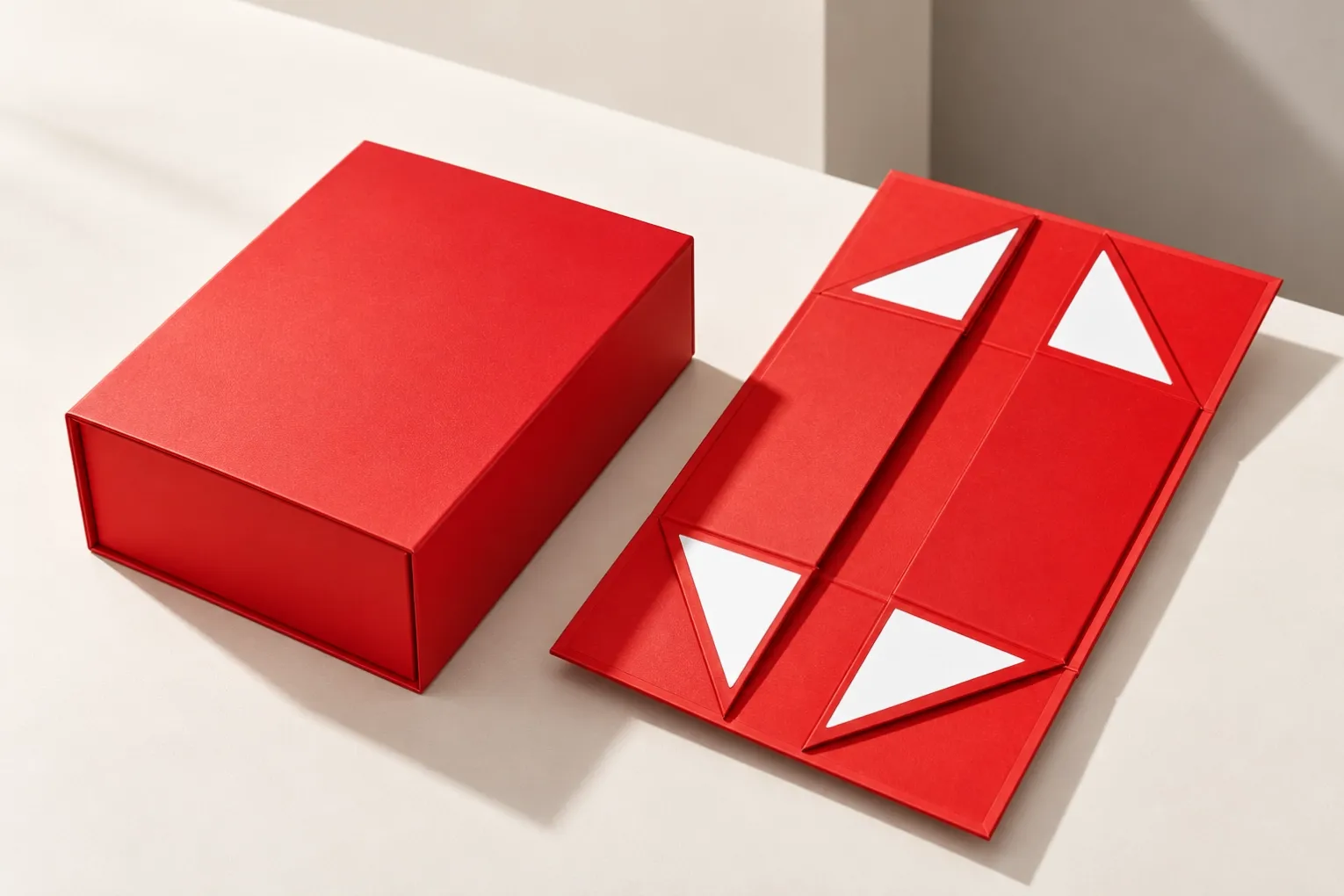
During quotation review, a packaging buyer can compare identical box dimensions and materials while missing one operational difference: one proposal assumes collapsed packs assembled at the buyer’s line, while another includes forming or partial assembly before shipment. That hidden scope changes storage, labor, protection and quality responsibility. This guide helps procurement, packaging, warehouse and fulfillment teams choose a delivery state for a defined structure and workflow.
It applies when the buyer can describe the product, assembly steps and storage constraints; it is not a universal claim that flat packing lowers total cost or that assembled packaging is easier. You will leave with a responsibility map, sample-trial questions and like-for-like RFQ fields. The result supports a delivery-state decision, but it is not a freight calculation, labor guarantee, quotation or production approval.
When an undefined delivery state disrupts fulfillment
- Actor: A procurement team compares packaging quotations with warehouse and fulfillment colleagues responsible for product loading.
- Trigger: A proposal says only “packed in export cartons,” without defining the state in which each box will arrive.
- Evidence gap: The team lacks agreed assembly instructions, workstation time and an inspection standard for forming, locking or insert placement.
- Rework: Warehouse staff may have to improvise the sequence and rework inconsistent boxes while purchasing clarifies the quoted scope.
- Consequence: Additional labor, storage congestion or a delayed loading schedule can make the apparent unit-price comparison misleading.
- Decision: Define the supplier’s and buyer’s assembly steps, then trial the proposed delivery state with the intended packing team before award.
Define the delivery state precisely
“Flat-packed” can mean different things. A folding carton may arrive creased and glued along one seam but collapsed flat. A rigid box may be supplied fully set up, as separate lid and base components, or in an engineered foldable construction requiring assembly. A paper bag may arrive folded flat while its handles and reinforcements are already installed.
“Assembled” also needs detail. Does it mean fully erected but empty, partially formed, fitted with an insert, closed with protective tissue, or ready for the product? State which operations the supplier performs and which remain at the buyer’s warehouse.
Use Jeeli Packaging’s product range to identify the exact packaging structure before comparing delivery states. The same phrase cannot be applied identically to every carton, rigid box, bag or insert.
When flat-packed delivery may fit
Flat delivery can reduce the volume occupied by empty packaging for structures designed to collapse or ship flat. It may suit buyers with limited inbound freight capacity but sufficient warehouse organization, assembly space and trained packing labor.
The trade-off is that work moves downstream. Staff may need to open, square, lock, fold, tape or otherwise form the package consistently. The buyer must plan instructions, workstations, inspection and the time required per unit.
Flat delivery is not automatically appropriate for every structure. Some premium boxes are supplied set up; some foldable rigid constructions require adhesive strips or locking corners; some complex cartons need more controlled forming. Confirm the actual assembly sequence on a sample.
When pre-assembled delivery may fit
Pre-assembled packaging can reduce forming work at the packing line and may help standardize presentation when assembly is difficult. It can suit launch kits, lower-volume premium programs, locations without a dedicated forming station, or products that need inserts positioned before arrival.
However, erected packages occupy more volume and may need additional protection against crushing, rubbing or dust. Outer-carton configuration, nesting possibilities and internal protection become important. The buyer should compare total handling and storage assumptions rather than only the packaging unit price.
Pre-assembly can also shift responsibility. Define whether the supplier checks squareness, closure, adhesive areas, insert position and cosmetic condition before packing the empty boxes.
Compare the operational trade-offs
| Decision factor | Flat-packed or collapsed delivery | Pre-assembled delivery |
|---|---|---|
| Inbound and storage volume | Often lower for structures designed to ship flat | Often higher because empty volume is already formed |
| Buyer labor | More forming or assembly work remains | Less forming work may remain |
| Packing-line space | Needs an assembly area and work-in-process control | Needs storage and staging for larger empty packs |
| Consistency risk | Depends on instructions, training and assembly checks | Depends on supplier assembly and transport protection |
| Damage exposure | Flat panels need edge, surface and crease protection | Formed packs need crush, rub and shape protection |
| Sample question | Can staff assemble it repeatedly and correctly? | Does it arrive square, clean and ready for the agreed next step? |
These are directionally useful comparisons, not quantified savings. Actual carton dimensions, nesting, labor, packing density and transport route must be evaluated for the project.
Calculate the workflow, not only the carton volume
Map each touchpoint from receiving to finished shipment. For flat packaging, include unloading, storage, opening master cartons, forming, locking or gluing, inspection, product loading and disposal of protective materials. For assembled packaging, include larger storage locations, movement to the line, dust protection, inspection and product loading.
Ask operations to test the process with representative quantities. Measure only after the assembly method, workstation and quality standard are defined. A hurried trial by one experienced operator should not become a universal labor promise.
Warehouse layout matters too. A flat option can reduce shelf volume but create a new queue at assembly. An erected option can speed loading but consume aisles or staging space. The right decision balances both constraints.
Confirm which quality checks happen where
For flat cartons, approve crease behavior, panel alignment, tab engagement, glue-seam quality and the appearance after repeated assembly. Instructions should distinguish orientation and the correct order of folds.
For assembled packaging, define acceptable squareness, corner alignment, closure, adhesive cleanliness, insert placement and surface condition. The shipping pack should protect the agreed presentation through transport and storage.
In both cases, test with the actual product where feasible. A package can look correct while empty yet become difficult to close, lift or stack after loading.
Jeeli Packaging’s custom packaging manufacturing process provides context for connecting structure, sampling, production and packing decisions.
Separate delivery-state scope from overall quotation differences
Delivery state is one cost and workflow variable among many. Material, printing, finishing, quantity, tooling, packing and quality requirements also affect quotations. Do not attribute the entire difference between suppliers to flat versus assembled delivery.
The article Why Do Custom Folding Carton Quotes Vary So Much Between Suppliers? covers the wider quotation task. This guide owns the narrower question: which assembly and delivery responsibilities belong to the supplier and which belong to the buyer.
Sample the real packing method
A useful trial should include the proposed package, product, insert or accessories, assembly instructions, sealing method and outer-carton assumptions. Have the intended team complete the sequence rather than assessing the box only on a conference table.
For flat delivery, repeat the assembly to identify confusing folds, slow steps or visible variation. For assembled delivery, unpack several units from the proposed master-carton arrangement and inspect pressure marks, dust, rubbing and shape recovery.
Record which sample features are representative of bulk production. A hand-made prototype can demonstrate form and fit but may not prove production assembly speed or final transport behavior.
RFQ checklist for delivery state
Prepare these fields so supplier quotations describe the same scope:
- Packaging type, structure and finished internal and external dimensions
- Required delivery state: collapsed, partially assembled or fully erected
- Exact supplier-performed gluing, locking, insert placement or protective wrapping
- Buyer-performed assembly and sealing steps
- Quantity per inner pack, master carton and pallet if applicable
- Acceptable packing orientation and nesting method
- Surface, corner and dust-protection requirements
- Warehouse storage and packing-line constraints
- Product dimensions, weight and loading orientation
- Sample trial, assembly instructions and approval criteria
- Delivery destination and any carton-label requirements
Send this checklist through Jeeli Packaging’s contact page to request like-for-like delivery-state options. Include the proposed assembly responsibilities and packing format so the team can review the complete scope.
Frequently asked questions
Is flat-packed packaging always cheaper to ship?
Not always. Empty-pack volume may be lower, but actual cost depends on dimensions, packing density, protection, route, quantity and transport terms. Buyer assembly labor also remains outside the freight comparison.
Are folding cartons considered flat-packed if the side seam is glued?
They can be supplied glued and collapsed flat, but the exact state must be described. Confirm which seams are completed and which forming steps remain.
Can rigid boxes be delivered flat?
Some engineered foldable rigid structures can be supplied flat, while conventional set-up rigid boxes are different constructions. Review assembly method, appearance and sample performance for the proposed design.
What should an assembly sample prove?
It should demonstrate the intended forming sequence, fit, closure, appearance and repeatability under the buyer’s planned workflow. State any prototype features that differ from bulk production.
Should assembled packaging include the insert?
Only if the quotation and packing specification say so. Define whether inserts arrive fitted, packed separately, or installed by the buyer, and how their position is protected.
Make assembly responsibility visible in the RFQ
Flat-packed versus assembled packaging is a division of work, space and quality control. Map the packing workflow, test the sample with the intended team and use the RFQ fields above to compare the same scope. Then contact Jeeli Packaging with your product dimensions, desired delivery state and packing requirements to discuss a suitable structure.