
Buying Guides
FOB vs DDP for Custom Packaging: Which Shipping Term to Choose?
FOB puts ocean freight, import duty and clearance on you; DDP delivers a landed price to your door. How the costs differ, and which term fits your order size.
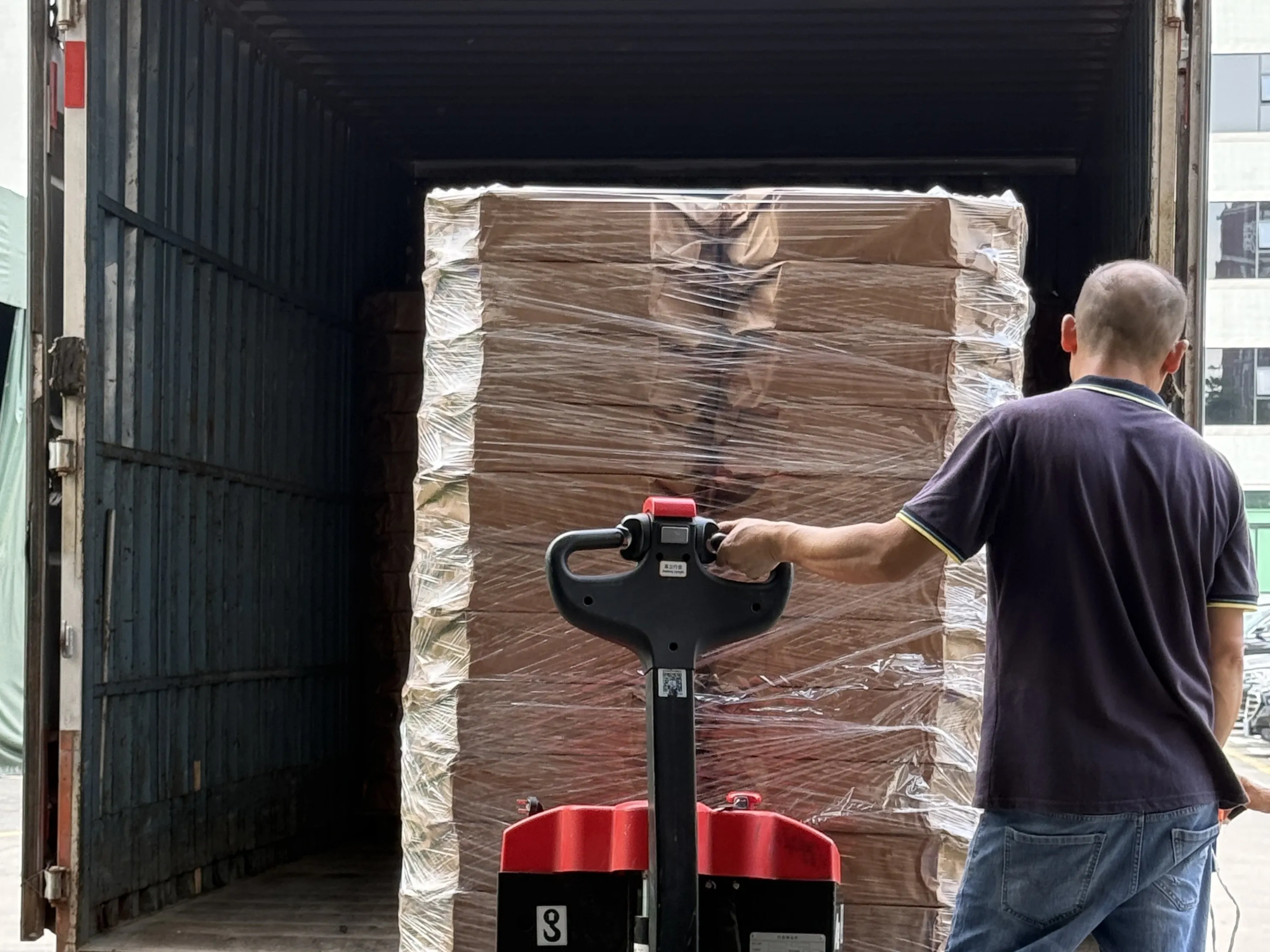
The shipping term decides who pays for everything that happens after the cartons leave the factory. FOB keeps freight, duty and import clearance on your side, and usually gives the lowest unit price. DDP bundles all of it into one landed price and hands the cartons to your warehouse with nothing left to pay.
For a first order under a few cubic metres, DDP is usually the simpler choice. For repeat orders where you already have a forwarder contract, FOB is cheaper and gives you control of the routing. The rest of this guide explains why, and how to check a quote before you accept it.
What does FOB actually include?
FOB means Free On Board at a named port, quoted as FOB Shenzhen or FOB Yantian under Incoterms 2020. We produce, pack, palletise, truck the goods to the port, clear them for export and load them on board. Your risk starts once the container is loaded; from that moment ocean freight, insurance, destination charges, import duty, customs clearance and the final delivery are yours.
- Production, printing, finishing and inspection: included in FOB
- Export cartons, pallets and stretch wrap: included in FOB
- Trucking to Shenzhen, Yantian or Shekou: included in FOB
- Export declaration and shipping documents: included in FOB
- Loading on board: included in FOB
- Ocean freight and marine insurance: yours under FOB
- Destination port charges, clearance, duty and delivery: yours under FOB
FOB is quoted per shipment but paid per unit, so ask for both numbers on the same sheet: unit price and total CBM. Printed packaging is light for its volume. Sea LCL freight is charged on volume with 1 CBM treated as 1,000 kg, and air freight uses 1 CBM as 167 kg, so for cartons and mailer boxes the chargeable weight is almost always the volume, never the scale.
What does DDP include that FOB does not?
DDP means Delivered Duty Paid, and it names a destination rather than a port: your warehouse, a 3PL, or an Amazon fulfilment centre. Under DDP we pay ocean or air freight, insurance, destination port charges, import clearance, duty and the final truck, so the figure on the quote is the figure that lands at your door.
The detail that catches buyers is the importer of record. Goods entering a country need a legal importer, and under DDP that is either the freight agent we book through or your own company, depending on the destination and the shipment size. Ask which one applies before you approve the order, because it affects who can reclaim import VAT and who carries compliance responsibility.
- Freight, insurance and destination charges: inside the DDP quote
- Import clearance and duty: inside the DDP quote
- Delivery to the named address: inside the DDP quote
- Unloading at your site: yours unless agreed separately
- Import VAT or sales tax recovery: depends on who is the importer of record
Where the cost actually differs between FOB and DDP
The product cost is identical under both terms. Everything else shifts, and the amount depends on volume, destination and how well your forwarder is contracted.
- Unit price and tooling: identical, quoted the same way under both terms
- Ocean freight: your forwarder rate under FOB, our consolidated rate under DDP
- Duty: paid by you at destination under FOB, bundled into the quote under DDP
- Destination port charges: billed by your agent under FOB, absorbed under DDP
- Insurance: optional and arranged by you under FOB, included under DDP
- Paperwork and entry filing: your broker under FOB, ours under DDP
In our experience with printed cartons, below roughly 5 CBM a DDP quote usually lands within a few percent of FOB plus a forwarder minimum, which is why small first orders often ship DDP. Above 15 CBM, a buyer with a contracted freight rate will usually beat DDP on the freight line alone, and the gap widens as volume grows.
Which term should you choose?
Match the term to the order, not to the price on the first page of the quote. The list below covers the situations we see most often.
- First order under 5 CBM, no import entity set up: DDP
- Repeat orders with your own forwarder contract: FOB
- Delivery to a 3PL or Amazon fulfilment centre: DDP to that address, after checking appointment rules
- In-house customs team with duty deferment: FOB
- Several SKUs from two suppliers arriving together: DDP, so both shipments consolidate into one delivery
- Urgent restock under 200 kg: air DDP, where speed outweighs the per-kilo cost
- Buyer who must insure separately or control the carrier: FOB
- Price benchmarking before any shipment: FOB, because it compares cleanly between suppliers
What about CIF and EXW?
CIF looks similar to DDP because both quotes include freight, but the risk is different. Under CIF the seller pays cost, insurance and freight to the destination port, while risk still passes to the buyer when the goods are loaded on board. Import clearance, duty and usually destination handling stay with you, and the insurance cover is minimum-level unless you agree more.
EXW is the opposite extreme: you collect at our factory and handle export declaration as well as everything after it. The unit price looks lowest, but it only makes sense if you already have a forwarder operating in China who can file the export paperwork on your behalf.
How do you check a DDP quote is really DDP?
Most shipping disputes are not about the freight rate. They are about what the quote quietly left out. These checks take ten minutes and prevent almost all of them.
- Ask for the exact named place in writing: DDP plus your full delivery address, not DDP Shenzhen, which is a port term and not a door term
- Ask who is the importer of record, and whether duty is included or duty unpaid
- Ask for a line breakdown: freight, insurance, destination charges, clearance, duty, last mile
- Ask who pays demurrage and detention if the container waits at destination, because a missed delivery appointment can cost more than the freight
- Compare the charged CBM with your own carton calculation, since rounding up is common and it is charged as if it were cargo
- Ask for the HS code used; folding cartons and rigid boxes normally sit under HS heading 4819, but the final digits change the duty rate, so confirm with your broker
What should be on your shipping instruction?
Whatever the term, a complete instruction avoids re-quotes and delays. Send it with the purchase order rather than after production.
- Consignee, notify party and contact details that actually answer
- Delivery address with receiving hours and any booking requirement
- Incoterm and the named place, written out in full
- Carton marks, SKU labels and any retail-ready labelling rules
- Pallet specification: footprint, maximum height, heat-treated or plastic
- HS code and the declared value you want on the commercial invoice
- Documents required: commercial invoice, packing list, certificate of origin if applicable
- Insurance arrangement and the party responsible for claiming
Getting a shipping term onto your quote
We quote FOB Shenzhen as standard and DDP to your door when you want a single landed figure. Send the delivery address, the estimated volume in CBM and your target date together with the artwork, and we will price both options on one sheet so you can compare like for like. To see how an order moves from artwork approval to container loading, read our custom packaging manufacturing process. If the structure is still open, the custom folding boxes, custom mailer boxes and foldable rigid boxes pages cover the formats these terms apply to, and you can send your specification through the contact form for a quote with both terms.