Sep 23, 2026Blog
Hang Tag Artwork Checklist: 8 Things to Check Before Production
Use this hang tag artwork checklist to check bleed, hole position, QR codes, barcodes, colors and finishing before approving production.
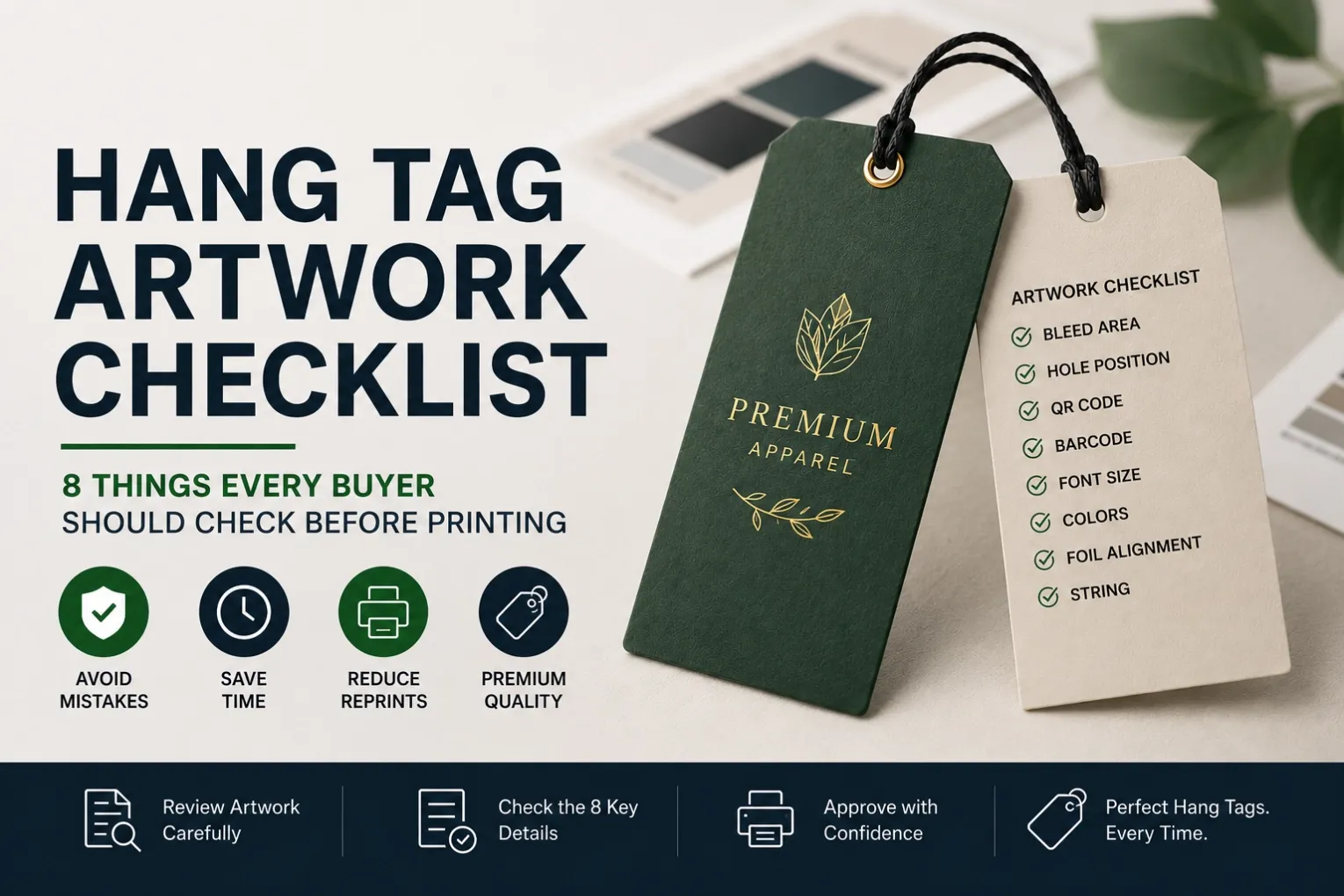
Approving your hang tag artwork may feel like the final step before production, but small details in the file can affect printing, cutting, finishing and how the finished tag works.
A design can look excellent on screen and still create problems once it is printed at actual size.
Before approving your artwork for sampling or bulk production, check these eight details.
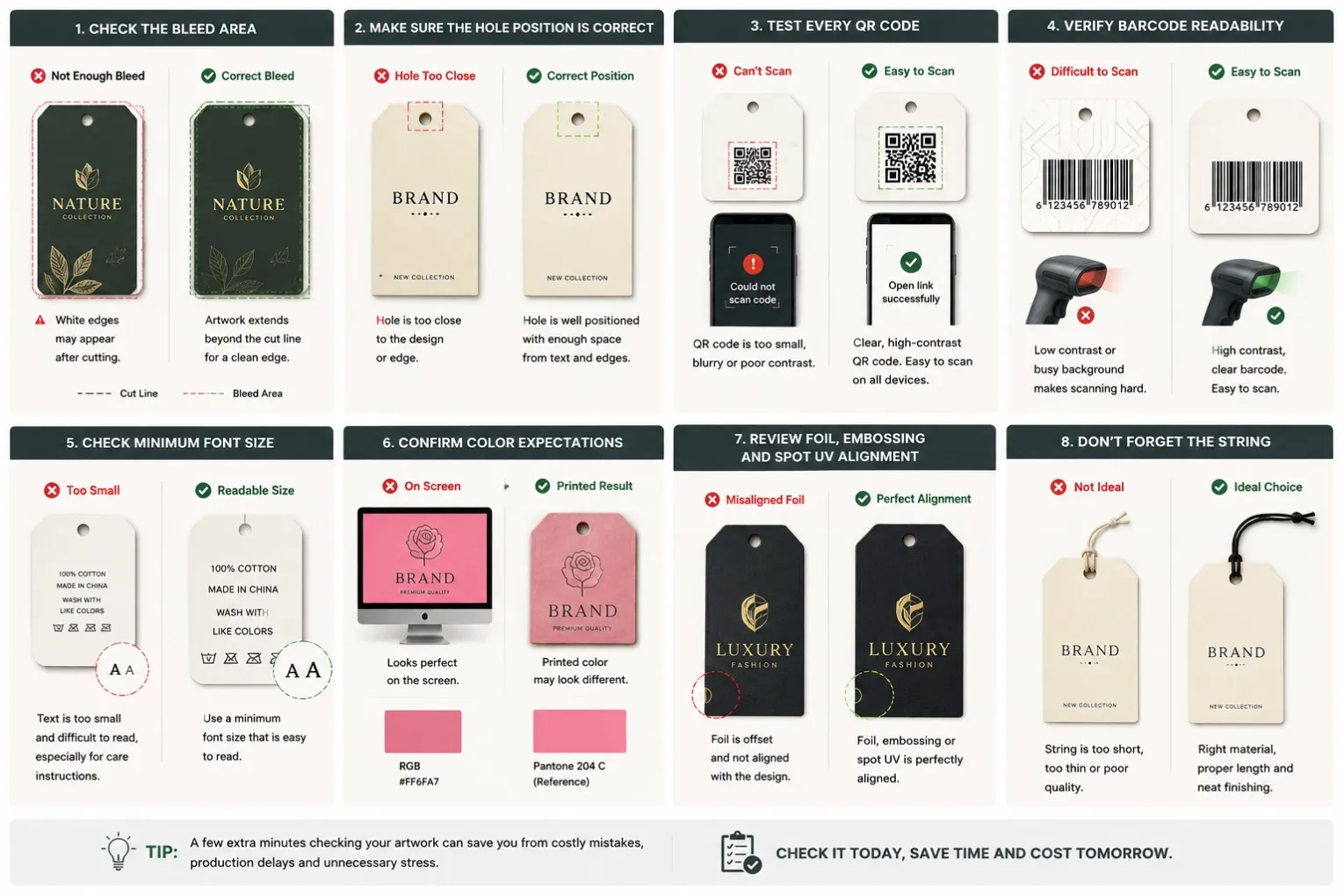
1. Check the Bleed Area
If printed color or artwork extends to the edge of the finished tag, the file normally needs bleed beyond the final cutting line.
Without sufficient bleed, normal cutting tolerance can leave an unwanted unprinted edge.
Before approval:
- Confirm the required bleed with your supplier
- Extend background colors and images into the bleed area
- Keep important text and logos away from the cutting edge
- Make sure the final trim size is clearly defined
Do not assume the bleed requirement is identical for every supplier or production method. Confirm it before submitting the final file.
2. Confirm the Hang Hole Position
The hole is part of the design, not something to add after the artwork is finished.
Check whether the proposed hole could interfere with:
- Your logo
- Small text
- QR codes
- Barcodes
- Foil stamping
- Embossing or debossing
- Other important graphic elements
Also consider the hole diameter, distance from the edge, paper thickness and whether an eyelet will be added.
If you are still deciding the overall dimensions and hole position, our clothing hang tag size guide explains how tag size, artwork and attachment requirements work together.
3. Test QR Codes at Actual Size
Do not evaluate a QR code only from an enlarged artwork file on your computer.
Print the artwork at 100% actual size and scan the QR code using several phones.
Check:
- Whether it scans reliably
- Whether there is enough clear space around it
- Whether the contrast is sufficient
- Whether nearby graphics interfere with readability
- Whether the destination URL is correct
QR-code performance depends on more than physical dimensions, so actual-size testing is more useful than relying on one universal minimum size.
4. Check Barcode Readability
If the hang tag contains a retail or inventory barcode, test it before production.
Potential issues include:
- Insufficient contrast
- Artwork behind the barcode
- Incorrect proportions
- Insufficient clear space
- Printing or finishing that reduces readability
Where the barcode is operationally important, test the final artwork using the scanning system relevant to your application.
5. Review Small Text at Finished Size
Text that looks perfectly readable while zoomed in on screen can become difficult to read once printed at the actual tag size.
Pay particular attention to:
- Product information
- Material information
- Country-of-origin text, when applicable
- Website addresses
- Social information
- Care or product instructions
- Other small mandatory or brand-specific content
Instead of relying on one universal minimum font size, print the design at actual size and evaluate readability.
If too much information has been placed on one small tag, consider increasing the dimensions, simplifying the content or dividing the information between multiple tags.
6. Define How Important Brand Colors Should Be Produced
Colors displayed on a monitor should not be treated as an exact representation of the final printed result.
If a particular brand color is important, make that requirement clear before production.
Depending on the project, this may involve:
- Providing a Pantone reference
- Supplying an approved physical color reference
- Reviewing a printed sample
- Confirming the selected printing process
Paper color, paper surface, ink and finishing can all influence the final appearance.
For important colors, define the reference rather than approving them only from a screen.
7. Check Foil, Embossing and Spot UV Layers
Special finishes need to work with the artwork and material.
For foil stamping, embossing, debossing or spot UV, check:
- Position of the finishing area
- Size of small details
- Relationship to printed graphics
- Distance from cutting and hole positions
- Suitability of the selected paper
- Expected registration tolerance
Avoid assuming that separate printing and finishing processes will align with mathematical perfection.
Instead, discuss the acceptable visual result with your supplier and review a physical sample when the alignment is especially important.
For deeper recessed effects, our guide to deep debossed hang tags explains why paper and artwork should be considered together.
8. Confirm the String and Attachment
The string is part of the finished hang tag presentation.
Before production, confirm:
- String or cord material
- Color
- Length
- Thickness
- Knot or attachment method
- Eyelet, if required
- Plastic or metal seal, if used
The attachment should suit both the tag and the garment.
A heavy cord may work well with denim or outerwear but feel oversized on a lightweight garment.
One More Check: Print the Entire Artwork at 100% Size
After reviewing the eight individual items, print the complete tag artwork at actual size.
Cut it approximately to the finished dimensions and place it against the garment.
Then check the whole design rather than individual elements:
- Does the logo feel correctly proportioned?
- Is the small text readable?
- Does the QR code scan?
- Is the barcode usable?
- Does the hole position look balanced?
- Is there enough space around the finishing areas?
- Does the tag feel appropriate for the garment?
This simple step can reveal problems that are difficult to notice on a large computer screen.
What Should Be Confirmed on the Physical Sample?
Artwork approval and sample approval are not the same thing.
Once a physical sample is available, review:
- Finished size
- Paper and thickness
- Printed color
- Cutting
- Hole position
- Foil stamping
- Embossing or debossing
- Spot UV, if used
- String and accessories
- Front-to-back alignment
- Overall appearance on the garment
If something differs from your expectation, identify whether the issue comes from the artwork, material, printing, finishing or construction before approving bulk production.
Final Thoughts
Good hang tag artwork is not only about creating an attractive layout.
It also needs to work with the actual printing, cutting, finishing and attachment processes used to produce the tag.
Before approving production, check:
bleed → hole → QR code → barcode → text → color → finishing → string
Then review the complete design at actual size.
If you are preparing custom hang tags, send us your artwork, finished size, quantity, material preference and finishing requirements. We can review the production details before sampling.