
Sep 24, 2026Blog
120 GSM vs 180 GSM Kraft Paper Bags: Which One Do You Actually Need?
Not sure whether to choose 120gsm or 180gsm kraft paper bags? Learn how paper weight affects pricing, strength, shipping costs, and why specifying GSM helps you receive accurate quotations.
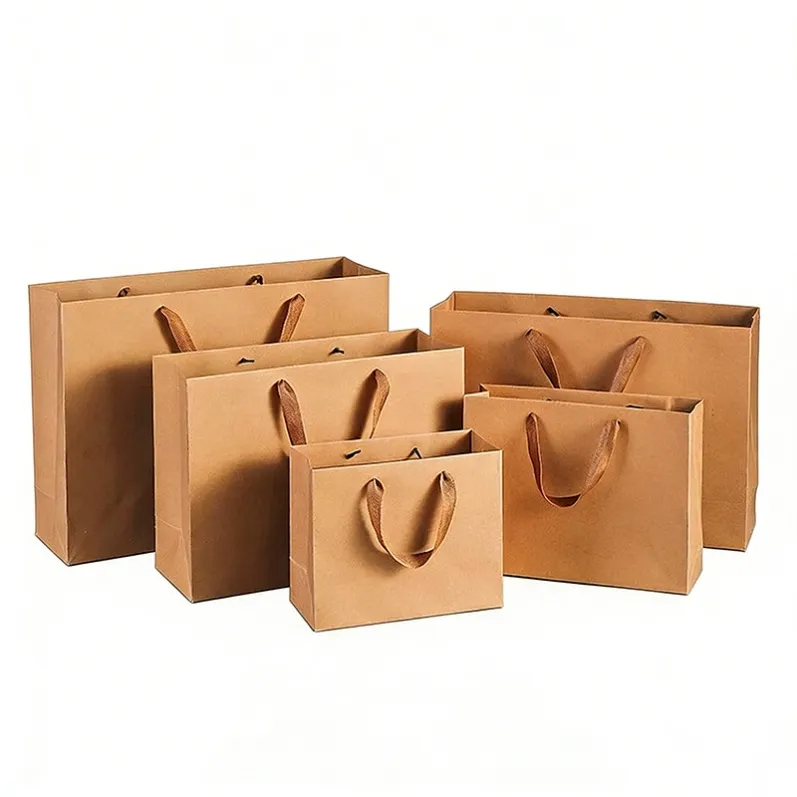
If you've ever requested quotations for custom kraft paper bags, you may have noticed something confusing:
You send the same bag size to several suppliers, but the prices can still be quite different.
One reason is often the paper weight, or GSM.
A supplier quoting 120gsm kraft paper and another quoting 180gsm kraft paper are not necessarily quoting the same packaging specification.
But does that mean 180gsm is always better?
No. The right GSM depends on the bag size, product weight, paper type, handle structure and the overall packaging requirement.
What Does GSM Mean?
GSM stands for grams per square meter. It describes the weight of the paper per square meter.
For the same type of paper, a higher GSM generally means more paper material is being used. It may also feel thicker or more rigid, but GSM alone does not tell you exactly how strong a finished paper bag will be.
The final performance also depends on factors such as:
- Paper type and fibre characteristics
- Bag dimensions
- Product weight
- Handle type
- Handle reinforcement
- Bottom reinforcement
- Bag construction
This is why choosing a paper bag should not be based on GSM alone.
120 GSM Kraft Paper Bags
120gsm kraft paper is commonly considered when the product is relatively light and the bag does not require a particularly rigid feel.
Depending on the bag size and construction, it may be suitable for products such as:
- Clothing
- Lightweight cosmetics
- Accessories
- Small retail products
- Lightweight gifts
One advantage of using a lighter paper is that it can help control material cost and finished packaging weight.
However, suitability should still be checked against the actual bag dimensions and expected load. A larger bag carrying a heavier product may require a different paper specification or additional reinforcement.
180 GSM Kraft Paper Bags
180gsm kraft paper uses more paper material and generally provides a more substantial feel than 120gsm of the same paper type.
It may be considered when:
- The bag is relatively large
- The packed product is heavier
- Greater rigidity is preferred
- The brand wants a more substantial hand feel
- The structure requires additional support
But 180gsm should not automatically be treated as the "premium" or "strongest" choice.
A well-designed bag using a lighter paper may perform better than a heavier-paper bag with unsuitable handles, insufficient reinforcement or an inappropriate structure.
120 GSM vs 180 GSM: What's the Real Difference?
Factor | 120 GSM | 180 GSM |
|---|---|---|
Paper weight | Lighter | Heavier |
Material usage | Lower | Higher |
Hand feel | Generally lighter | Generally more substantial |
Rigidity | Depends on paper and structure | Usually greater with the same paper type |
Packaging weight | Lower | Higher |
Cost | Often lower | Often higher |
Best use | Depends on product and bag structure | Depends on product and bag structure |
The important point is that GSM should be compared together with the paper type, bag dimensions and construction.
Two bags with the same GSM can still perform differently if they use different papers or structures.
Why Does GSM Affect the Quotation?
Paper weight affects how much material is required to manufacture the bag.
For example, if one supplier calculates your quotation using 120gsm paper while another uses 180gsm, the two prices are based on different material specifications.
That makes the quotations difficult to compare directly.
This is one reason buyers sometimes receive noticeably different prices even when they send suppliers the same bag dimensions.
If you want to understand this issue in more detail, see our guide on why suppliers can't give an accurate kraft paper bag quote without GSM.
Is Higher GSM Always Better?
No.
Choosing a higher GSM than necessary can increase:
- Material usage
- Unit cost
- Finished packaging weight
- Shipping weight
At the same time, choosing paper that is too light for the bag dimensions and expected load may result in a bag that does not provide the desired structure or presentation.
The goal is therefore not to select the highest GSM available.
It is to select a suitable paper specification for the actual product and bag design.
Don't Look at GSM Without Looking at the Handles
The paper itself is only one part of the finished bag.
When the bag will carry heavier products, the handle system also needs to be considered.
Important details include:
- Handle material
- Handle thickness
- Handle attachment method
- Reinforcement around the handle area
- Bottom reinforcement
- Finished bag dimensions
- Expected product weight
For heavier products, simply increasing the paper GSM may not solve a weakness elsewhere in the structure.
What Information Should You Give Your Supplier?
To receive a more meaningful quotation, provide more than just the bag dimensions.
Useful information includes:
- Finished bag size
- Product type
- Approximate product weight
- Expected quantity
- Preferred paper type
- Preferred GSM, if already known
- Handle type
- Printing requirements
- Finishing requirements
- Delivery destination
If you do not know the appropriate GSM, provide the product and usage information first and ask the supplier to recommend a suitable starting specification.
120 GSM or 180 GSM: Which Should You Choose?
There is no single GSM that is right for every kraft paper bag.
120gsm may be sufficient for some lightweight retail applications, while 180gsm may be more appropriate when a larger bag, heavier product or more substantial feel is required.
In other cases, a specification between these two weights may be more suitable.
The decision should be based on:
Product → Weight → Bag Size → Paper Type → Structure → Handles → Reinforcement → GSM
rather than choosing GSM first and trying to make the rest of the bag fit around it.
Before Approving Bulk Production
For projects where carrying performance is important, confirm the complete bag specification before bulk production.
A physical sample can help you evaluate:
- Paper feel and rigidity
- Finished dimensions
- Handle attachment
- Bottom construction
- Printing appearance
- Overall presentation
- Performance with the intended product
This is especially useful when comparing different GSM options because the number alone does not show how the finished bag will actually feel and perform.
Need Help Choosing the Right GSM?
If you're unsure whether 120gsm, 180gsm or another paper weight is suitable, send us your bag dimensions, expected product weight, quantity and printing requirements.
We can review the project together with the paper, handle and bag structure rather than selecting GSM in isolation.