
Sep 23, 2026Blog
Why Does a Mailer Box Feel Flimsy? 7 Factors Buyers Should Check
Why does a mailer box feel flimsy? Learn how flute, paper, box size, structure and product weight can affect the strength of a corrugated mailer box.
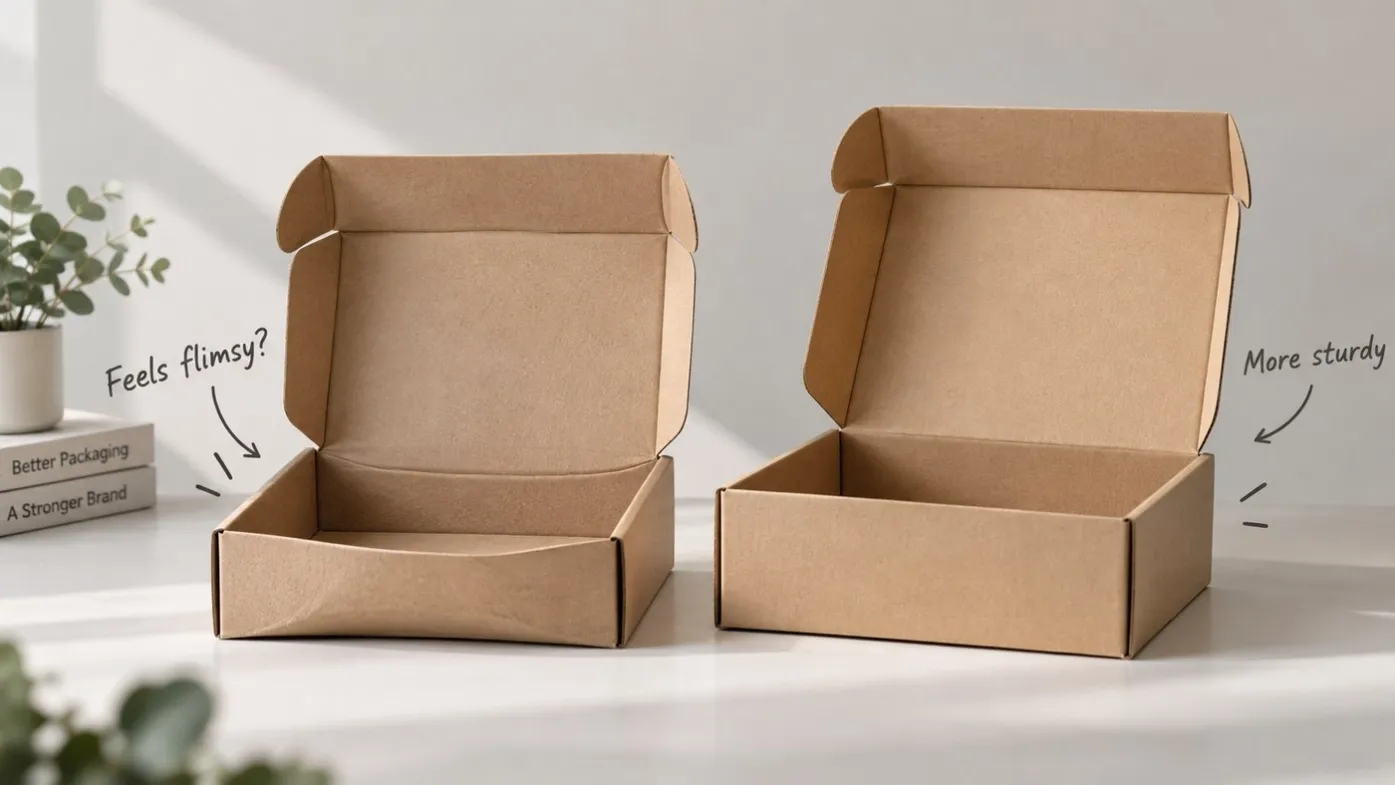
A mailer box can look perfectly fine in the artwork or photos, but the physical sample may give a buyer a different impression:
“Why does the box feel softer than expected?”
The first reaction is often to ask for thicker corrugated board.
Sometimes that is the right solution. But not always.
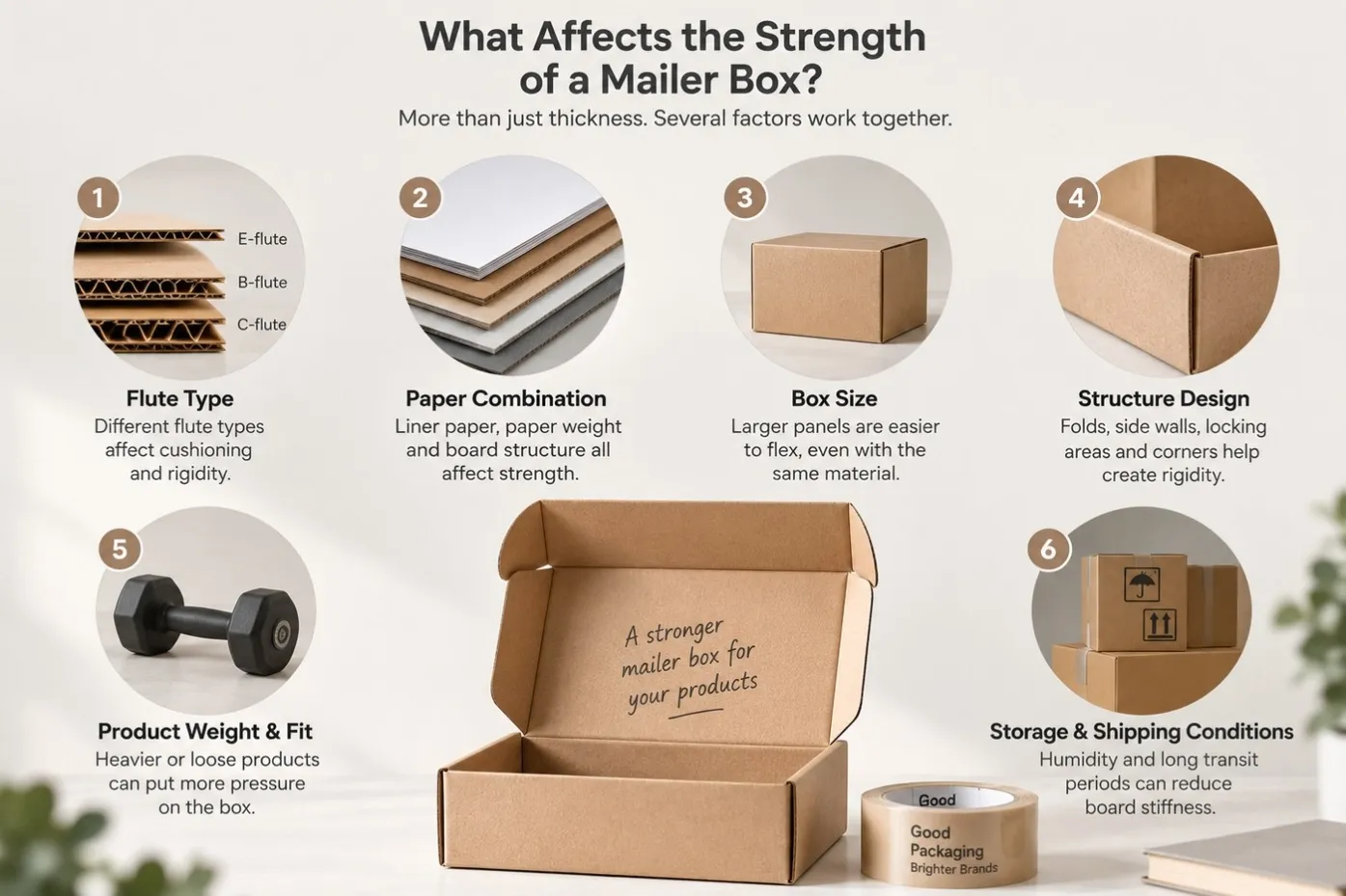
A mailer box gets its rigidity from more than just board thickness. Flute type, paper combination, box dimensions, structural design, product weight and even storage conditions can all affect how the finished box feels.
Before changing the material, it is worth finding out what is actually causing the problem.
1. Is the Flute Suitable for the Product?
Flute type is one of the first things to check.
A finer flute can provide a compact structure and a smoother surface for printing, while a thicker flute may provide more cushioning and rigidity.
But there is no single flute that works best for every mailer box.
If you are comparing common flute options, our E-Flute vs B-Flute guide explains how flute choice can affect mailer box thickness, rigidity and presentation.
The choice should depend on:
- product size
- product weight
- box dimensions
- protection requirements
- printing requirements
- packing and shipping conditions
A board that works well for a small, lightweight product may feel too flexible when the same specification is used for a much larger box.
So the question should not simply be:
“Which flute is stronger?”
A better question is:
“Which flute is suitable for this product and this box?”
2. Board Thickness Does Not Tell the Whole Story
That is because corrugated board is a combination of liner paper and fluting medium. The paper combination also affects the performance of the finished board.
Differences may come from:
- liner paper
- paper weight
- fluting medium
- fibre composition
- board combination
- moisture condition
This is why specifying only “E-flute” or another flute type may not be enough when strength is important.
The complete board specification should be considered.
3. Is the Box Larger Than the Material Can Comfortably Support?
Box size is easy to overlook.
Imagine using the same corrugated board for a small accessory box and a much larger apparel box.
Even though the material is the same, the larger panels have more area to flex when pressed.
As a result, the larger box may feel softer or less rigid.
This does not automatically mean the material is poor quality.
It may simply mean the relationship between:
Board + Box Size + Structure
needs to be adjusted.
When box dimensions increase, the board specification or structural design may also need to change.
4. Is the Structure Providing Enough Support?
Material is only one part of the box.
The folding structure itself also contributes to rigidity.
Mailer boxes rely on folded side walls, locking tabs, corners and overlapping panels to create their finished shape.
If these areas do not fit or lock properly, the assembled box can feel loose even when the corrugated board itself is acceptable.
For example:
- side walls may not sit firmly
- locking tabs may not engage properly
- large panels may flex
- corners may lack support
- tolerances may be too loose
This is why it is better to evaluate the assembled box rather than judging only a flat sheet of corrugated board.
5. Is the Product Too Heavy — or Moving Inside the Box?
The product inside the box changes everything.
A mailer box suitable for lightweight clothing or accessories may not be suitable for a glass bottle, electronics product or heavier gift set.
Product weight can put additional pressure on:
- the bottom
- side walls
- corners
- locking areas
Product fit is also important.
If there is too much empty space, the product can move during handling and place additional stress on the packaging.
In this situation, the solution may not simply be thicker board.
6. Has Humidity Affected the Corrugated Board?
Paper-based packaging reacts to its environment.
Corrugated board can absorb moisture in humid conditions. When this happens, it may feel softer and lose some stiffness.
This can become relevant during:
- factory storage
- warehouse storage
- sea transportation
- long transit periods
- storage in humid climates
A sample checked immediately after production may therefore feel different from boxes that have spent a long time in a humid environment.
For export packaging, storage and shipping conditions should be considered together with the board specification.
7. Are You Testing the Empty Box or the Actual Packaging?
This is one of the most useful checks during packaging development.
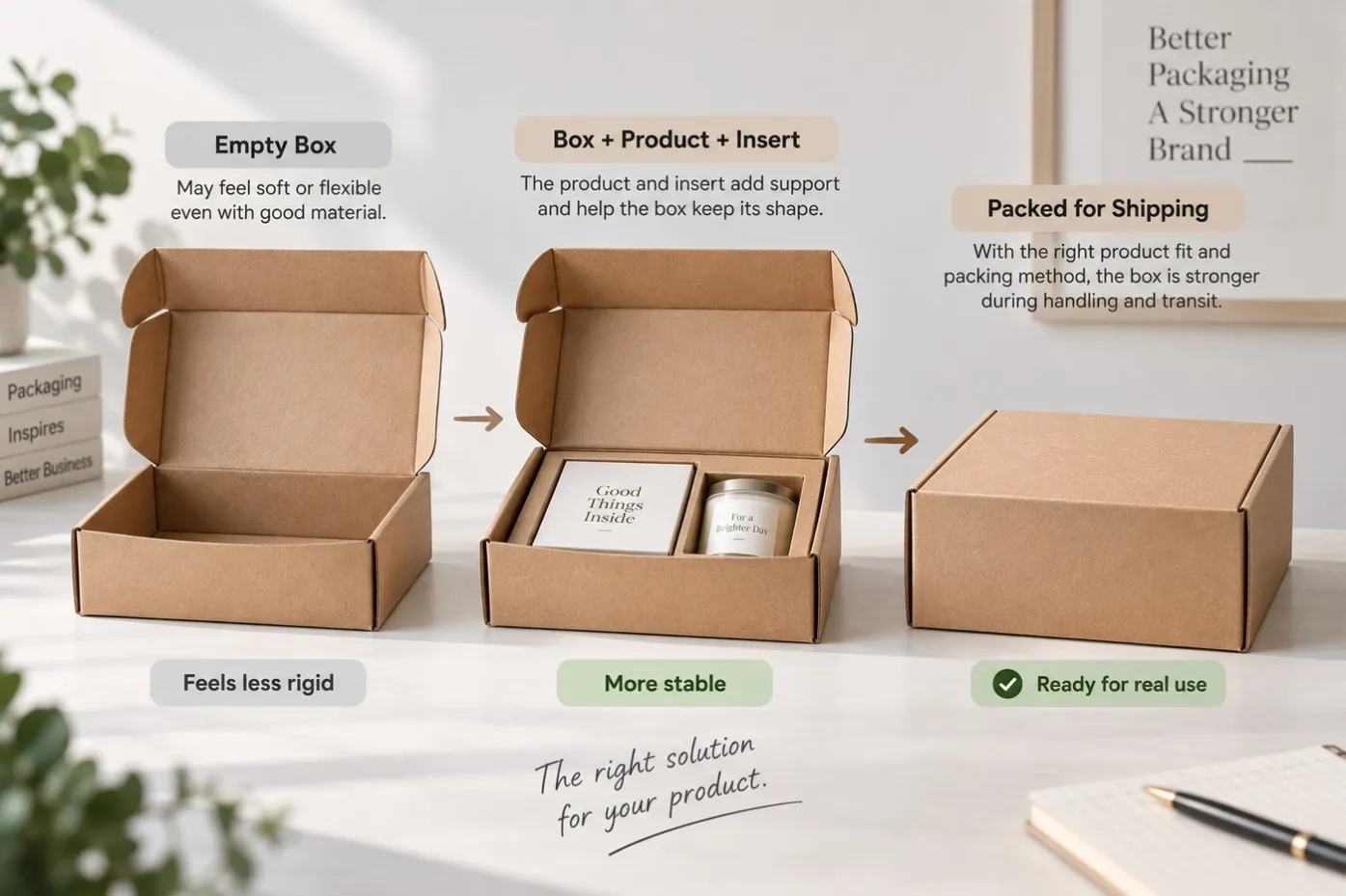
Buyers sometimes press or squeeze an empty mailer box and decide that it feels too soft.
But the real packaging condition is usually:
Box + Product + Insert + Packing Method
Once the actual product is inside, the way the box performs can change.
The opposite can also happen: an empty box may look strong, but a heavy or poorly fitted product may cause deformation after packing.
Before bulk production, it is better to evaluate the assembled sample with the actual product whenever possible, especially when product weight, fit or shipping protection is a concern.
Should You Just Use Thicker Corrugated Board?
Not automatically.
A thicker board may improve rigidity, but it can also affect:
- material cost
- folding
- finished box dimensions
- printing appearance
- packing volume
- shipping volume
Before increasing the material, first identify why the current box feels weak.
If the real problem is a large unsupported panel, loose locking structure or poor product fit, simply increasing board thickness may not be the most efficient solution.
What Should You Tell Your Packaging Supplier?
When developing a custom mailer box, provide your supplier with more than the finished box dimensions.
Useful information includes:
- Product dimensions
- Product weight
- Finished box dimensions
- Preferred box structure
- Current board or flute specification, if known
- Whether an insert will be used
- Printing and finishing requirements
- Packing method
- Shipping method and destination
With this information, the supplier can evaluate the box as a complete packaging system rather than recommending a material based only on thickness.
Final Thoughts
When a mailer box feels flimsy, “use thicker board” may be the obvious answer, but it is not always the right one.
The cause may come from the flute, paper combination, box dimensions, structure, product weight, fit or storage conditions.
A better way to evaluate the problem is:
Product → Board → Box Size → Structure → Insert → Packing → Shipping
The goal is not simply to make the box thicker.
It is to choose a material and structure that provide the protection the actual product needs without adding unnecessary material, packing volume or cost.