
Buying Guides
Planning a Multi-Size Wholesale Gift Box Order
How to plan custom gift boxes wholesale across sizes: tooling, price per size, call-off schedules and reorder consistency.
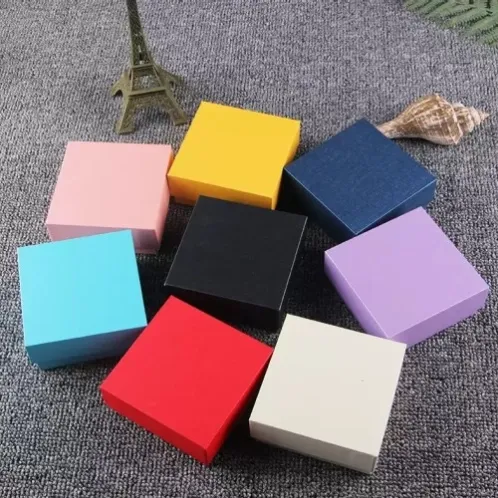
Most gifting programmes do not need one box — they need a family of them. A candle brand wants a single-jar box and a three-jar set; a fashion label wants scarf, sweater and accessory sizes. Multi-size orders are quoted and produced differently from single-size runs, and the planning decisions are worth making before the quote, not after.
Step 1: Decide Which Sizes Are Real
Every size in a wholesale gift box order carries its own setup: cutting die, wrapping or print setup, and (if used) its own insert tooling. The unit price per size at 500 units across five sizes is therefore worse than 500 units of one size — but the total programme cost is usually lower than ordering five sizes as five separate jobs, because setup work is grouped into one production slot.
The sizes worth keeping are the ones with distinct jobs: a single-item box, a set box, and possibly a shipping-ready version. Two sizes that differ by 8 mm are not two sizes; they are one size with slack. Consolidating near-duplicates is the cheapest cost reduction available on this kind of order.
Step 2: Understand How Price Per Size Builds Up
For each size, the quote is driven by four variables:
Board and wrapping paper — the material spec, shared across the family if you want a matched look.
Tooling per size — cutting die and any insert tooling; amortised into unit price at low volumes.
Decoration — foil, print or deboss; one setup if position and artwork scale consistently, more if each size needs its own plate.
Quantity per size — not total quantity. 2,500 boxes as 5 × 500 prices worse than 2,500 as 1 × 1,500 + 2 × 500.
A detail that surprises buyers: if the artwork is a centred logo, one foil die can sometimes serve several sizes; if the logo must scale with the box, each size needs its own die. Ask which case you are in before approving artwork.
Step 3: Plan the Delivery Schedule, Not Just the Order
Wholesale orders ship two ways: all at once, or as a call-off schedule — produced once, delivered in batches against your sell-through. Call-offs smooth cash flow and warehouse space, but they need agreement up front on storage time and moisture-safe warehousing. For seasonal programmes, the production date matters more than the order date: a December programme is quoted from its September sample approval, not its July enquiry.
Step 4: Lock Reorder Consistency
Luxury gift boxes wholesale is where reorder consistency matters most — a reorder six months later must match the approved sample in board, paper shade and foil colour. The mechanism is simple: the material specification is kept on file against your order, and every production batch is checked against the retained standard sample. Make sure that file exists before the first run; it is what makes the second order a repeat instead of a re-development.
Structure choice sits underneath all of this. Lid-and-base and book-style constructions dominate multi-size programmes because they share tooling logic across sizes; the two main structures are compared on our rigid lid and base box page, with the collapsible variant on the two-piece rigid box page.
What to Send for a Quote
Each size (L × W × H) and its quantity — honest per-size numbers, not just the total.
One shared material and colour spec, or the differences per size.
Decoration and whether the logo scales per size.
Insert requirements per size, if any.
Delivery: single shipment or call-off schedule, and the first delivery date.
If a first batch is needed to test the market before the full programme, that is a normal request — see how a small first order works before the MOQ. Seasonal variants build on the same logic; our holiday gift boxes page shows how a family of sizes is themed for a single season.