
Packaging Knowledge
Paper Bag Weight Capacity Guide | Load Limits by Size & Material
How much weight can a paper bag carry? Load limits by size, paper weight, handle type and reinforcement, plus what to test before a retail run.
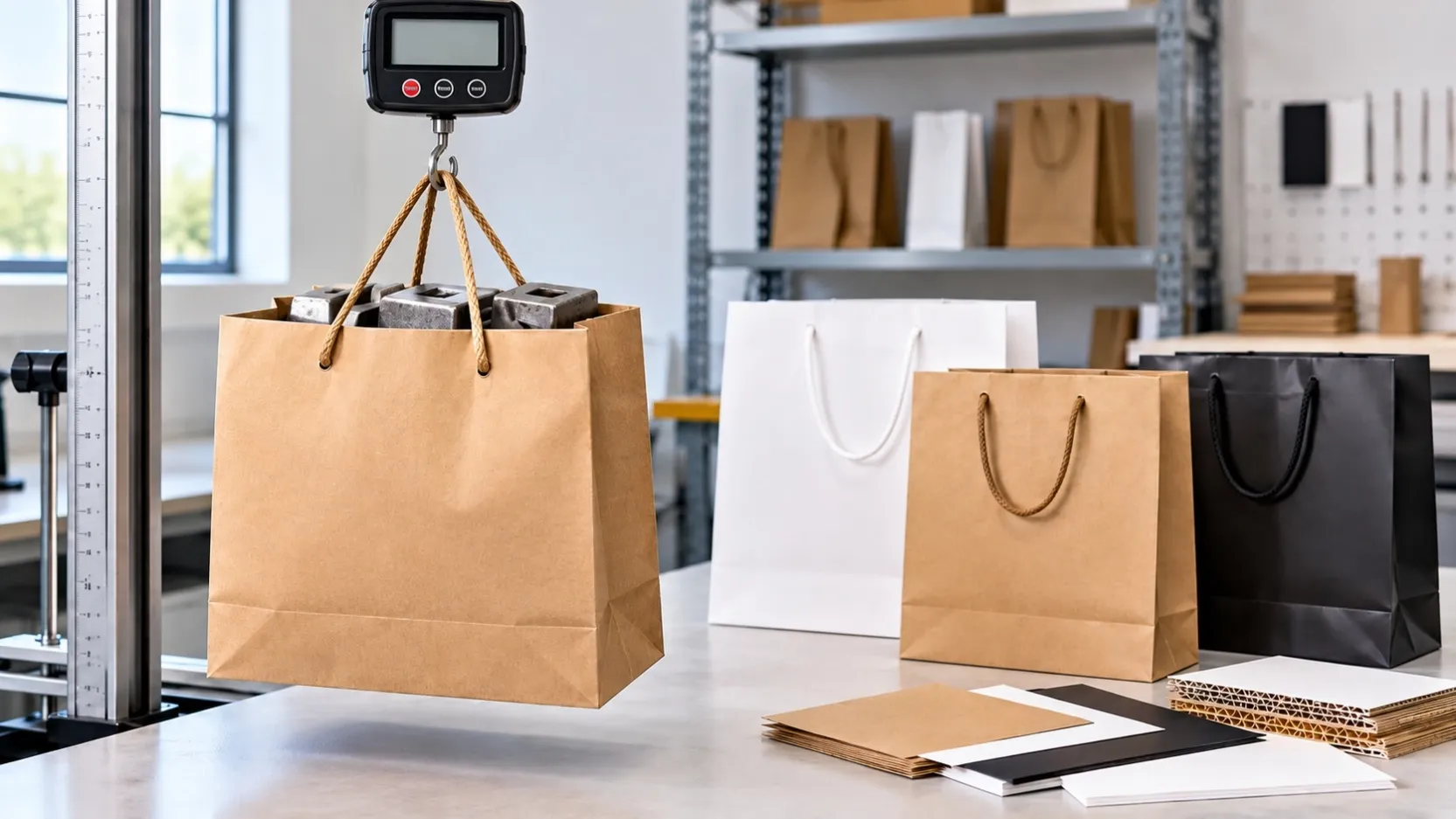
Choosing the right paper bag for your products isn't just about aesthetics—it's about ensuring your packaging can handle the load. A bag that tears in a customer's hands damages your brand reputation and creates unnecessary waste. This comprehensive guide breaks down paper bag weight capacity by material, construction, and design, helping you make data-driven packaging decisions.
For heavier retail products, a reinforced luxury paper bag with a patched handle area is usually the starting point for a quotation.
Disclaimer: The weight capacity data below is based on industry standards and typical manufacturing specifications. Actual capacity may vary depending on material quality, construction methods, environmental conditions, and usage. Always test samples with your specific products before placing bulk orders.
Understanding Paper Bag Strength: The Key Factors
Before diving into specific numbers, let's examine what determines how much weight a paper bag can hold:
1. Paper GSM (Grams per Square Meter)
GSM is the single most important factor in paper bag strength. Higher GSM means thicker, stronger paper:
GSM Range | Thickness | Typical Use | Weight Capacity |
80-100gsm | Thin | Lightweight retail, food service | 1-2 kg |
120-150gsm | Medium | Standard shopping bags | 3-5 kg |
180-250gsm | Thick | Heavy retail, grocery | 5-8 kg |
250-350gsm | Extra thick | Luxury bags, heavy items | 8-15 kg |
2. Handle Type and Attachment
The handle is typically the weakest point in a paper bag's load chain:
Handle Type | Attachment Method | Typical Capacity | Best For |
Twisted Paper | Glued through reinforced patch | 3-5 kg | General retail, medium loads |
Flat Paper | Glued to interior | 4-6 kg | Fashion retail, books |
Rope (Cotton/PP) | Knotted through reinforced holes | 5-10 kg | Luxury items, heavier products |
Die-Cut | Cut from bag body + reinforced | 2-4 kg | Light items, events |
Ribbon | Glued + reinforced | 3-5 kg | Gift packaging, cosmetics |
3. Bag Construction
- SOS (Self-Opening Square): Flat bottom with side gussets. Strongest structure for vertical loads.
- Pinch Bottom: Sealed V-bottom. Good for light to medium items.
- Rigid Construction: Board-mounted bottom and reinforced top. Handles the heaviest loads.
Weight Capacity by Bag Type
Standard Kraft Paper Bags (SOS Style)
Size (W×H×G) | 100gsm | 150gsm | 200gsm | 250gsm |
Small (18×23×9cm) | 2 kg | 3.5 kg | 5 kg | 6 kg |
Medium (25×30×12cm) | 3 kg | 5 kg | 7 kg | 9 kg |
Large (32×41×15cm) | 4 kg | 6 kg | 8 kg | 12 kg |
Extra Large (40×50×18cm) | 5 kg | 7 kg | 10 kg | 15 kg |
Luxury Paper Bags (Rope Handle)
Size (W×H×G) | 200gsm Art Paper | 250gsm + Lamination | 300gsm + Reinforced |
Small (20×25×10cm) | 4 kg | 6 kg | 8 kg |
Medium (28×35×12cm) | 6 kg | 8 kg | 12 kg |
Large (35×45×15cm) | 8 kg | 10 kg | 15 kg |
Laminated Paper Bags
Lamination adds significant strength and moisture resistance:
Base GSM | Gloss/Matte Lamination | Capacity Increase |
150gsm | + 20-30 micron film | +25-40% |
200gsm | + 20-30 micron film | +30-50% |
250gsm | + 20-30 micron film | +35-60% |
Real-World Load Examples
Here's what different bags can realistically carry in everyday scenarios:
Grocery Shopping
- Small kraft bag (150gsm): 2-3 cans of food, or 1 bottle of wine + bread
- Medium kraft bag (200gsm): 6-8 cans, or 2 wine bottles + produce
- Large kraft bag (250gsm): Full grocery run (10+ items, 8-10 kg)
Fashion Retail
- Medium luxury bag (250gsm + rope): 2-3 clothing items + accessories (5-7 kg)
- Large luxury bag (300gsm + reinforced): Multiple garments, shoes, heavy coats (10-12 kg)
Food Service
- Small grease-resistant bag (120gsm): Sandwich, chips, drink (1-2 kg)
- Large takeout bag (180gsm): 3-4 meal containers + drinks (4-5 kg)
Cosmetics & Beauty
- Small luxury bag (200gsm): 4-6 beauty products, perfume bottles (2-3 kg)
- Gift set bag (250gsm + insert): Curated set with 8-10 items (4-5 kg)
How to Calculate the Right Bag for Your Products
Step 1: Weigh Your Average Order
Calculate the typical weight of products going into one bag:
- Weigh 10 representative orders
- Use the 75th percentile (not the average) to ensure most orders are covered
- Add 20% safety margin
Step 2: Consider Product Shape and Distribution
- Concentrated weight (bottles, cans) creates more stress than distributed weight (clothing)
- Sharp edges require thicker paper or protective inserts
- Awkward shapes may need larger bags even if weight is low
Step 3: Factor in Customer Behavior
- Customers often overload bags beyond intended capacity
- Bags carried long distances need extra strength
- Reusable bags should be rated for 2-3x expected load
Step 4: Match Handle to Load
Expected Load | Recommended Handle |
Under 3 kg | Twisted paper or die-cut |
3-6 kg | Flat paper or ribbon |
6-10 kg | Rope (cotton or PP) |
Over 10 kg | Rope with reinforced board |
Common Weight Capacity Mistakes
1. Using GSM Alone
While GSM is important, construction quality matters just as much. A well-constructed 150gsm bag can outperform a poorly made 200gsm bag.
2. Ignoring Handle Weak Points
Most bag failures occur at handle attachment points. Reinforced patches and proper glue application are critical.
3. Not Testing with Actual Products
Always test bags with your actual products before ordering in bulk. Simulate real-world conditions: lifting, carrying, and environmental factors.
4. Forgetting Environmental Factors
- Humidity weakens paper fiber strength by 10-30%
- Cold temperatures can make paper more brittle
- Direct sunlight can degrade paper over time
Industry Standards and Testing Methods
Professional packaging manufacturers test bag strength using standardized methods:
Drop Test
Bags are filled to rated capacity and dropped from 1 meter. Pass rate should be 95%+.
Suspension Test
Filled bags are hung for 24 hours to test handle attachment and paper creep.
Repeated Use Test
Bags are filled, emptied, and refilled 10+ times to simulate reusable scenarios.
Environmental Testing
Bags are tested at various humidity (40-90% RH) and temperature (0-40°C) levels.
Sustainability vs. Strength: Finding the Balance
Many brands worry that eco-friendly bags won't be strong enough. The good news: modern sustainable options perform excellently:
Material | GSM | Capacity | Eco-Credentials |
Recycled Kraft | 150gsm | 4-5 kg | 100% recycled, recyclable |
FSC-Certified Kraft | 180gsm | 5-7 kg | Sustainably sourced |
Cotton Fiber Blend | 200gsm | 6-8 kg | Biodegradable, strong |
Grass Paper | 150gsm | 3-4 kg | Low carbon footprint |
Weight Capacity Quick Reference Chart
Application | Recommended Specs | Expected Capacity |
Bakery / Cafe | 100gsm SOS, twisted handle | 1-2 kg |
Boutique Retail | 200gsm art paper, rope handle | 4-6 kg |
Grocery Store | 180gsm SOS, flat handle | 5-8 kg |
Wine & Liquor | 250gsm + lamination, rope | 8-12 kg (bottles) |
Department Store | 250gsm art paper, reinforced | 8-15 kg |
Gift Packaging | 200gsm + foil, ribbon | 3-5 kg |
E-commerce | 150gsm + print, self-seal | 2-4 kg |
Conclusion: Choose Strength with Confidence
Understanding paper bag weight capacity helps you select packaging that protects your products, satisfies your customers, and represents your brand professionally. When in doubt:
- Over-specify rather than under-specify — A stronger bag costs marginally more but prevents costly failures
- Always test before bulk ordering — Request samples and conduct your own load tests
- Consider the full customer journey — From checkout counter to home, your bag needs to perform
At Jeeli Packaging, we provide detailed load specifications for every bag style we manufacture. Our team can help you calculate the exact specifications needed for your products, ensuring your packaging performs flawlessly in real-world conditions.
Need help selecting the right bag strength for your products? Contact our packaging specialists for a free consultation and sample testing.
Related Articles: