
Why Your Black Paper Bag Looks Grey: Rich Black vs Regular Black for Packaging
Learn why black areas on paper bags and boxes look grey, and how rich black — the right CMYK mix, paper and finish — gives your packaging a deep, even black.
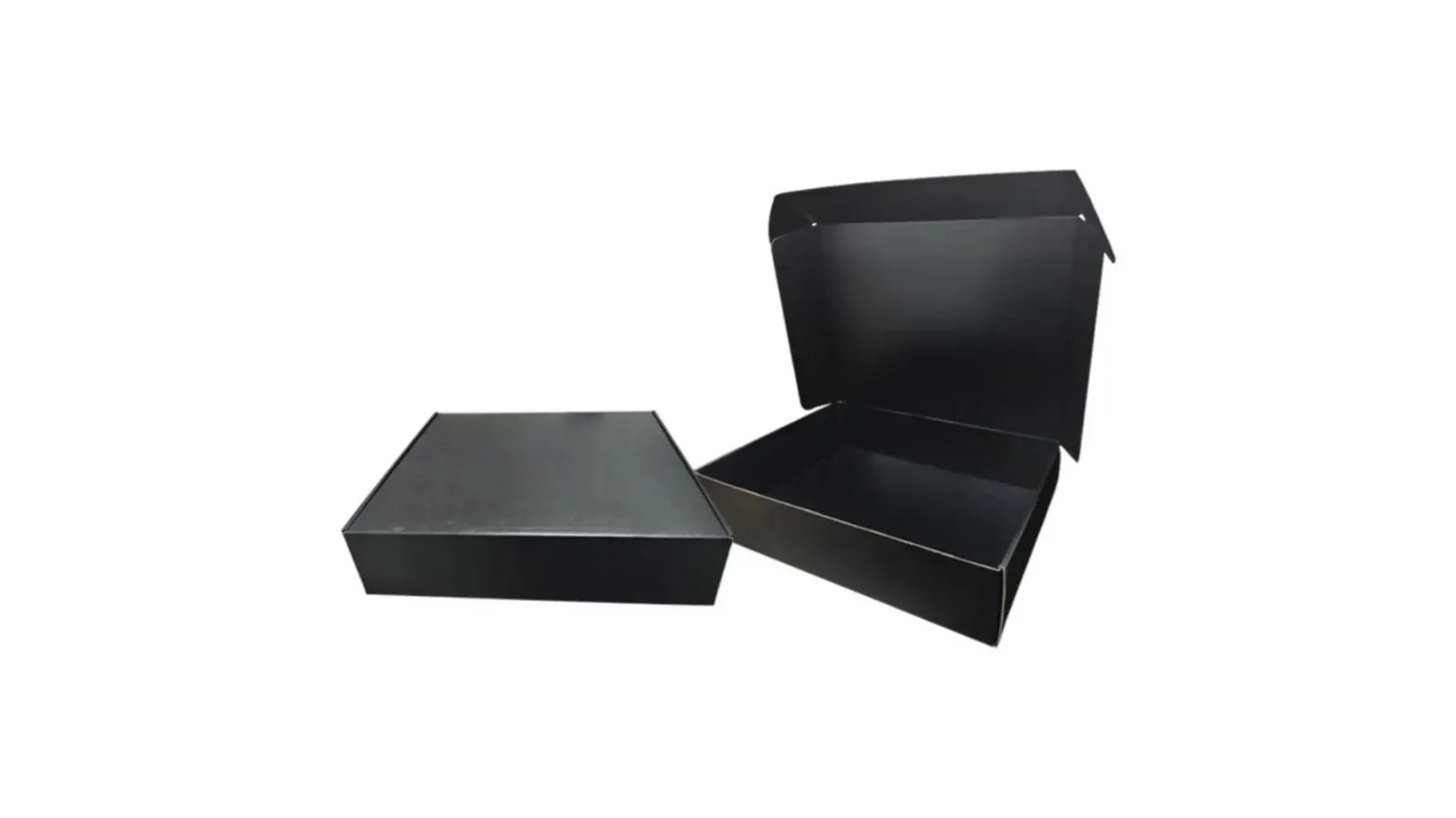
Your black paper bag looked perfect on screen: deep, solid and luxurious. Then the printed samples arrive, and the large black panels look grey, dusty or washed out — especially beside another black pack.
You are not imagining it, and the paper is not necessarily at fault. In most cases the cause is the black itself: the CMYK values in your artwork. A black that works beautifully for a headline can fail across a whole bag, while a black that fills a whole bag richly can ruin fine text. This guide explains regular black, rich black, and what to check before you approve a proof.
Why Large Black Areas Look Grey
A screen shows black by switching light off, so it costs nothing. Print does the opposite: it puts ink on paper, and the paper, the ink and the light in the room all shape what your eye sees. One layer of black ink is thin. On uncoated or lightly coated board it sinks in and leaves the paper texture showing. The result reads as dark grey, and the effect grows as the area gets larger.
Beside a foil stamp or a black-dyed board, a printed black has to work harder to look black — and any weakness in it is the first thing a customer notices.
Regular Black: C0 M0 Y0 K100
Regular black, also called plain black, uses only black ink: C0 M0 Y0 K100. Nothing else is printed underneath. With only one plate in play, small text stays sharp, thin lines stay clean, and there is no risk of colours underneath shifting out of register and giving a letter a coloured edge.
Its weakness is the same feature. Spread over a large panel, regular black often looks grey, uneven or slightly dusty, because one layer of ink is simply not enough for a dense, even result. That is why a large black bag in plain black can disappoint, even when the same file prints well at a smaller size.
Rich Black: Black with Colour Underneath
Rich black, also called strong black, adds cyan, magenta and yellow ink underneath the black. A common starting point is C60 M40 Y40 K100, which puts 240% total ink on the paper. Those colour layers fill the gaps a single black layer leaves, so the printed area looks deeper, denser and more even. Keep total ink below 300%, and ask your printer for its own limit, which is often in the 260–300% range. Too much ink can cause drying problems, marking and show-through.
Rich black is not one recipe. The right one depends on the board, the print process and the finish. Our guide to CMYK and Pantone printing explains how colour values are set and checked before you change a black.
Warm Black vs Cool Black
Changing the colour under the black changes its temperature. A warm black uses more magenta and yellow than cyan — for example, C40 M60 Y60 K100 — and suits luxury and beauty packaging. A cool black uses more cyan — for example, C70 M40 Y30 K100 — and suits tech and modern brands. Check the choice on a physical proof, because a warm or cool cast can be obvious in print.
Rich Black vs Regular Black at a Glance
| Feature | Regular Black | Rich Black |
|---|---|---|
| CMYK values | C0 M0 Y0 K100 | C60 M40 Y40 K100 |
| Total ink | 100% | 240% |
| Best for | Small text and thin lines | Large black areas |
| Main risk | Looks grey on large areas | Needs a total-ink limit |
Packaging Problems Black Makes Worse
Four issues come up again and again on black packaging.
White Cracking at Folds
Printed black cracks at folds, and every crack shows as a white line. Score lines, board choice and fold direction all matter, and a fold test on a real sample is the only reliable check.
Black-Dyed Paperboard
You can also start with board that is black through its fibres, instead of printing black onto white board. It stays black at cut edges and fold lines, which suits rigid boxes where the edge is part of the look. See our black paper bag case for a finished example, and ask for a board sample before you commit.
Matte vs Gloss Lamination
Matte lamination softens reflections and makes black look deep and even, but it can mute the colour slightly. Gloss lamination makes black look darker, but every scuff shows. For most black bags, matte is the safer choice.
Double-Hit Black for Luxury
For a luxury finish, a printer can print the black twice — a double hit. The second layer fills gaps the first missed, giving a denser black. It is quoted per specification and best saved for premium packs.
Artwork Checklist for Buyers
Before you approve artwork, run through this list with your printer.
- Use regular black (C0 M0 Y0 K100) for small text, thin lines and barcodes.
- Use rich black (C60 M40 Y40 K100) for large black areas, below 300% total ink.
- Set warm or cool black on purpose, and note the choice on the artwork.
- Check folds and edges on a physical proof, in daylight as well as under shop light.
- Ask for a physical proof of the finished pack, not just a digital proof, before approval.
Frequently Asked Questions
Why does my black paper bag look grey?
Because it was probably printed in regular black, C0 M0 Y0 K100, with only one layer of ink. For large areas, switch to rich black and check it on a physical proof.
Can I use rich black for text?
No. Rich black can shift out of register and give small text a coloured edge. Keep small text, thin lines and barcodes in regular black.
What is the safest total ink limit for rich black?
Keep total ink below 300%, and ask your printer for its own limit, often in the 260–300% range. C60 M40 Y40 K100 is a good starting point.
Does lamination help a black bag look blacker?
It can. Matte lamination makes black look deep and even, while gloss makes it look darker. Test both on a proof, because each shows marks differently.
Related reading: Printing on Black Mailer Boxes: Foil, Spot UV and White Ink
How Jeeli Can Help
Jeeli can help you get black right before printing. Share your artwork, and we will check your black values, board and finish, and produce a physical proof so you can see the black in real light.