
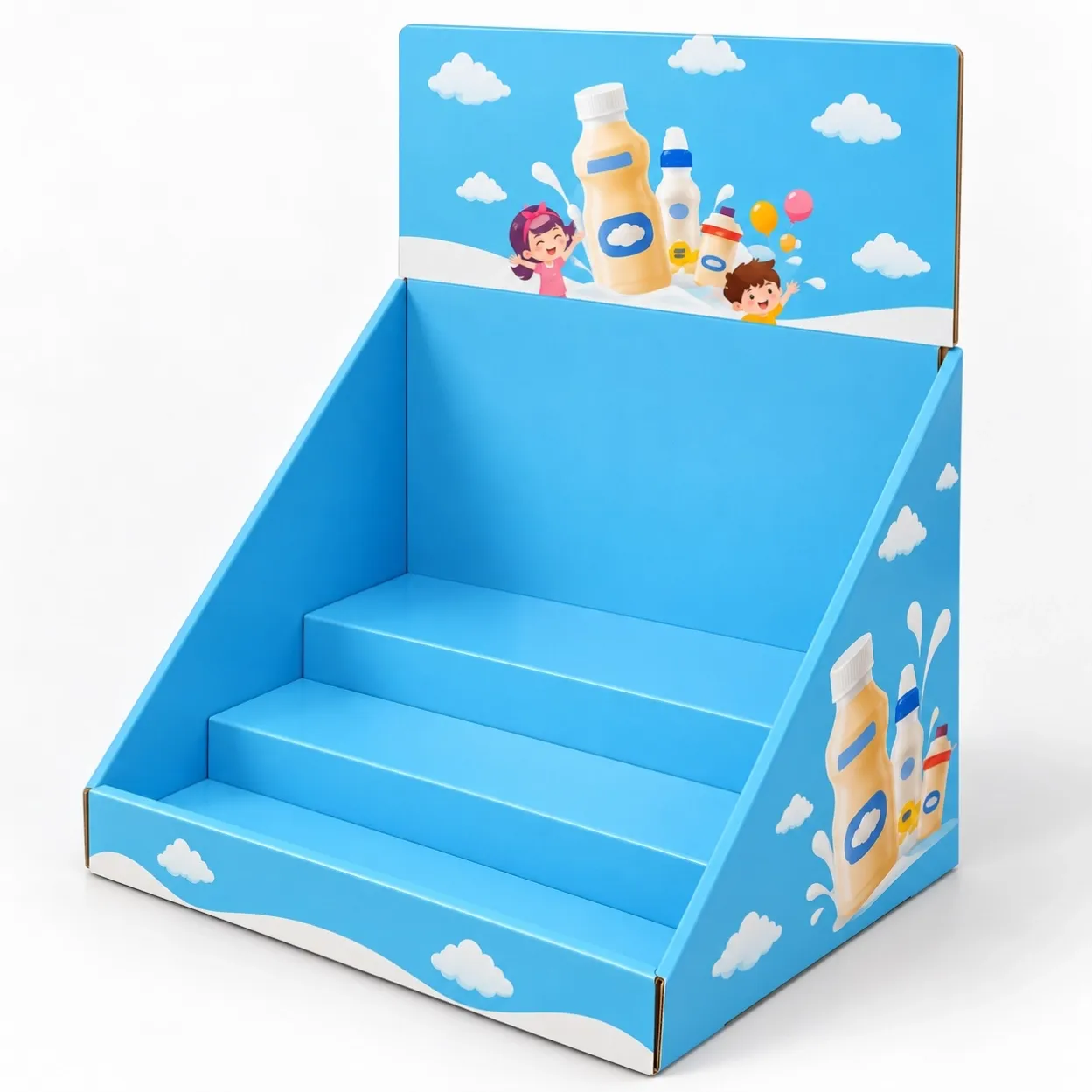
Display boxes
Custom PDQ Display Boxes Wholesale
Custom PDQ counter display boxes shipped flat, assembled in seconds: full-CMYK print, sampling in 7–10 days, replies within 24 hours for retail launches.
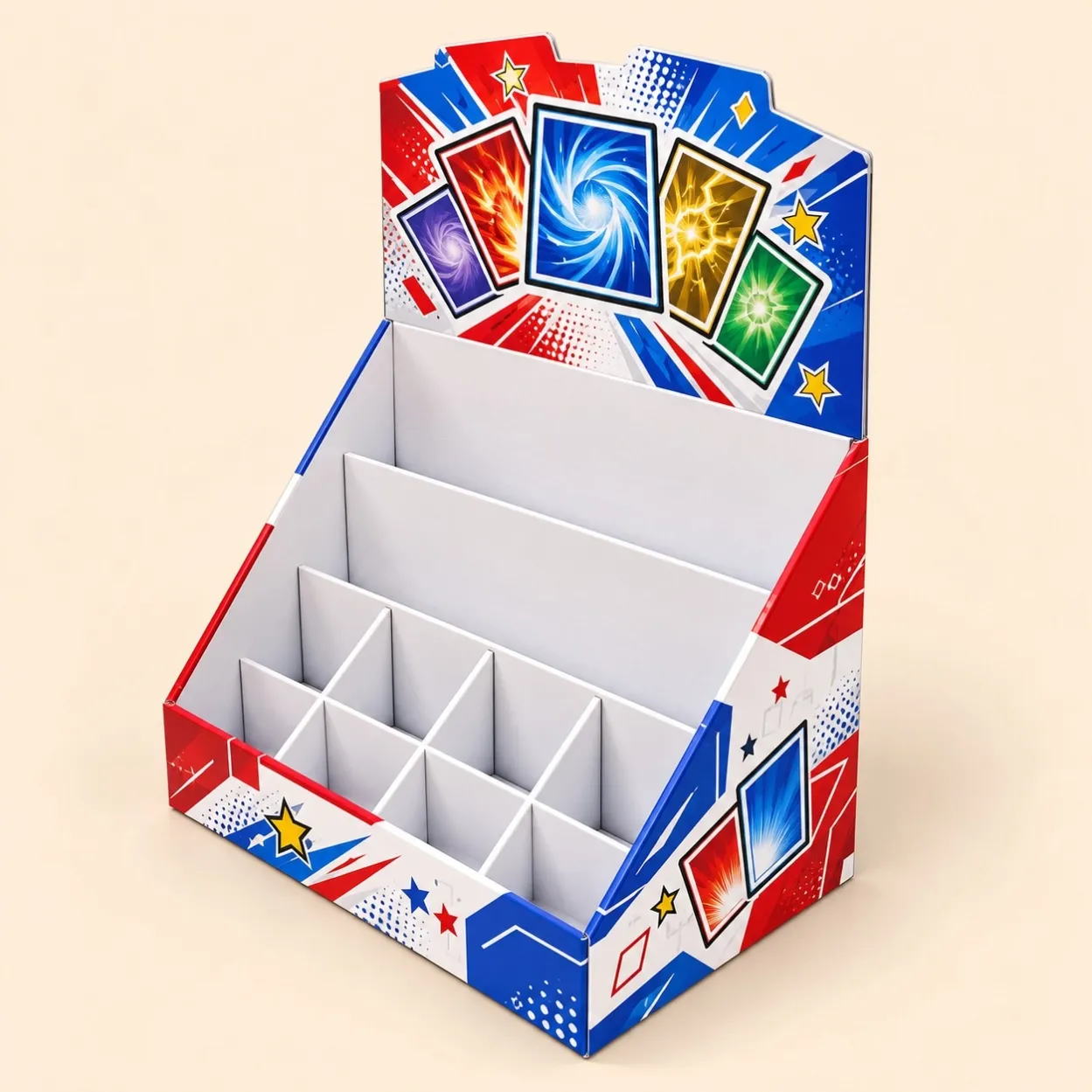
PDQ display boxes are pre-packed counter and shelf displays that a store can put on the floor in seconds - literally "Pretty Darn Quick." Products arrive already loaded and shrink-wrapped; staff slice the wrap and the display is selling. Jeeli Packaging manufactures custom PDQ displays for cosmetics, confectionery, electronics accessories and impulse categories.
Because the display ships as the outer case, structural accuracy matters: it must survive freight, open cleanly, and present products at the right angle once unwrapped.
What Is a PDQ Display?
PDQ refers to any retail-ready display shipped pre-packed with product. Common formats include counter PDQ units (one to three tiers), half-pallet and full pallet displays, and shelf-ready trays. The printed corrugated structure acts as both shipping case and merchandising unit, which is why PDQ is the standard format for big-box and drugstore channels.
Structures We Produce
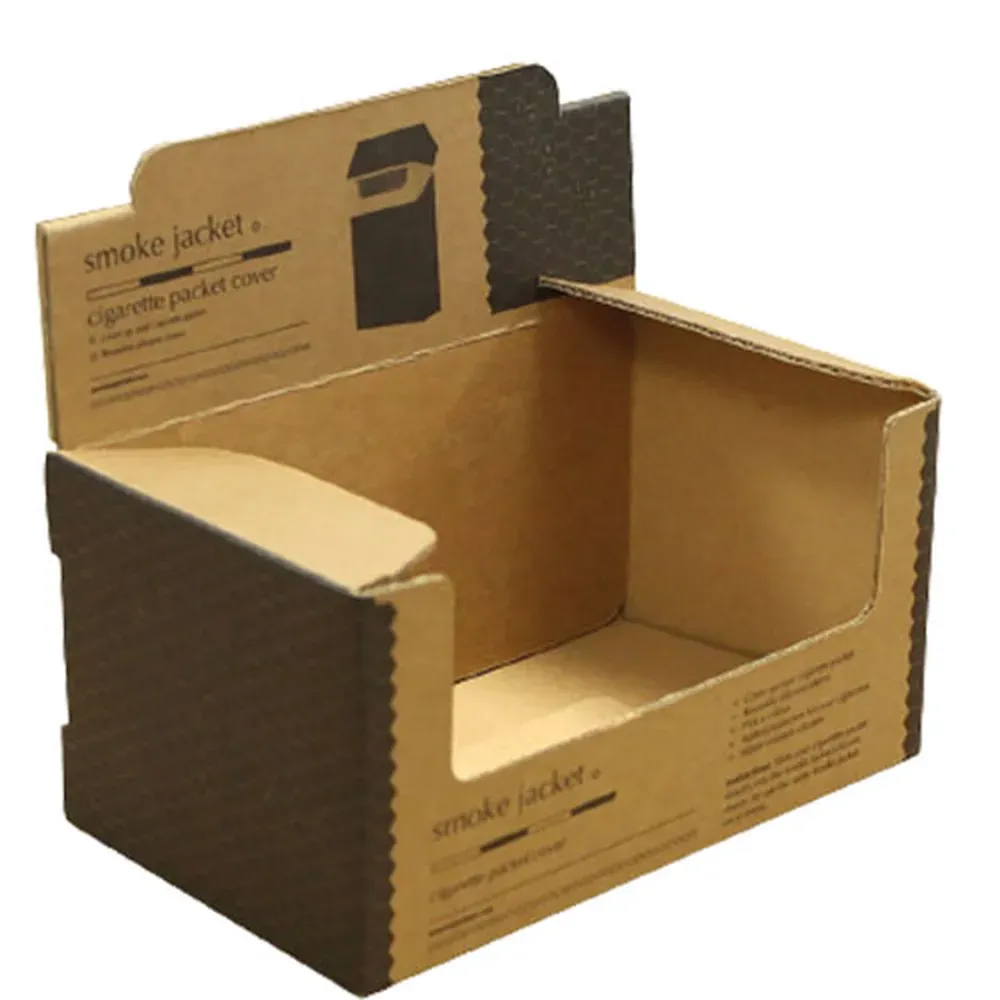
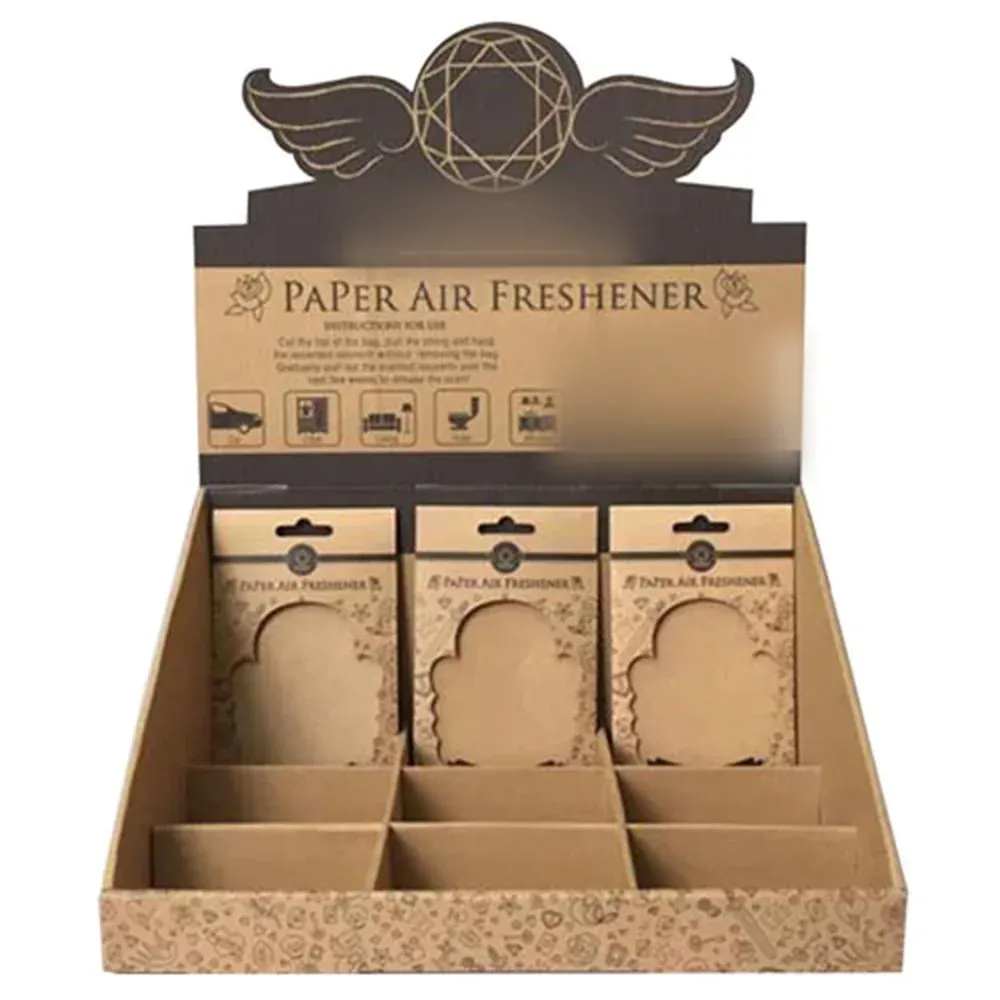
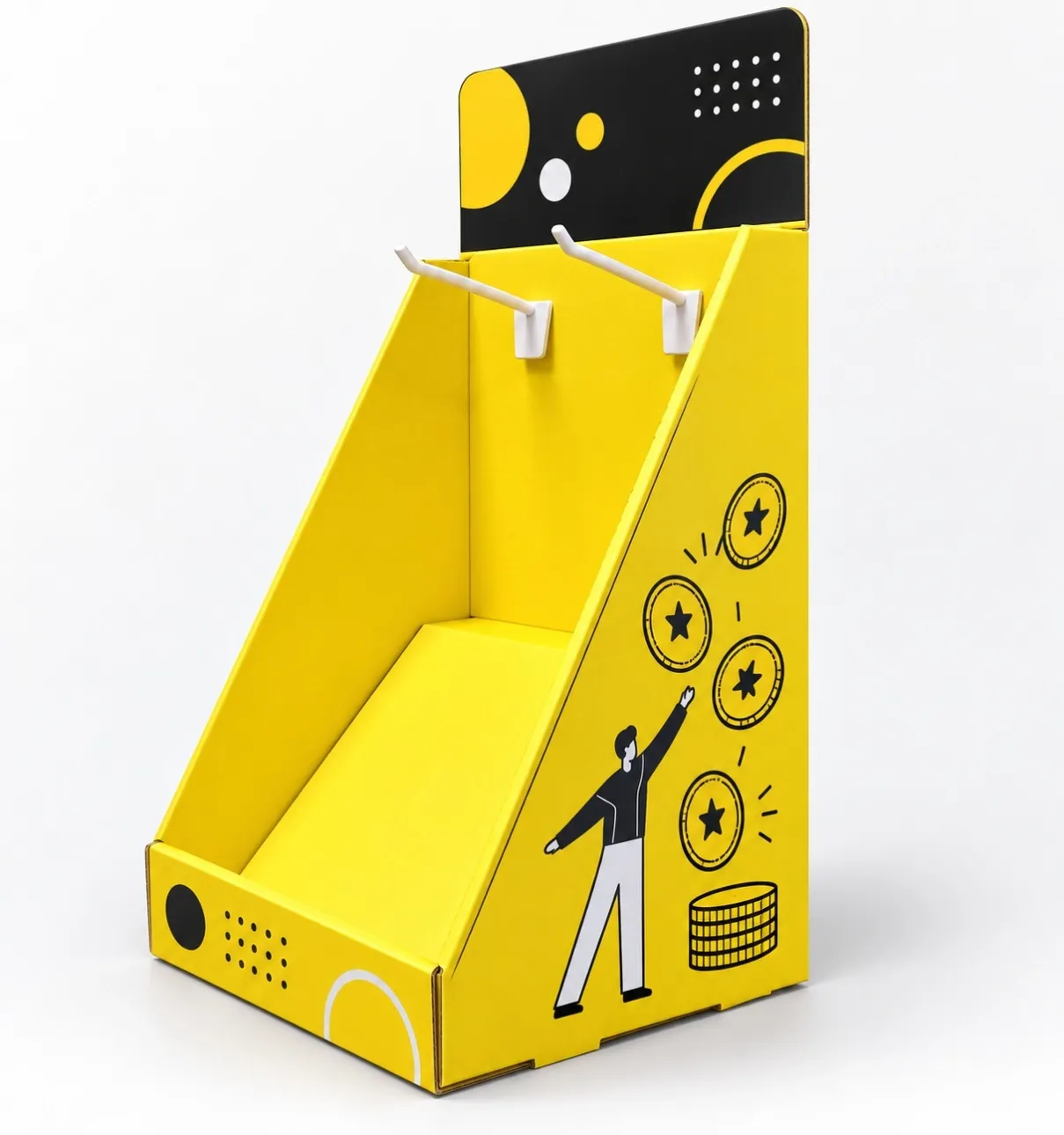
Counter PDQs with angled or stepped tiers, shipper displays with tear-off perforation and header cards, pallet displays with full graphic wraps, and trays with dividers for fragile items. Locking bases are die-cut to assemble without glue, keeping store setup fast and flat-pack shipping economical.
For floor-standing formats, compare our cardboard display stands, which complement counter PDQs in the same campaign.
PDQ vs Counter Display vs Floor Display
Three formats get confused in briefs, and choosing the wrong one is the most common reason a display underperforms at retail. The difference is where the unit lives in the store and how much stock it carries.
- PDQ display boxes — pre-packed units that arrive at the store already filled and go onto a shelf or pallet position as one piece. Store staff tear the perforation, fold back the header and sell straight from the case.
- Counter display boxes — small footprint units for the checkout zone, usually one to three products deep and holding a few dozen pieces. Built for impulse pickup rather than volume.
- Floor displays and stands — free-standing units for aisles and end caps, carrying a heavier load and more stock, and needing their own structural base.
If your product sells next to the till, our counter display boxes are the better fit. If it needs to stand in an aisle and carry a full campaign quantity, compare POP display boxes and the floor-standing formats above.
Printing and Graphics
Litho-laminated labels deliver photographic quality on E-flute corrugate; direct flexo printing keeps budgets tight for one and two-color art. Headers, side panels and shelf strips are printed as one piece so brand colors match across every surface.
Board Grades and Load Bearing
A PDQ carries two loads at once: the product inside, and the stack of identical cases above it in the warehouse or on a pallet. Both decide the board grade, so we ask for the packed weight and the stacking height before quoting.
- E-flute — thin, prints well, and right for light units that go straight to a shelf and are not stacked high.
- B-flute — thicker walls and more compression strength, the usual choice for heavier multipacks and pallet positions.
- Double wall (BC or EB) — for full pallet displays where the unit itself has to bear the weight of the pallet above it.
If the unit also has to work as the shipping carton, the structure must survive the whole journey before it can look good on shelf. That trade-off is covered in our guide to how shelf-ready packaging should be designed for shipping, and the retail-ready variants are listed under shelf ready packaging (SRP).
Applications
Impulse zones at checkout, cosmetics promotional tables, seasonal confectionery, telecom accessories and new-product launch kits. Send us your product dimensions, units per display and retail channel, and we will propose a structure with a per-unit landed cost including freight.
Choosing the Right Format for Your Product
Most briefs are settled by four questions. Answer them and the format usually picks itself.
- Packed weight of one selling unit — this sets the board grade and the base structure.
- How many units the store should hold at once — shelf depth and replenishment rhythm decide the tier count.
- Where the unit sits in store — checkout, shelf run, end cap or pallet position.
- Whether the store receives it pre-filled or flat-packed.
Specifications We Confirm Before Quoting
PDQ display boxes are quoted against your product rather than from a stock size list, so the price depends on the combination you choose. These are the points we settle first:
- Product dimensions, weight and how many units sit in one display
- Display dimensions and the shelf or pallet position it is built for
- Board grade and flute, based on packed weight and stacking
- Print method — litho-laminated label or direct flexo
- Finishing — varnish, lamination, or a plain uncoated shelf look
- Header card, tear-off perforation and any shelf-ready features
- Whether the unit ships flat or pre-filled
Minimum Order Quantity, Samples and Lead Time
The minimum order quantity is confirmed for your specific structure and print requirement together with the quotation, because a litho-laminated display and a one-colour flexo display carry very different set-up costs.
A physical pre-production sample is strongly recommended for displays, more so than for a standard folding carton. Colour on a shelf under store lighting reads differently from a screen, and the sample is also the only reliable way to test that the unit assembles, fills and opens the way store staff will use it. Where a full production sample is not practical, a white sample can be supplied for structure only.
Lead time is confirmed at quotation stage and depends on quantity, print method and finishing. If the display is tied to a launch date or a retail booking window, share the target on-shelf date at enquiry stage rather than after artwork approval, because the retail window is usually the tightest constraint in the project.
Packing and Shipping
Flat-shipped displays are delivered knocked down and palletised, which keeps freight volume low and lets a warehouse assemble close to the store. Pre-filled displays are packed with product inside, sealed, and shipped as the outer case — that saves handling at the destination but increases carton volume and requires the structure to pass transit testing as a shipper.
We confirm which of the two you need before production, because it changes the board grade, the closure and the pallet plan.
Minimum order quantity: 1,000 pieces. Sampling: 7–10 days. Bulk production: 15–25 days.
Send your size, quantity, material and print requirements. Get a Custom Quote. We reply within 24 hours.