
Magnetic Closure vs Lid-and-Base Rigid Boxes: Which Structure Should You Choose?
Magnetic closure vs lid-and-base rigid boxes: opening, product fit, inserts, packing, storage and what to check on samples.
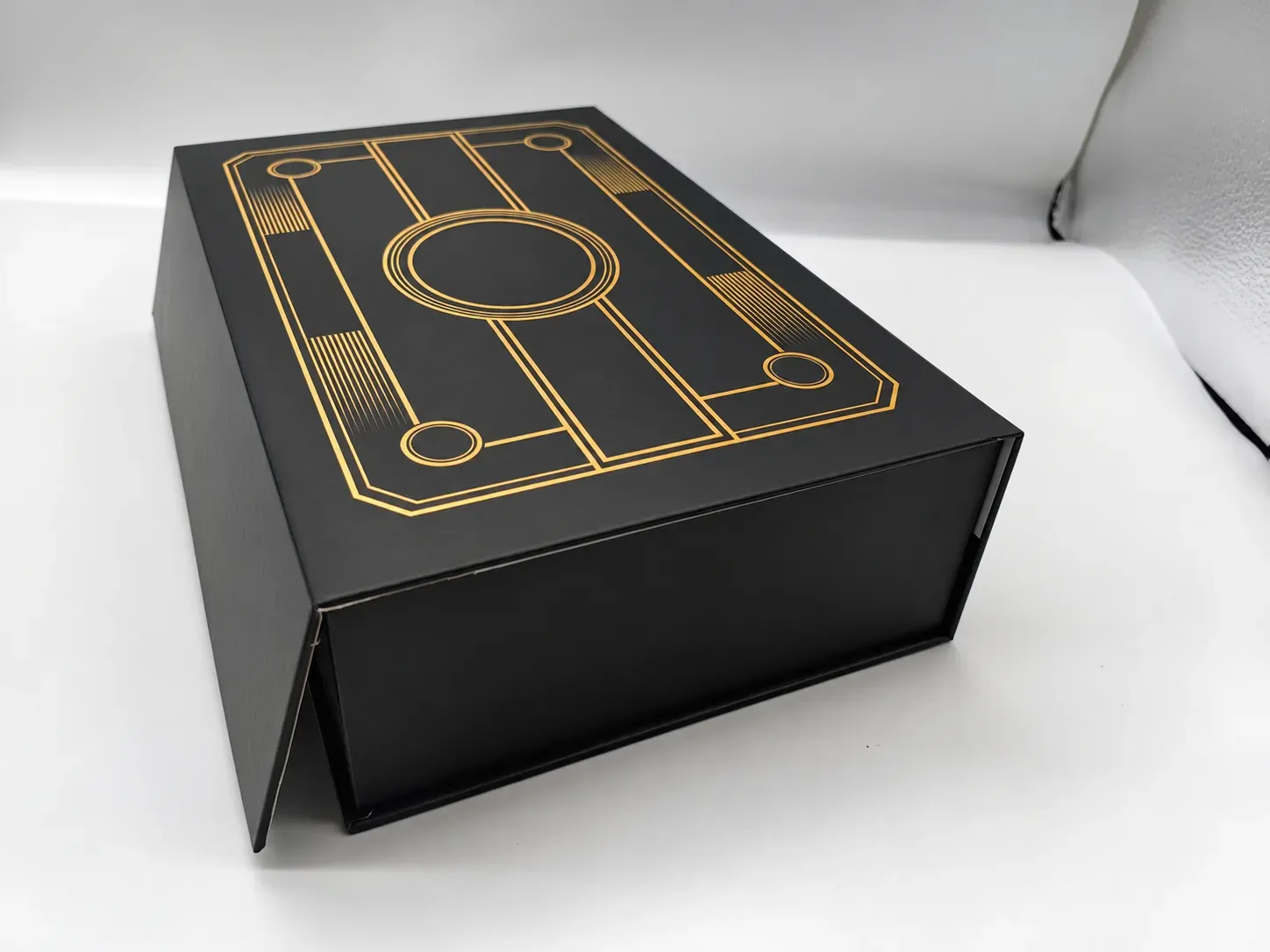
Brand, packaging, and procurement teams comparing custom rigid boxes should begin with the product, insert, opening sequence, packing method, and storage constraints—not artwork alone. This guide helps buyers compare a magnetic closure box with a lid-and-base box and leave with one structure worth sampling plus a list of unresolved checks. Use actual product dimensions, weight, fragile areas, preferred reveal, insert objective, and packing conditions as the evidence for that decision. It is not intended for buyers seeking one universally cheapest or “best” box, and it does not replace structural testing. The output is a practical sample brief, not a quotation, compatibility confirmation, or production approval. Final suitability still depends on representative samples and review of the exact materials, dimensions, insert, closure, and shipping method.
Why the rigid box structure changes more than appearance
Both formats can deliver a premium presentation, but they create different interactions. A magnetic rigid box usually opens on a hinge and closes with concealed magnets. A lid-and-base box separates into two pieces, with the lid lifting away from the base. That simple distinction affects how the package is opened, displayed, assembled, stored, packed, and shipped.
The mistake is to choose from a photograph alone. It cannot show product access, repeated-opening alignment, or packing-line fit. Ask which structure supports the complete journey from packing station to unboxing.
For an example of the two-piece format, review Jeeli Packaging’s rigid lid-and-base box options before comparing the decision factors below.
Compare the opening experience first
A magnetic closure box offers a guided reveal. The hinged panel opens in one direction, so artwork inside the lid and the product presentation can be composed as one scene. The closure also gives the user a clear physical cue when the flap meets the front panel. This can suit gift sets, launch kits, presentation packs, and products where the opening sequence is part of the brand experience.
A lid-and-base box creates a different rhythm. The user lifts the lid, then sees the entire product area at once. A shallow lid may produce a quick reveal; a deeper lid may create a slower opening and a more enclosed look. Because the lid is removable, it can also be placed beneath the base during display, depending on the product and the available space.
Neither experience is automatically better. Test it where customers will open, film, display, or reuse it.
Match the structure to the product and insert
Product fit should decide the internal dimensions before external styling is finalized. Confirm the product’s maximum length, width, height, weight, fragile areas, and any accessories that must ship in the same pack. Then define how much of the product should be visible when the box opens.
Magnetic rigid boxes can work with different fitted insert concepts, but the hinge, front flap, and magnet positions create structural zones. A tall insert or front accessory may interfere with closing if clearances are not checked.
Lid-and-base boxes also accept many insert layouts. Their open rectangular base can make it straightforward to arrange a central product, a product-and-accessory set, or layered components. Yet the relationship between lid depth, insert height, and product projection still matters. If the product sits too high, the lid may press against it; if it sits too low, the reveal can feel disappointing and removal can become awkward.
Compare paperboard, corrugated, foam, and molded insert concepts separately once the outer structure and product-support objective are clear.
Consider packing, storage, and freight volume
The finished box is only one part of the sourcing decision. Your warehouse team must receive it, store it, assemble it if required, load the product, inspect it, and place it into an outer carton. A structure that looks efficient on a desk may create extra handling at scale.
Some magnetic rigid box designs can be engineered as foldable structures. These may reduce storage and shipping volume before assembly, but they introduce additional decisions: how the corners lock, where adhesive strips are placed, how consistently the box squares up, and how much assembly work is acceptable. Review foldable rigid box structures if flat delivery is an important constraint.
For conventional set-up boxes, compare packed dimensions, nesting possibilities, protective wrapping, pieces per outer carton, and the damage-prevention method for the exact design. Ask your fulfillment team whether the proposed carton size, orientation, and assembly steps fit current operations.
Magnetic closure vs lid-and-base: a buyer decision table
Use this comparison as a briefing tool, not as a substitute for a physical sample.
Decision factor: Opening motion · Magnetic closure rigid box: Hinged, directional reveal · Lid-and-base rigid box: Removable lid, full top access
Decision factor: Presentation · Magnetic closure rigid box: Interior lid and base can form one composed view · Lid-and-base rigid box: Product area is revealed when the lid lifts away
Decision factor: Closure · Magnetic closure rigid box: Concealed magnets provide the closing action · Lid-and-base rigid box: Lid-to-base fit provides the closing action
Decision factor: Insert planning · Magnetic closure rigid box: Must account for hinge, flap, magnets, and closing clearance · Lid-and-base rigid box: Must account for lid depth, insert height, and lid-to-base clearance
Decision factor: Flat-pack potential · Magnetic closure rigid box: Available for certain engineered foldable constructions · Lid-and-base rigid box: Depends on the specific construction; conventional versions are set up
Decision factor: Packing workflow · Magnetic closure rigid box: May require folding or adhesive steps in a foldable version · Lid-and-base rigid box: Separate lid and base must be handled and matched during packing
Decision factor: Storage review · Magnetic closure rigid box: Compare assembled or flat packed dimensions and outer-carton plan · Lid-and-base rigid box: Compare nested or set-up packing method and outer-carton plan
Decision factor: Best next check · Magnetic closure rigid box: Open-close cycle, squareness, flap alignment, magnet placement · Lid-and-base rigid box: Lid fit, lift resistance, corner alignment, lid depth
The table narrows the choice, but the sample reveals what specifications alone cannot: hand feel, resistance, alignment, sound, and real product access.
What to check on a physical sample
Place the actual product and every accessory into the sample. A dummy may hide issues caused by cables, closures, irregular edges, or uneven weight.
For a magnetic box, open and close it repeatedly. Check whether the front flap lands in the same position, whether the magnets meet cleanly, whether the hinge creases evenly, and whether the insert remains secure as the lid moves. View the box from the front and side to spot bowing, exposed board edges, or uneven gaps.
For a lid-and-base box, lift the lid slowly and then more quickly. Check whether it releases smoothly without being too loose, whether the four corners align, and whether the lid presses on the product or insert. Turn the closed box gently in different orientations to see whether internal components shift.
For both structures, inspect wrapped corners, printed color, finishing registration, scuff visibility, and product removal. The custom packaging manufacturing process connects structure, printing, finishing, sampling, production, and packing.
Choose according to the buying situation
Choose magnetic closure when a controlled hinged reveal matters and operations suit its packing requirements; include a foldable concept if storage volume is a key constraint. Choose lid-and-base when a removable lid and full top access suit the product and packing line. Specify lid depth and opening resistance rather than treating all two-piece boxes as equivalent.
If both remain plausible, sample one realistic version of each using the same product, insert objective, and artwork direction. This lets stakeholders compare opening, fit, packing, and presentation against one brief.
Information to prepare for a useful quotation
Prepare one consolidated request rather than separating dimensions, artwork, and finishes across multiple files. Include:
- Product dimensions, weight, photos, and any fragile or projecting areas
- Required internal arrangement, accessories, and preferred product orientation
- Preferred structure, plus an alternative if you want a comparison
- Finished box dimensions if already established, or the actual product for fit development
- Board and wrapping-paper preferences, if known
- Artwork files and color references
- Finishes under consideration, such as foil stamping, embossing, debossing, spot UV, matte lamination, or gloss lamination
- Insert objective and material preference, if known
- Expected packing method and any storage or carton constraints
- Destination and the stage at which you need a structural or printed sample
The custom packaging RFQ checklist can help you organize these details before contacting a supplier.
Frequently asked questions
Are magnetic closure boxes always more expensive than lid-and-base boxes?
Not necessarily. The final quotation depends on dimensions, construction, board and paper choices, insert design, printing, finishing, quantity, packing, and other project details. Compare two clearly specified structures rather than using a general price assumption.
Can magnetic rigid boxes be supplied flat?
Some designs can be engineered as foldable rigid boxes. The folding method, adhesive arrangement, assembly process, and finished appearance should be reviewed with a sample. A conventional set-up magnetic box is a different construction.
Which structure is better for a heavy product?
Weight alone does not determine the answer. Product dimensions, weight distribution, insert support, board construction, lifting method, and shipping protection all matter. Provide the physical product or complete specifications so the structure can be evaluated as a system.
Can the same insert design be used in both structures?
It may need adjustment. A magnetic box has hinge, flap, magnet, and closing-clearance considerations, while a lid-and-base box has lid-depth and lid-to-base fit considerations. Confirm insert dimensions only after the outer structure is defined.
What should be approved before bulk production?
Confirm dimensions, structure, artwork, color, materials, finishing, insert fit, opening behavior, and packing method. A physical sample is especially valuable when product fit and opening feel affect the buying decision.
Turn the comparison into a sample brief
The selected rigid-box structure should be evaluated for product protection, packing fit, and the intended reveal. Use the checklist above to prepare a sample brief. Before sharing product files or artwork, use Jeeli Packaging’s verified contact route and confirm how project information should be submitted. A discussion does not confirm suitability, price, timing, or production approval.