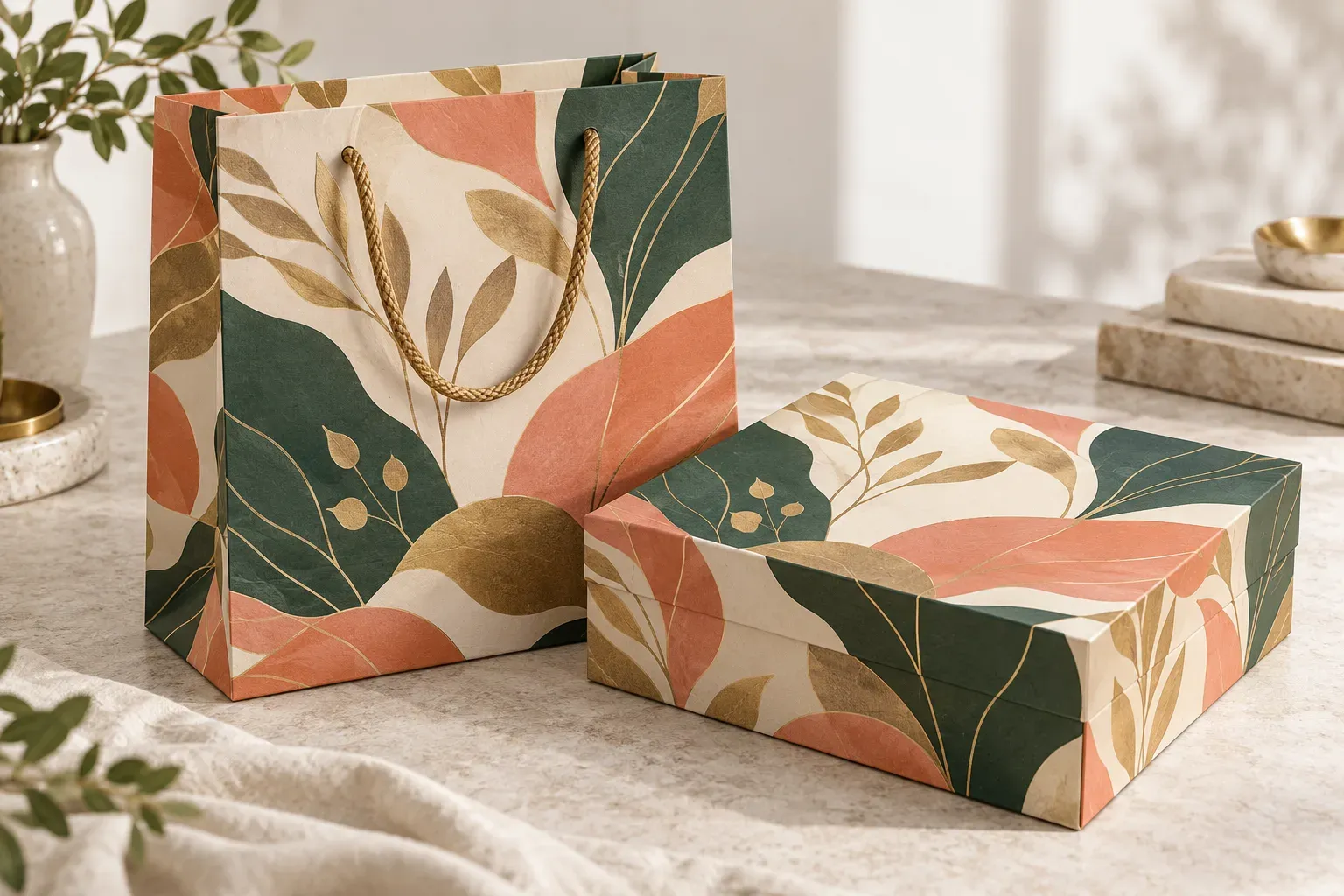
How to Match Paper Bags and Gift Boxes for a Consistent Packaging Set
Learn how to coordinate paper bags and gift boxes through color, artwork, materials, finishes, sizing and side-by-side sample approval.
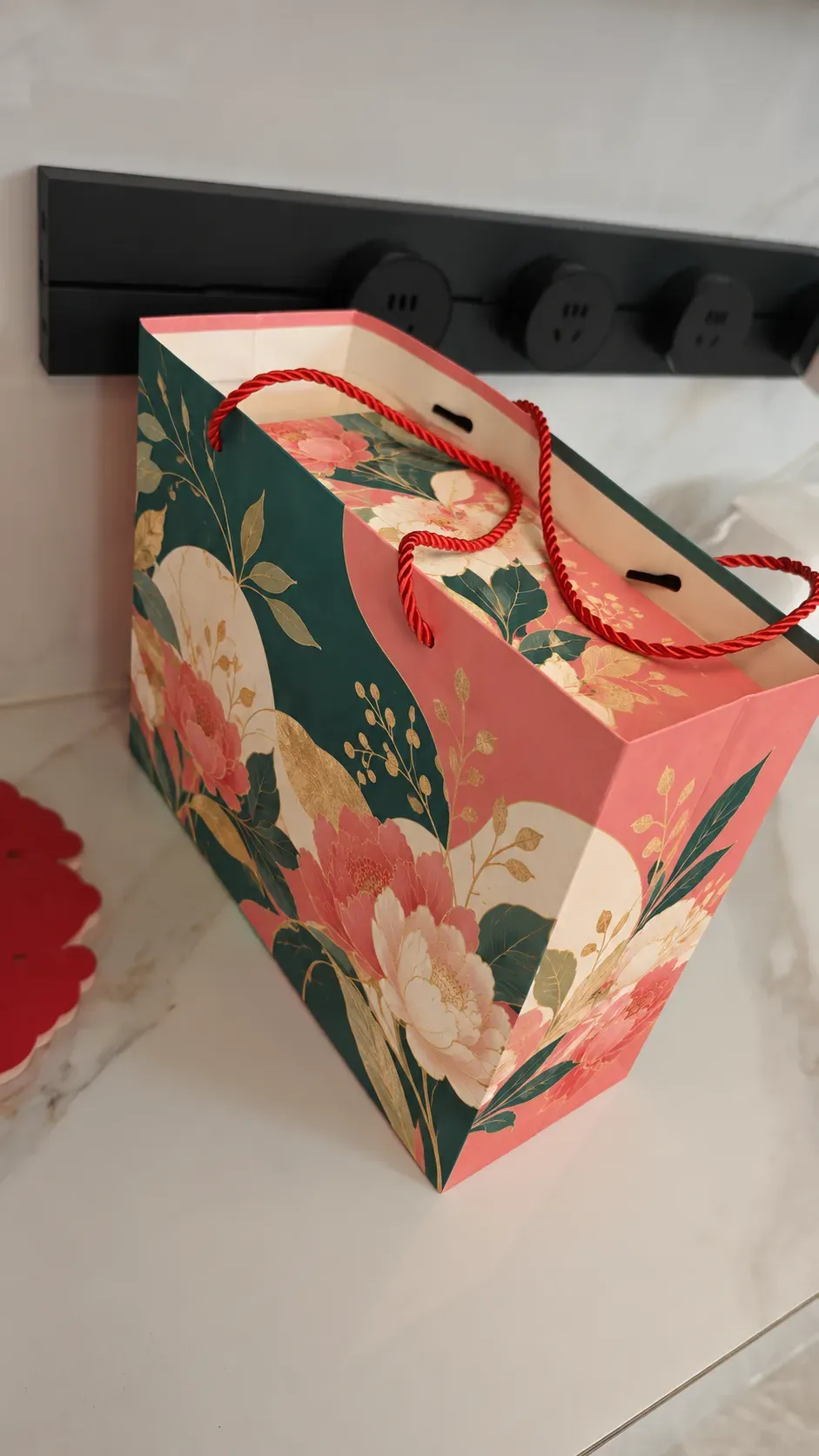
A paper shopping bag and gift box should look like one packaging system, not two unrelated items ordered at different times. Buyers need to coordinate color, artwork, materials, finishes, proportions and production tolerances while still allowing each format to perform its own job. This guide explains how to build a practical matching brief for custom paper bags and gift boxes, how to avoid common visual mismatches and what to approve before bulk production.
Start with one visual hierarchy
Decide which elements must remain identical and which can adapt to the format. The logo, core color palette and main artwork style usually provide continuity. Secondary patterns, placement and scale may change because a tall paper bag and a shallow rigid box have different proportions.
Choose one primary brand element, one supporting element and one finish priority. This prevents every panel from competing for attention and makes the set easier to recognize from a distance.
Match color by specification, not by screen appearance
The same digital color can look different on coated paper, uncoated kraft, wrapped greyboard and printed paperboard. Lamination, ink coverage, texture and viewing light also affect perception. Do not approve color by comparing only PDFs or screen previews.
Provide a physical reference, Pantone target or approved printed sample where possible. Ask the supplier to explain whether the bag and box will use the same substrate and print process. If exact matching is unrealistic, define an acceptable coordinated range before sampling.
Adapt artwork to each dieline
A shopping bag has front and back panels, side gussets, a bottom turn-in, top fold and handle area. A gift box may have a lid, base, wrapped edges, corners and an insert. Artwork should be adapted to these structures rather than scaled mechanically.
Keep logos away from folds, handle holes, seams and wrapped corners. Check that patterns continue intentionally across visible panels. Review Jeeli Packaging’s custom paper bag options and rigid lid-and-base boxes when planning the complete set.
Coordinate materials without forcing them to be identical
Matching does not require the same paper construction. A paper bag must flex, carry weight and hold its handles securely. A rigid gift box needs stiffness, wrapped corners and dimensional stability. The visible surfaces can be coordinated even when the structural materials differ.
Compare whiteness, texture, gloss level and print behavior. A slightly warm uncoated bag beside a cool white laminated box can look accidental. If the materials cannot match exactly, use a deliberate contrast and repeat another shared element such as foil color or artwork.
Use finishes consistently
Foil stamping, embossing, debossing, spot UV and lamination can unify a packaging set when applied with restraint. The same gold foil reference may create continuity even when the logo sizes differ. However, finish behavior changes on flexible bag panels and rigid wrapped surfaces.
Specify the finish reference, location and purpose for each item. Test small type, fine lines and areas near folds or handles. Jeeli Packaging’s lamination comparison can help buyers define the base surface before adding accents.
Plan proportions and carrying fit
The bag should fit the boxed product with enough clearance for easy packing and removal, but excessive space makes the set look poorly planned and increases material and freight volume. Confirm the closed box dimensions first, then calculate the practical bag width, gusset and height.
Consider tissue paper, protective sleeves, handles and the way staff will load the product. Test the actual box inside the sample bag. Check whether it sits upright, whether the bag base remains stable and whether the handles close comfortably above the product.
Bag-and-box consistency checklist
- Use the same approved logo file and brand-name spelling.
- Define a shared primary color and acceptable production tolerance.
- Adapt artwork scale and placement to each dieline.
- Compare paper tone, texture and gloss side by side.
- Specify the same foil or finish reference where continuity matters.
- Keep critical artwork away from folds, seams, handles and wrapped corners.
- Test the closed box inside the finished bag.
- Approve both samples together under the same lighting.
Common causes of mismatched packaging sets
Frequent problems include separate design files with different logo versions, color approval at different times, inconsistent foil references, artwork copied without dieline adjustment and a bag ordered before the final box size is confirmed. Different suppliers or production batches can increase variation if specifications are not controlled.
Create one master packaging-set document listing approved artwork, colors, materials, finishes, dimensions and sample references for both items. Record changes in one place.
What to include in the RFQ
Send the product and closed-box dimensions, bag carrying requirements, quantities, dielines, vector artwork, color references, material preferences, finish layers, handle style, insert requirements, packing method and delivery destination. Include photographs or a physical sample when color and texture are important.
The custom packaging RFQ checklist helps organize these details before supplier review.
Frequently asked questions
Must the paper bag and gift box use the same paper?
No. Their structural jobs are different. Coordinate the visible color, texture and finish while choosing suitable materials for strength and construction.
Can the same artwork file be used for both items?
The same brand assets can be used, but layout and scale should be adapted to each dieline and panel structure.
How can buyers reduce color differences?
Use physical references or defined color targets, review substrate and print-process differences, and approve the bag and box samples together.
Should the bag be ordered before the box?
Confirm the final closed-box dimensions first so the bag can be sized for practical packing, carrying and presentation.
What should be approved before mass production?
Approve dimensions, product fit, artwork, color, materials, finishes, handles, box construction, packing method and the complete set viewed together.
Turn the set into one sourcing brief
A coordinated packaging set begins with shared visual rules and ends with side-by-side sample approval. Before sending artwork or product files, use Jeeli Packaging’s verified contact route and confirm the correct submission method. A discussion does not confirm suitability, price, timing or production approval.