
How Packaging Factories Store Paperboard: Best Practices Guide
Learn how professional packaging factories store paperboard. Temperature, humidity control, stacking methods & inventory management tips!
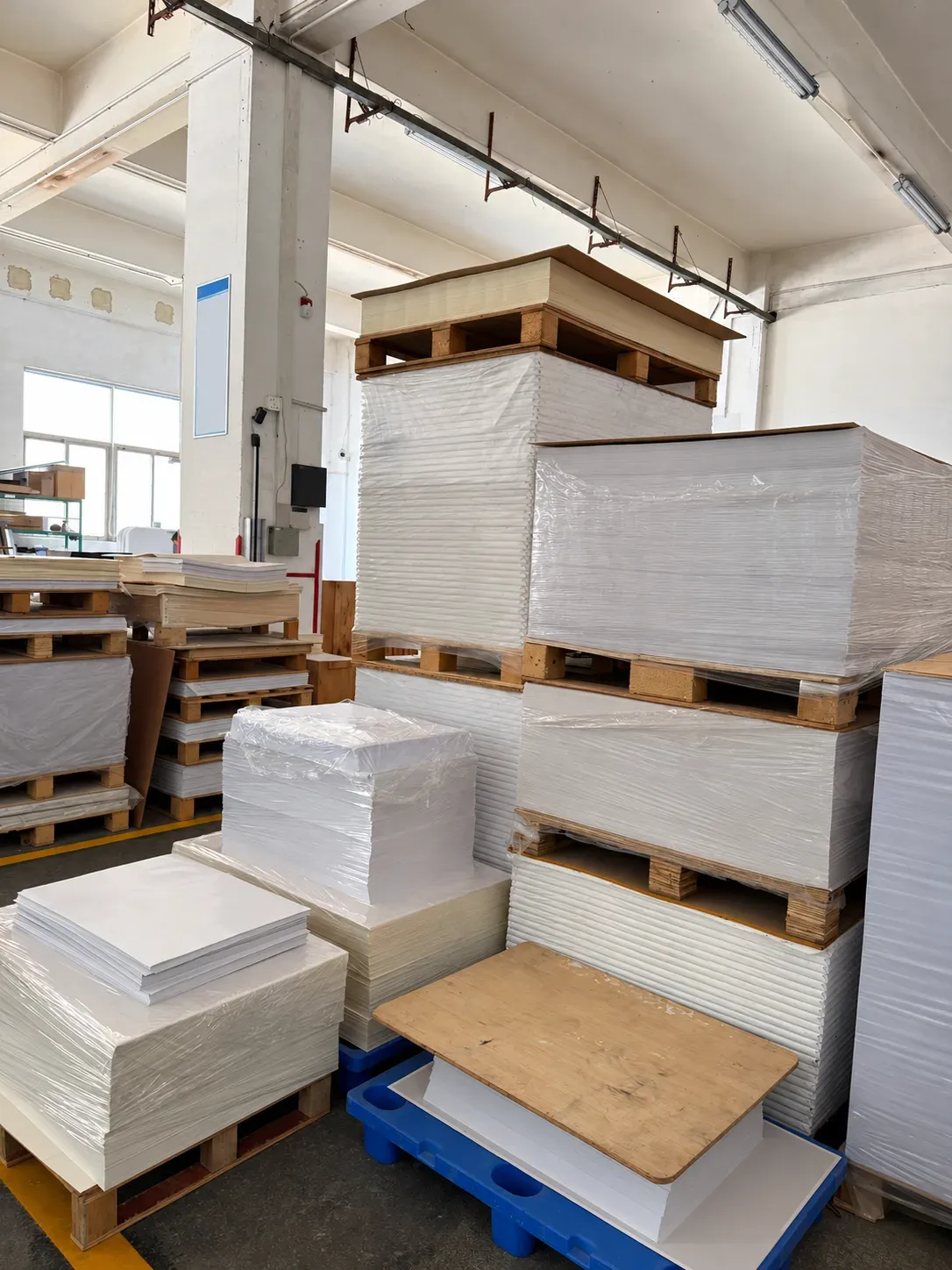
This guide is for procurement, packaging, and quality teams reviewing a supplier’s paperboard controls before printing. It is not a universal temperature-and-humidity specification or a remote diagnosis for curl, color variation, feeding problems, or crease failure. Review the selected board, protective wrapping, receiving condition, storage environment, production schedule, and intended printing route together.
The useful output is a storage-control question list, a record of missing evidence, and a next-step material or representative-sample review. These outputs help supplier validation; they do not prove the factory’s procedure or approve material for production.
Paperboard is sensitive to its environment
Paper-based materials exchange moisture with surrounding air. When storage and production conditions differ, sheets may gain or lose moisture and change dimension or flatness. The effect depends on board grade, construction, coating, sheet size, wrapping, exposure time, and environment.
Printing and die cutting rely on predictable sheet handling. Board that is not flat may feed inconsistently, dimensional movement can complicate registration, and surface contamination or edge damage can create avoidable waste.
Buyers do not need to prescribe one universal temperature or humidity number. Ask the factory how conditions are controlled for the exact material and process. A credible answer connects storage with incoming inspection, production scheduling, and handling.
Keep material protected, identified, and off vulnerable surfaces
Paperboard should be protected from water, dust, direct contamination, crushing, and uncontrolled exposure. Factories may use wrapped pallets, covers, racks, or designated storage areas according to workflow.
Ask whether pallets are kept away from wet floors, leaking roofs, open doors, or other moisture risks. Check how partial pallets are rewrapped, how corners are protected, and how long opened material may wait before use.
Protection is useful only if the material remains identifiable. Labels should connect stock to the purchase reference, board grade, thickness or weight specification, lot information, receiving date, and project allocation. This prevents similar-looking boards with different print or structural behavior from being mixed.
Use stock rotation without losing project traceability
Warehouse rotation helps avoid forgotten stock, but packaging work also requires lot and project control. Approved material may need to be reserved for a repeat order, while damaged, quarantined, or substitute stock must remain separate.
Ask how material is inspected and released. If damage, moisture exposure, contamination, or labeling discrepancies are found, isolate the affected stock until a decision is made. A board described as equivalent should not replace the approved material without review when surface, color, stiffness, thickness, or conversion performance matters.
The broader custom packaging manufacturing process shows why material approval comes before printing, finishing, and bulk production. If the open decision is the board itself, use the guide to choosing paperboard for folding cartons.
Why acclimatization may be discussed before printing
Paperboard arriving from another environment may need time to approach production-room conditions before opening or printing. The appropriate practice depends on material, wrapping, temperature and humidity differences, pallet size, and the factory’s process instructions.
Acclimatization does not mean leaving exposed sheets wherever space is available. The supplier should define where material waits, whether wrapping remains intact, when it is opened, and how production timing is coordinated. Opening cold wrapped stock too early in a warm humid room can create condensation risk under some conditions.
Ask what triggers an acclimatization step and how the decision is documented. The useful evidence is a clear procedure tied to material condition and schedule, not a universal waiting time.
Storage-to-print risk checklist
| Control point | Buyer question | Why it matters |
|---|---|---|
| Receiving | Is packaging damage, moisture, edge crushing, and label accuracy checked? | Problems can be isolated before stock enters production. |
| Identification | Are grade, specification, lot, date, and project status visible? | Similar sheets should not be mixed by appearance. |
| Location | Is stock protected from floors, leaks, doors, dust, and direct heat? | Local exposure can affect only part of a pallet. |
| Wrapping | Are full and partial pallets protected? | Open stock responds faster to surrounding air. |
| Conditioning | When is acclimatization required and when is wrapping opened? | Material should approach production conditions through a controlled plan. |
| Release | Who confirms that material is suitable to print? | A named decision point prevents questionable stock moving forward. |
What poor storage can look like during production
Storage-related concerns may appear as edge waviness, curl, uneven flatness, blocked or damaged sheets, surface contamination, inconsistent feeding, or registration difficulty. These signs are not proof of one cause. The production team should investigate material, environment, machine setup, ink or coating, and sequence together.
Avoid diagnosing from photographs alone. Ask for the affected quantity to be isolated, record material identification, and compare unused stock from the same and different lots where available. If a sample is remade, document what changed.
Connect storage with printing and conversion approval
Board that prints acceptably must still pass lamination, foil, embossing, die cutting, folding, gluing, wrapping, and assembly. These stages can reveal stiffness, flatness, surface, or dimensional issues not obvious on a flat printed sheet.
When the observed problem is cracking along a fold, use the dedicated guide on folding carton crease cracking rather than assigning the issue to storage alone.
Approve material as part of the finished packaging route. Jeeli Packaging’s paper-based product range includes different structures, so checks should follow how each item is printed and converted.
Questions to include in a supplier review
- How is paperboard inspected when it arrives?
- Which material details remain visible in storage?
- How are approved, reserved, leftover, and quarantined stocks separated?
- How are full and partial pallets protected?
- What conditions trigger acclimatization before printing?
- How does production confirm material identity and release status?
- What happens if curl, moisture exposure, damage, or contamination is found?
- How is a substitute communicated and approved?
- Which sample proves the selected board can pass printing and conversion?
Frequently asked questions
Does paperboard need a fixed storage temperature and humidity?
There is no single number suitable for every board and process. Follow the paper supplier’s guidance and the factory’s controlled procedure for the selected material and production environment.
Should paperboard be unwrapped as soon as it reaches the factory?
Not automatically. The decision depends on transport and room conditions, wrapping, acclimatization needs, and production timing.
Can poor storage change printed color?
Material condition can influence printing, but color variation may also involve paper shade, ink, press settings, coating, lighting, and measurement. Investigate the complete system.
What should happen to a damaged pallet?
Identify and separate the affected material for inspection rather than mixing it into available stock. Then decide whether it is usable, requires testing, or should be rejected.
How can a buyer verify storage controls remotely?
Request the relevant procedure, material labels, inspection records, and dated project evidence. A representative sample and traceable material reference are more useful than generic warehouse images.
Make material condition part of the packaging brief
Good paperboard storage supports predictable printing and conversion, but it should be assessed through evidence. Send Jeeli Packaging the intended structure, board, print coverage, finishing, sample objective, and critical appearance requirements for a material-control review. This review does not diagnose a defect or approve material until project records and representative evidence are checked.