
Buying Guides
Stationery Shipping Boxes: Sizing Paper Goods Without Corner Damage
How to size stationery shipping boxes for notebooks and card sets: clearance, corner protection, inserts and the transit test that prevents returns.
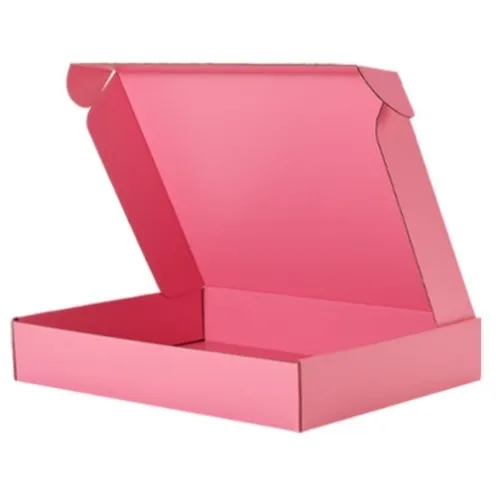
Stationery is unforgiving packaging territory. A dented mailer disappoints a customer for a day; a dented notebook cover is a returned product, because the corner damage sits exactly where the user's hand rests. Sizing and protecting paper goods is therefore a precision exercise, not a scaled-up version of general shipping.
The Clearance Rule for Paper Goods
Soft goods tolerate a loose box; paper goods punish both extremes. Too tight and the board bows or the corners crush on insertion; too loose and the contents shift until a corner finds the wall. The working clearance that most stationery shippers converge on:
3–5 mm total on width and height for a single flat item (notebook, planner, card deck).
6–10 mm when the item has a spiral, elastic band, pen loop or boxed edge — anything that creates a high spot.
No clearance rule survives contact with a journal set: two notebooks plus a pen need a fixed-position insert, not a bigger box.
Measure the product at its thickest point, including packaging the item is already in (a cello-wrapped deck is wider than a bare one), and state internal box dimensions — not the size of a similar box you have seen.
Corner Damage: The Three Causes
Impact — the box is dropped on a corner. Fix: a board grade with adequate edge strength, or an insert that keeps the contents off the walls.
Compression — the box is stacked under heavier parcels. Fix: a stiffer board or a smaller footprint so the same force spreads over less area.
Vibration rub — long transit wears print and corners against the wall. Fix: reduced clearance plus a wrap or insert, so nothing rubs directly on the board.
For most stationery ranges the practical answer is a paperboard cradle or wrap inside a mailer: it fixes the item's position, keeps corners off the walls, and presents better on unboxing than loose void fill. The material options and their trade-offs are laid out in our insert materials guide.
Mailers vs Folding Cartons for Stationery
A stationery brand usually ships two ways: the product goes out in a mailer box (e-commerce orders), and sits in a folding carton on the retail shelf (or the two are combined — a carton that ships). The sizing logic differs:
The shipping mailer is sized for protection: clearance rules above, E-flute for rigidity, crash-lock base for packing speed.
The retail carton is sized for the shelf: exact fit, print quality, barcode panel, and the spine height a bookstore expects.
If the same box must do both jobs, it is sized to the retail dimension and the shipping protection is added with an insert — that combination is the standard stationery solution and the one we quote most. Both bases are covered on the custom mailer boxes and custom folding boxes pages.
The Five-Minute Pre-Order Check
Measure every SKU at its thickest point, including wraps.
Decide one insert strategy for the range, not per SKU.
Order one physical sample with the real product inside and post it to yourself — the cheapest crush test there is.
Check the sample's corners after transit before approving bulk.
Corners are where stationery packaging fails, and where a sample tells you everything. One week and one postage stamp beats a season of returns.