
Trial Run or Bulk Order? How We Route Your Packaging by Quantity
Under about 2,000 pcs your order runs on digital printing; above that, offset takes over. How Jeeli routes each quantity — and what to send us.
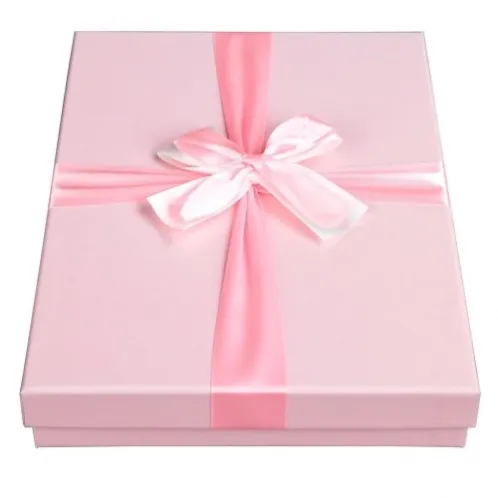
Quantity decides how your packaging is made. At Jeeli, orders of about 500–2,000 pieces run through digital printing; larger runs move to offset printing on our own Heidelberg presses. The print method, the unit price and even the freight plan all follow from that one decision, so it pays to understand it before you ask for a quote.
This guide explains the routing, the crossover point, and what to send us for a fast first quote. Sampling takes 7–10 days and bulk production 15–25 days on either route: quantity changes how the job is printed, not whether you get a sample first.
The Two Routes at a Glance
Every order follows one of two routes. The dividing line moves with the product, the colours and the finishing, but for most printed paper packaging it looks like this:
| Route | Typical quantity | Print method | Best for |
|---|---|---|---|
| Trial run | About 500–2,000 pcs | Digital printing, via our production partner | Market tests, multi-SKU launches, seasonal artwork |
| Bulk order | Above about 2,000 pcs | Offset printing in-house on Heidelberg presses | Established products, repeat orders, tight colour control |
One exception: rigid boxes. A rigid box is built around sheet-fed offset-printed wrapping paper, so rigid boxes normally run on offset even at their 500-piece minimum. The digital route applies mainly to folding cartons, mailer boxes, paper bags, labels and stickers — the products where the print surface is a flat sheet or a roll.
Route 1: Trial Runs of 500–2,000 Pieces — Digital Printing
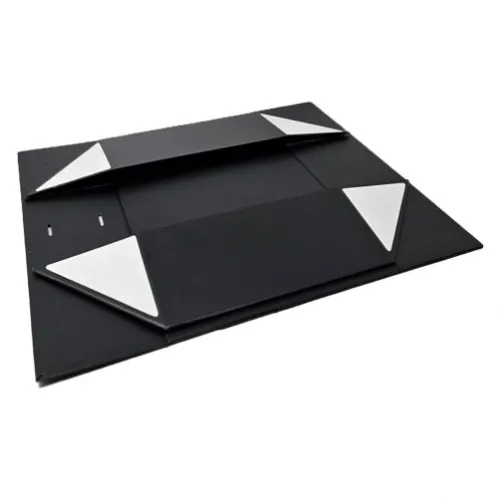
A trial run exists to answer one question: will this packaging sell? Digital printing fits that job because there are no plates and no make-ready. Your artwork goes straight to print, so a short run can start quickly and carry two or three design versions at once — useful when testing which colourway your customers pick up first.
Trial runs are printed digitally through our production partner, not on our own presses — a deliberate choice. A digital press is the right tool for 500 pieces; setting up an offset press for the same quantity would put most of the cost into make-ready.
Three honest differences to plan around:
- Unit cost is higher, and it falls slowly. With no plate cost to spread, doubling a digital run roughly doubles the print cost. The saving at trial-run quantities comes from avoiding plates, tooling and make-ready altogether — not from a low unit price.
- Colour is very good, but not identical to offset. A digital sample is not a perfect colour reference for a later offset bulk run. When you move to bulk, we re-proof colour on the offset press and file the approved sample as the production reference.
- Small changes are cheap. With no plates to remake, adjusting artwork, text or a barcode between a trial run and the bulk order costs little. Tell us at the trial stage if a bulk run is likely — we keep the artwork, dieline and colour notes on file.
Route 2: Bulk Orders — Offset Printing In-House
Bulk orders are printed in our own facility in Shenzhen on our Heidelberg offset presses (CD 102-4, CX 104-4, CX 75-4 and SM 52-4), in CMYK with Pantone spot colours for brand-critical panels. Printing, die-cutting, finishing and gluing all happen under one roof, so a bulk run can move from approved sample to shipment without leaving the factory.
The economics are the mirror image of digital. Plates and make-ready are fixed costs: they cost the same whether we print 2,000 or 20,000 pieces. Spread over a long run, they become a small fraction of the unit price — and that is where the bulk discount comes from. It is not a volume favour; it is arithmetic.
Bulk is also where finishing pays off: lamination, foil stamping, embossing and spot UV are applied in-house, so a custom rigid box can carry foil and a magnetic closure without a second supplier. Our folding carton work follows the same logic: cartons are printed, die-cut, finished and glued in one facility, then packed flat and prepared for export.
Minimum Order Quantities by Product
Each product has its own starting quantity. These are the standard minimums from our product pages; smaller first runs are quoted case by case where the artwork and structure are simple, and the exact figure for your specification is confirmed with the quotation.
| Product | Standard MOQ | Sampling |
|---|---|---|
| Custom rigid boxes | 500 pcs | 7–10 days |
| Folding cartons | 1,000 pcs per size | 7–10 days |
| Custom mailer boxes | 1,000 pcs | 7–10 days |
| Custom paper bags | 1,000 pcs per design | 7–10 days |
| Roll labels | 1,000 pcs | 7–10 days |
| Custom stickers | 1,000 pcs | 7–10 days |
Bulk production runs 15–25 days once the sample is approved, on either route. If your launch date is fixed, work backwards: sampling plus bulk production plus freight is the real timeline. For a fuller walk-through of first-order quantities, read our guide on custom packaging MOQ and small first orders.
The Crossover Point: When Bulk Becomes Cheaper
There is no single quantity where digital hands over to offset — it depends on the box size, the print colours and the finishing. But the maths always has the same shape. On a digital run, cost grows almost in step with quantity. On an offset run, the fixed costs stay flat while the variable costs grow with quantity, so the unit price falls steeply at first, then levels off.
As a rule of thumb, once a folding carton or mailer box order passes roughly 2,000–3,000 pieces, offset is usually cheaper per unit than digital. Below that, digital usually wins — or the two are close enough that speed and flexibility matter more than the unit price. Rigid boxes cross over earlier, because their offset route starts at 500 pieces.
Do not guess the crossover for your own specification. Send us the quantity range you are considering — for example 1,000, 3,000 and 5,000 pieces — and we will quote the routes side by side. That comparison costs you one email and often saves a second production run.
Freight: Flat-Packed vs Assembled
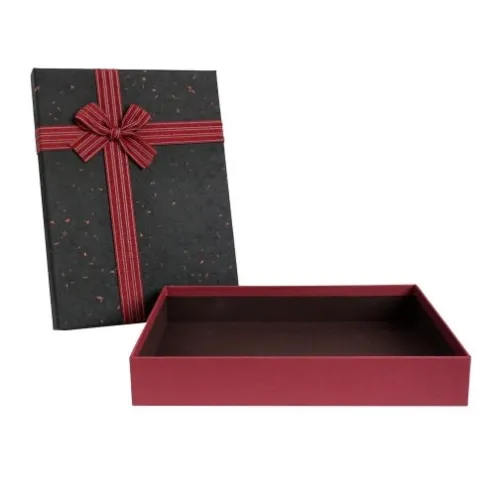
Quantity also decides how your order travels, and freight is where a wrong route choice gets expensive. Folding cartons and mailer boxes ship flat-packed, so they stack tightly and sea freight stays predictable. Rigid boxes ship assembled: a finished rigid box occupies its full volume from the factory floor to your warehouse.
An example makes the gap concrete. An assembled rigid box measuring 30 × 20 × 10 cm occupies 0.006 CBM, so 1,000 of them fill about 6 CBM before pallets and spacing are counted. Flat-packed folding cartons stack far tighter, which is why cartons and custom mailer boxes are the cheapest products to ship by sea. (Illustrative dimensions; we calculate the real CBM from your box size at quotation.)
Two consequences follow. If freight is a large share of your landed cost, split the programme: rigid boxes for the hero SKU, folding cartons for the rest. And order categories together where you can. Cartons, mailer boxes, rigid boxes and inserts from the same factory consolidate into one shipment with one set of export documents, instead of arriving as separate freight bills.
What Happens on Your Second Order
The first order is the expensive one to set up; the second is where the routing pays off. Once your first run is approved, the dieline, the plates and the approved sample stay on file as the production reference, so a repeat order usually moves faster and prices better — the fixed costs were already paid on the first run.
That only works if the second order matches the first. Change the board, size or finishing and some changes need a new sample — cheaper to know before the bulk run starts than after it ships. And if your lid fit was ever a problem, read our guide on rigid box lid fit and tolerance checks before reordering — the five sample checks there apply to every repeat rigid box order.
What to Send Us for a Fast Quote
We reply within 24 hours. The fastest quotes include these seven items:
- Product type and box dimensions, or a photo of the product the box must hold.
- Quantity — or a range, such as 1,000 / 3,000 / 5,000 pieces, so we can quote both routes.
- Artwork files, or a note that artwork is still in progress.
- Board or material preference, if you have one; otherwise tell us the product weight and we will recommend a grade.
- Print colours, including any Pantone references, and the finishing you want.
- Destination city and your target delivery date.
- Whether this is a trial run, a one-off order or the start of a repeat programme.
Missing items do not block a quote, but a complete enquiry usually gets a priced answer in one round instead of three.
FAQ
Can I order 500 folding cartons?
The standard MOQ is 1,000 pieces per carton size. Smaller first runs are quoted case by case where the artwork and structure are simple — a 500-piece order is possible, but priced as an exception.
Will my trial-run colours match the bulk run?
Very closely, but not perfectly. Digital and offset printing reproduce colour differently, so when a trial run moves to bulk we re-proof colour on the offset press and check it against the approved sample before the run starts.
Is digital printing lower quality than offset?
No — it is different, not worse. Digital is sharp and consistent and needs no plates, which suits short runs. Offset wins on long runs, Pantone matching and unit price once the quantity spreads the fixed costs.
How long does each route take?
Sampling takes 7–10 days and bulk production 15–25 days on either route. The difference is set-up: digital starts printing sooner, offset spends longer in make-ready, then prints faster per unit.
Can I combine a trial run and a bulk order?
Yes. A common pattern is a 500-piece trial run of folding cartons, followed by a bulk rigid box order for the winning SKU. Tell us the plan upfront and we will route each part separately and consolidate the freight.
Get a Packaging Quote
Send your box size, product details, quantity and artwork through our contact page, or email info@jeelipackaging.com. We will return a route recommendation and a price indication within 24 hours. Include the quantity range you are considering — the side-by-side quote is the fastest way to see which route your order belongs on.
Jeeli Packaging
Jeeli Packaging is a custom packaging manufacturer in Shenzhen, China, established in 2009. We print, die-cut, finish and assemble rigid boxes, folding cartons, mailer boxes, paper bags, hang tags, labels and stickers in our 12,000 m² facility, with sampling in 7–10 days and bulk production in 15–25 days.