
Hang Tags
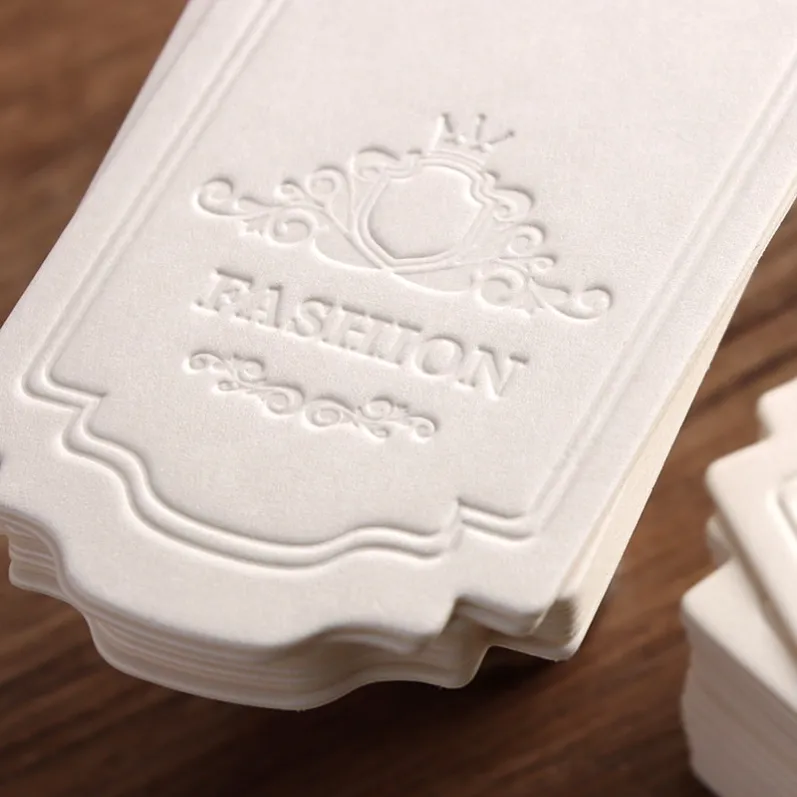
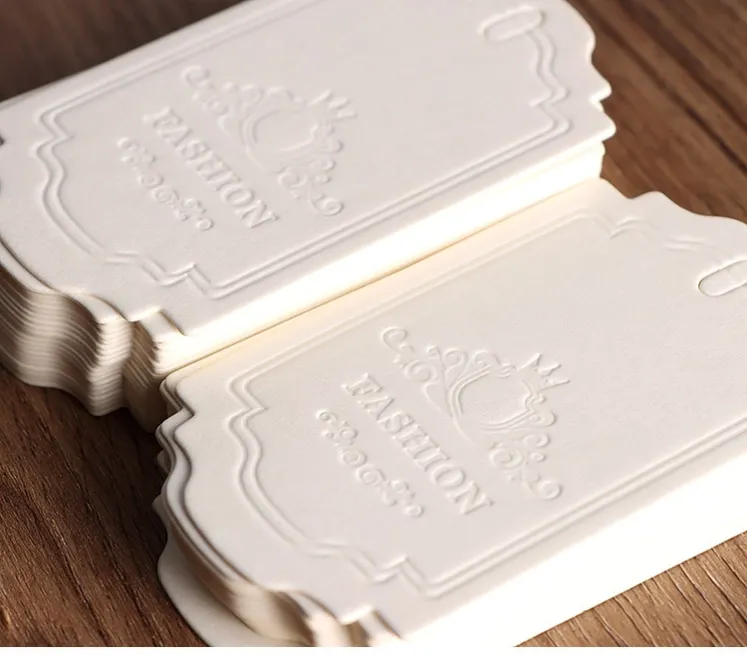
Custom Debossed Clothing Hang Tags
Custom debossed clothing hang tags for fashion and retail brands. Choose paper, size, printing, foil, strings and debossed logo or artwork details.
Custom Debossed Hang Tags for Clothing Brands
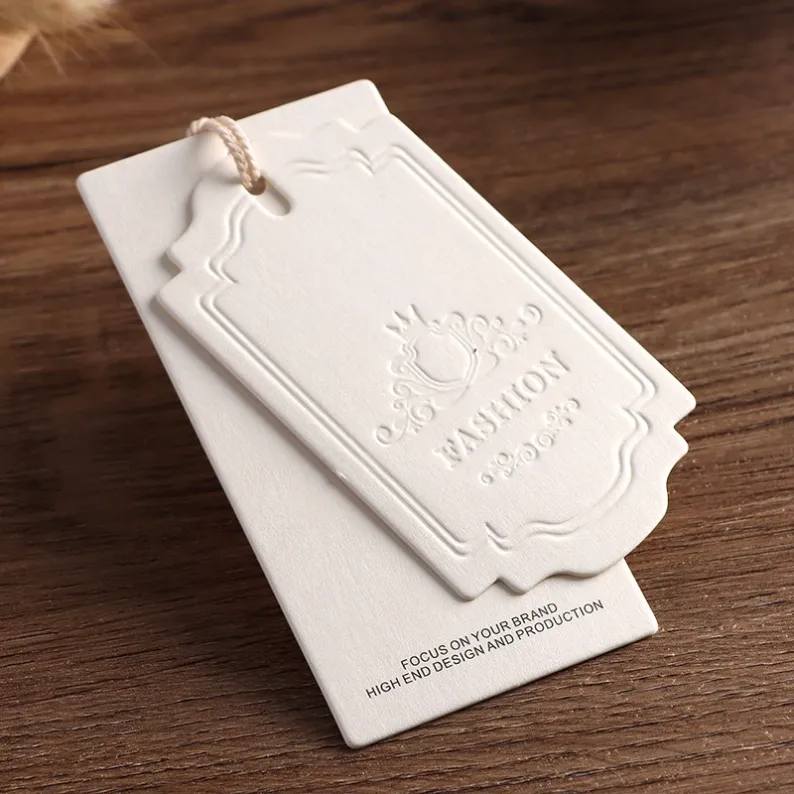
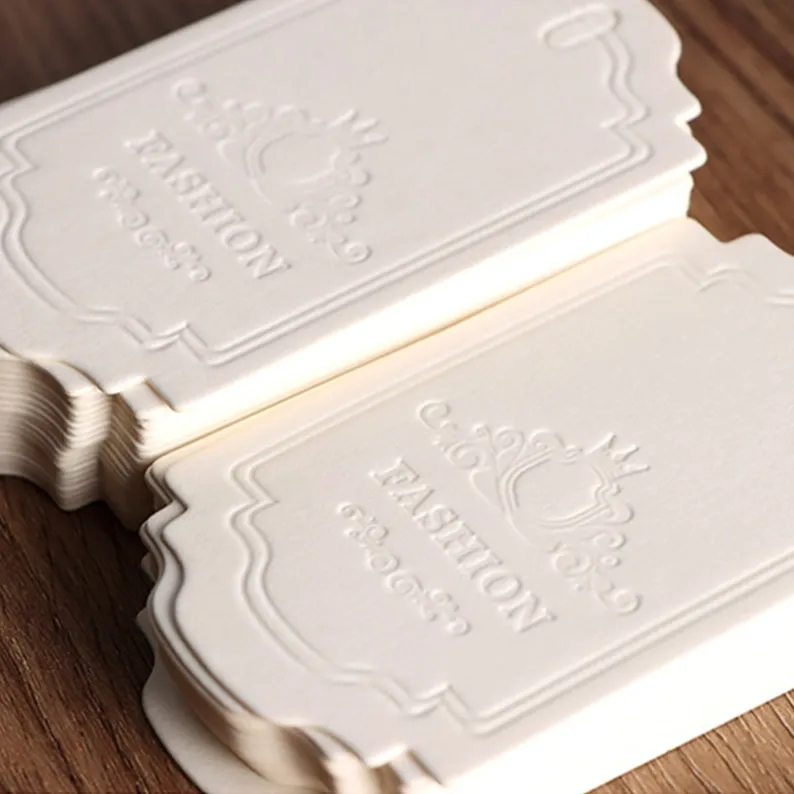
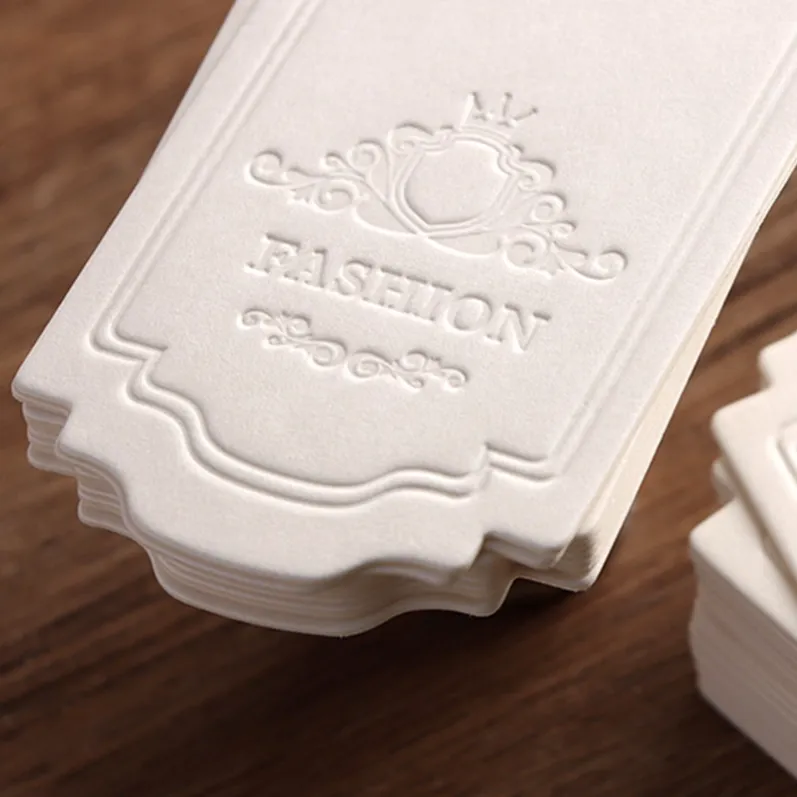
Debossing presses a logo, pattern or other artwork into the paper, creating a recessed detail that can be seen and felt without relying on additional printed color.
For clothing brands, it works particularly well when the hang tag design is simple and the paper itself is an important part of the presentation.
Custom debossed hang tags can be produced in different sizes, shapes and paper stocks, with printing, foil and attachment options selected according to the final design.
What Makes a Good Debossed Hang Tag?
A good deboss is not simply about pressing the artwork as deeply as possible.
The final result depends on several factors:
- Paper thickness
- Paper density and surface
- Artwork size
- Line thickness and spacing
- Debossed area
- Tag size
- Other printing or finishing on the tag
Fine text and very small details may behave differently from a larger logo or simple graphic.
If a deep deboss is important to your design, see our guide to deep debossed custom hang tags for more detail on paper and artwork selection.
Choosing Paper for Debossing
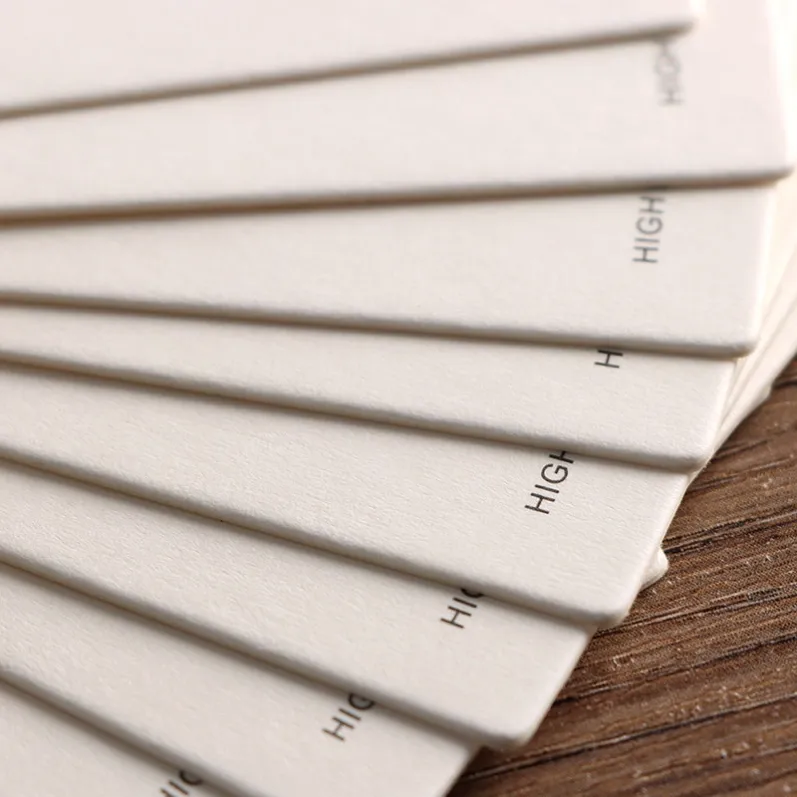
Paper selection has a significant effect on how the recessed impression looks and feels.
Options can include:
- Coated paper
- Uncoated paper
- Black cardstock
- Kraft paper
- Textured paper
- Specialty paper
- Recycled paper
Different papers respond differently under pressure. A paper that looks attractive on screen or in a swatch book may not necessarily produce the deboss depth or edge definition you expect.
For this reason, paper and finishing should be considered together rather than selected separately.
Debossing With Printing or Foil
Debossing can be used by itself or combined with other finishing techniques.
Common combinations include:
- Debossing + black printing
- Debossing + CMYK printing
- Debossing + Pantone color
- Debossing + gold foil
- Debossing + silver foil
- Debossing + spot UV
A blind deboss uses the recessed impression without adding ink or foil. This can create a quieter, more tactile result.
If metallic details are part of the design, our gold foil hang tags provide another finishing option to compare.
Custom Sizes, Shapes and Attachments
Debossed clothing hang tags can be customized to suit the garment and artwork.
Options can include:
- Custom tag sizes
- Rectangular, square or die-cut shapes
- Single- or double-sided printing
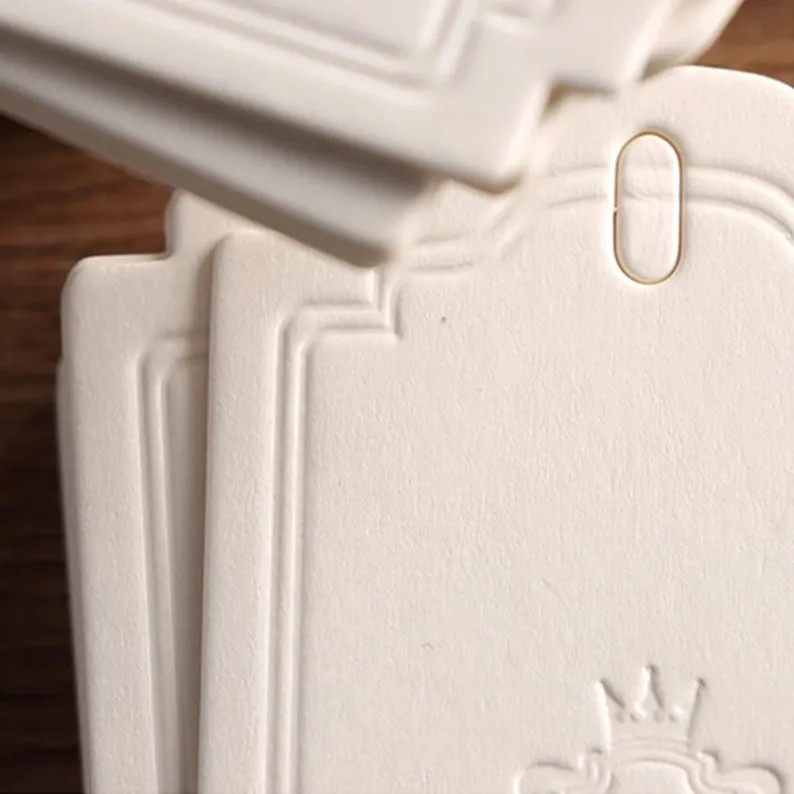
- Custom hole position
- Rounded or square corners
- Cotton string
- Waxed cord
- Elastic string
- Ribbon
- Metal eyelets
The hole position and attachment should be considered during artwork development, especially when the debossed area is close to the edge of the tag.
If you are still deciding on dimensions, our clothing hang tag size guide explains how artwork, product information and attachment position affect the finished size.
Where Are Debossed Hang Tags Commonly Used?
Debossed hang tags can work well for:
- Fashion and apparel
- Denim
- Streetwear
- Knitwear
- Accessories
- Jewelry
- Boutique products
- Lifestyle brands
- Gift products
The technique is particularly useful when the brand wants the paper, typography and tactile detail to do more of the visual work.
What Should Be Confirmed Before Sampling?
Before producing a sample, it helps to confirm:
- Finished tag size
- Paper type and thickness
- Debossed artwork
- Approximate deboss position
- Printing colors
- Foil requirements
- Hole size and position
- String or attachment
- Quantity
Artwork should be reviewed carefully because extremely fine lines, small text or closely spaced elements may need adjustment for the selected paper and finishing process.
Why Is a Physical Sample Important?
Debossing is a tactile process, so a screen proof cannot fully show the final depth, edge definition or interaction between the artwork and paper.
A physical sample allows you to review:
- Deboss depth
- Artwork definition
- Paper response
- Position and alignment
- Printing or foil combination
- Overall look and feel
If the debossed effect is important to the brand presentation, these details should be reviewed before bulk production.
FAQ
What is the difference between embossing and debossing?
Debossing creates a recessed impression by pressing the design into the paper.
Embossing creates a raised impression above the surrounding paper surface.
Both can be used for logos, typography and decorative details.
Does thicker paper always create a deeper deboss?
Not necessarily.
Thickness is only one factor. Paper density, fibre structure, surface, artwork and production settings can all influence the final result.
Can debossing be combined with gold foil?
Yes. Debossing and foil stamping can be combined, depending on the artwork and desired appearance.
The exact result should be reviewed with the selected paper and finishing specification.
Can small text be debossed?
It may be possible, but very small text or fine lines can lose definition.
Artwork should be reviewed before production rather than assuming that every printed detail will translate directly into debossing.
Can you make custom shapes?
Yes. The tag size, outline, hole position and attachment can be customized according to the artwork and product requirements.
Request a Quote for Custom Debossed Hang Tags
Send us your artwork, finished size, quantity and preferred paper or reference image.
If the material or deboss specification has not been finalized, we can review the paper, artwork and finishing requirements before sampling.