Hot Foil Stamping vs Spot UV on Dark Packaging: A Buyer’s Guide
Compare hot foil stamping and spot UV for dark packaging, including artwork, lighting, lamination, handling and the sample checks buyers should make.
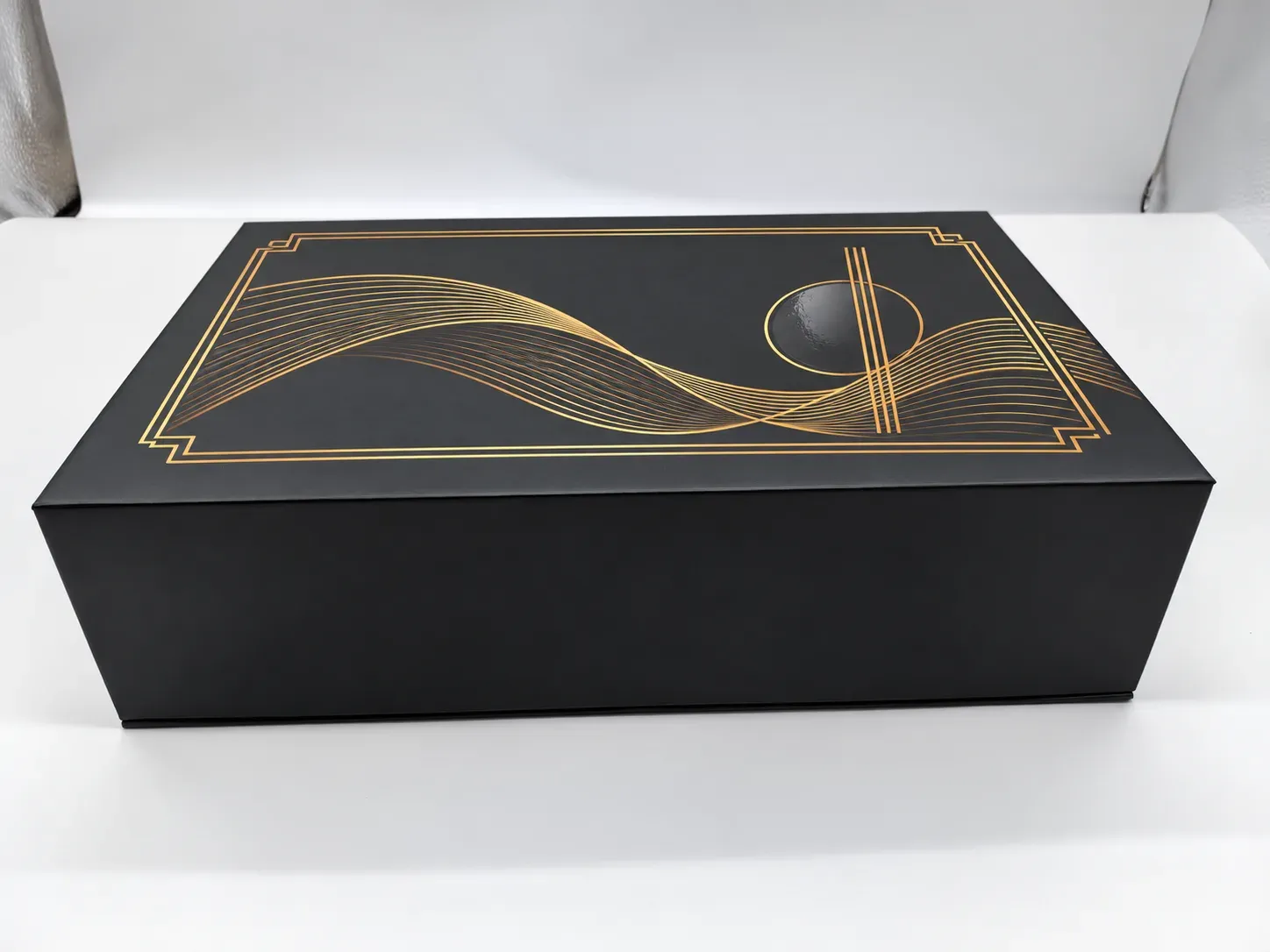
Choosing between hot foil stamping and spot UV on dark packaging is not only a style decision. Buyers should compare the artwork, substrate, lamination, lighting, handling conditions and the role the finish must play. Foil can create a strong metallic highlight, while spot UV creates gloss and texture contrast over the printed surface. Neither finish is automatically better or more durable. The practical choice should be based on representative samples using the actual paper, dark color, structure and artwork.
Why dark packaging changes the decision
Black, navy, burgundy and deep green packaging can make finishing effects look more dramatic, but they also reveal dust, fingerprints, scuffs and registration differences. A finish that looks attractive in a close-up photograph may appear too subtle in soft light or too reflective under direct light.
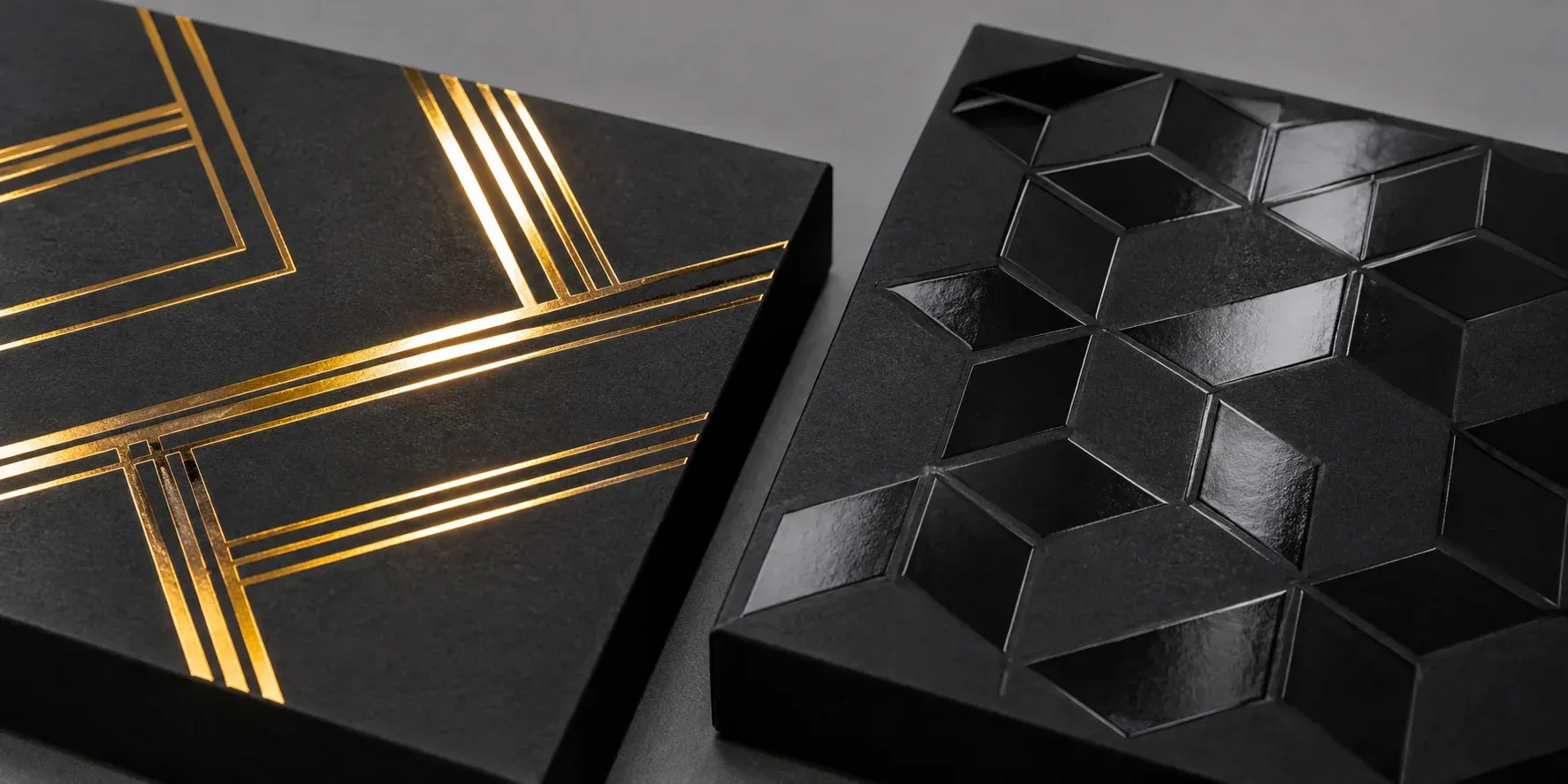
Hot foil stamping transfers a foil film with heat and pressure. Spot UV applies a clear glossy coating to selected artwork areas. Foil creates contrast through color and reflection; clear spot UV depends mainly on gloss and viewing angle.
Compare the viewing effect first
Foil is usually easier to recognize from a distance because the metallic surface catches light. It can suit logos, borders, short text and controlled accents. Spot UV is often more discreet. It works well for tone-on-tone patterns, secondary graphics and details intended to appear as the customer moves the package.
Consider where the pack will be viewed: online photography, retail lighting, an unboxing video or a customer’s home. Test the finish under warm, cool, frontal and angled light rather than approving it under one desk lamp.
For the base surface, review Jeeli Packaging’s matte vs gloss lamination guide.
Match the finish to the artwork
Foil stamping is effective for bold logos, line motifs, emblems and short typography. Very fine lines, tiny gaps, tight reversals or large solid areas may need adjustment. Spot UV can reproduce detailed patterns, but fine features and alignment with printed graphics still require production review.
Separate print, foil and spot UV into clearly named vector layers. Do not rely on a flattened preview image. Ask the supplier to review practical line widths, gaps and registration tolerances for the actual material and equipment.
Paper, print and lamination must be tested together
A smooth laminated surface, textured paper, uncoated stock and printed dark ink do not behave in the same way. The final result depends on the complete layer sequence: base paper, printed color, lamination and accent finish.
Jeeli Packaging’s custom packaging manufacturing process shows how material selection, printing, finishing, sampling and packing connect. Approve the full combination, not a generic foil or coating swatch.
Foil stamping vs spot UV: buyer comparison
- Visual effect: foil adds a transferred reflective surface; spot UV adds clear gloss over the base color.
- Typical use: foil suits prominent logos and borders; spot UV suits tone-on-tone patterns and selective highlights.
- Lighting: foil changes apparent brightness with angle; spot UV may become visible only when light crosses the coated area.
- Artwork risks: foil requires checks for filling and missing detail; spot UV requires checks for coverage and registration.
- Sample focus: inspect edge definition, placement, gloss consistency, surface pressure and alignment.
Check handling and scuff visibility
Dark surfaces may show handling marks more clearly. A glossy accent can reveal fingerprints, while foil can draw attention to dents or pressure marks around the stamped area. Recreate the real packing and delivery journey: handle, sleeve, stack, repack and inspect the sample under several angles.
Finish placement should also respect folds, edges, handles and holes. This matters on custom hang tags and custom paper bags, where the surface may flex during use.
Can foil and spot UV be combined?
Yes, when each finish has a separate purpose. Foil may establish the primary logo while spot UV creates a quieter background pattern. However, two finishes in one small area can add visual noise and make registration differences more visible. Ask for a finishing map and a physical sample before approval.
Sample approval checklist
- Inspect the finish under relevant warm, cool and directional lighting.
- Check fine lines, small type, reversals, corners and edges.
- Compare placement with the approved dieline and artwork.
- Check registration between print, foil and spot UV.
- Look for missing foil, filled detail, uneven gloss or pinholes.
- Fold and open the pack, then inspect finishes near creases and closures.
- Handle and repack the sample to evaluate fingerprints and scuffs.
- Approve paper, color, lamination and finish as one system.
What to include in a quotation request
Send the packaging type, dimensions, structure, intended use, paper preference, dark-color reference, lamination choice, vector artwork, dieline, finish layers, foil color, spot UV areas, quantity, packing method and sample objective. Clear information helps the supplier identify compatibility questions before production.
Frequently asked questions
Is foil stamping better than spot UV on black packaging?
No universal answer exists. Foil provides stronger reflective contrast, while spot UV creates a subtler gloss effect. Choose according to the artwork and viewing environment.
Can spot UV be applied over matte lamination?
This combination can create strong gloss contrast, but compatibility and appearance must be confirmed on the selected material with a representative sample.
Will fine logo details reproduce correctly?
Fine lines and gaps may need adjustment. The supplier should review the production artwork before approval.
Can foil and spot UV overlap?
Possible combinations depend on materials and production sequence. Treat overlap as a technical question and confirm it through sampling.
What files should buyers provide?
Provide the dieline, vector artwork, separate print and finish layers, dimensions, color references, material preferences and reference images.
Build the finish around the viewing experience
Give each finish a clear job and test it under real light, handling and packing conditions. Before sharing artwork, use Jeeli Packaging’s verified contact route and confirm how project files should be submitted. A discussion does not confirm compatibility, price, timing or production approval.