
Perfume Box Packaging: How to Design a Fragrance Box That Sells
How to design a perfume box that sells: choose the right style, fit the bottle, match colours, pick premium finishes and check every detail before production.
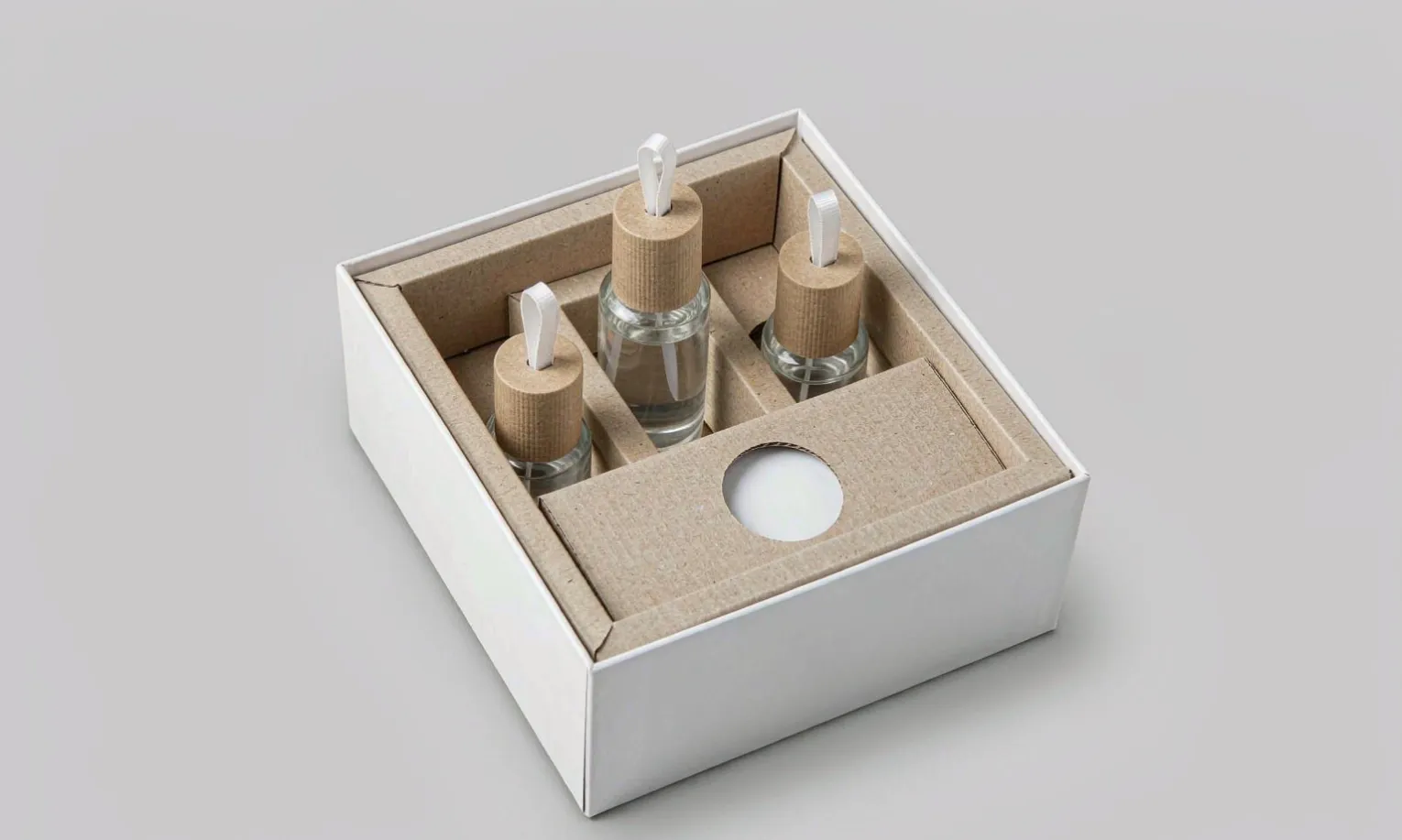
A perfume box does more than hold a bottle. On a shelf or a screen, it is the first thing a customer touches, reads and judges, often before they have smelled the fragrance inside. A well-designed box protects a fragile glass bottle and makes the price feel justified.
This guide covers the decisions that matter most: box style, bottle fit, colour, finishes, structure, materials, and the checks to make before you order.
Start with the job the box has to do
Before you choose a style, list what the box must do: hold the bottle still, survive handling and shipping, and carry the brand name, scent name, volume and required information clearly. A discovery set and a two-bottle gift set do not need the same box.
The same thinking applies across beauty packaging. Our guide to custom makeup and skincare packaging shows how cartons and rigid boxes are matched to different beauty products.
Choose the right box style
Three structures cover most perfume boxes, and each has a clear place.
Tuck-end folding carton
A tuck-end folding carton is a single piece of printed paperboard that folds into shape, with tuck flaps closing each end. It is light and ships flat. A custom tuck-end folding carton suits standard 30 ml and 50 ml bottles, discovery sets and retail ranges.
Rigid box
A rigid box is made from thick, non-folding board wrapped in printed paper, so it holds its shape and feels solid in the hand. It is the natural choice for premium and gift fragrances, for 100 ml bottles, and for sets where unboxing is part of the experience.
Rigid box with sleeve
A rigid box with a sleeve adds a printed outer sleeve that slides over the box and carries the main artwork and scent story, while the box inside stays simple and strong. It suits limited editions and seasonal gift sets.
| Style | Best for | Strengths | Watch out for |
|---|---|---|---|
| Tuck-end folding carton | 30 ml and 50 ml bottles, discovery sets, retail ranges | Light, flat-packed, easy to print | Needs a well-fitted insert |
| Rigid box | Premium and gift fragrances, 100 ml bottles, sets | Solid feel, holds its shape | Heavier and more costly per unit |
| Rigid box with sleeve | Limited editions, seasonal sets, gifting | Sleeve carries the artwork | Check the sleeve fit on a sample |
Bottle sizes and inserts that hold the bottle safely
Perfume bottles are glass, and glass does not forgive a loose fit. The insert should grip the bottle by its base and neck so it cannot move, tip or rattle. Paperboard inserts suit lighter bottles; corrugated or foam inserts suit heavier glass and gift sets. Measure the bottle, including its cap, before the insert is drawn: a bottle a few millimetres wider than the drawing will not sit properly. For material trade-offs, see our insert materials guide.
Think in terms of the bottle: a 10 ml bottle suits a small carton or a discovery set, 30 ml and 50 ml are the standard retail sizes, and a 100 ml bottle is heavier and more fragile, so it usually needs a rigid box and a deeper, firmer insert.
Match the colour to your brand guidelines
Colour is where many perfume boxes go wrong. A shade that looked right on screen can print differently on coated and uncoated paperboard, and gold or deep navy can shift more than you expect. Send your brand guidelines and Pantone references with the order, and ask for a printed proof of the main panels before production. Our guide to CMYK vs Pantone for retail packaging explains the choice.
Check the artwork too: scent name, volume, ingredients and mandatory information should be checked against the final dieline, not a screen mock-up.
Finishes that give a premium look
Finishes are what a customer feels as well as sees. Soft-touch lamination gives a smooth, matte feel and resists fingerprints. Foil stamping picks out a logo or scent name in metallic gold, silver or copper. Embossing raises the brand mark so it can be felt, and spot UV adds a gloss pattern on a matte surface.
Build a structure that survives shipping
A perfume box also has to travel. The bottle is heavy for its size, so the base must not flex, the insert must not collapse, and the lid must stay closed. Ask for a sample packed exactly as it will ship, then check it after a courier journey or a drop test.
Materials and sustainability
Most perfume boxes use SBS paperboard for folding cartons and rigid board for rigid boxes. If sustainability matters to your brand, ask about recycled content and recyclable options, and choose a structure that can be reused or recycled.
What to confirm with your supplier before ordering
Before you confirm an order, check these points with your supplier:
- Bottle measurements, including the cap, and a sample bottle.
- Box style, board, print colours and finishes, quoted per specification.
- A printed proof of the artwork and colours before production.
- Insert material and fit, tested with the real bottle.
- A packed sample that has travelled by courier.
- Minimum order quantity and lead time.
- Recycled content and recyclable options, if your brand needs them.
Frequently asked questions
What is the best box for a 50 ml perfume bottle?
A tuck-end folding carton with a paperboard insert suits most 50 ml bottles. Choose a rigid box for premium or gift positioning.
How do I stop a glass bottle from breaking in transit?
Use an insert that grips the base and neck, a box that does not flex, and a packed sample tested by courier.
Should I choose CMYK or Pantone for my perfume box?
Pantone is safer for an exact brand colour; CMYK suits full-colour artwork. See our guide to CMYK vs Pantone for retail packaging.
How is the price of a perfume box decided?
Price is quoted per specification, based on box style, board, size, print, finishes and quantity.
How Jeeli Can Help
To turn this guide into a box, contact Susan Hou, Business Development Director at Jeeli Packaging. Share your bottle size, brand guidelines and artwork, and Jeeli will prepare a sample so you can check the fit, colour and finish before production. Artwork can be revised after the sample, and you will receive progress updates during production until your order is ready to ship.