
Packaging Knowledge
What Are Folding Cartons? Structure, Board Choices and When to Use Them
Folding cartons are paperboard boxes printed flat and folded into shape at packing. See structures, board weights and when they beat corrugated boxes.
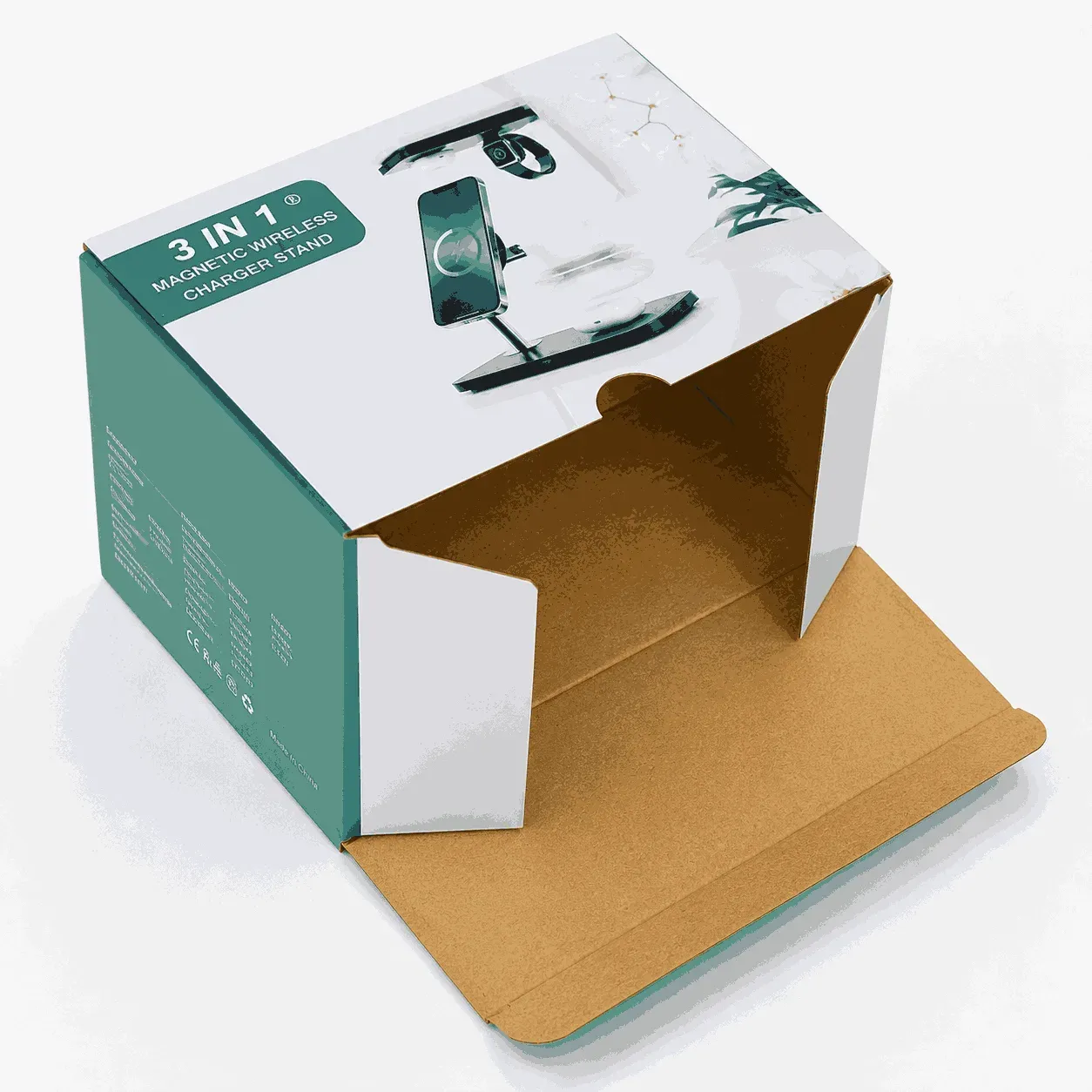
What Are Folding Cartons?
A folding carton is a box made from paperboard that is printed, die-cut and creased while flat, then folded into its final shape at the packing line. Unlike rigid boxes, folding cartons ship flat and pop open in seconds, which is why they are the default choice for retail shelf packaging: cosmetics, supplements, electronics, food-adjacent dry goods and most consumer products that sit on a store shelf.
If you have ever opened a toothpaste box, a phone accessory box or a skincare carton, you have handled a folding carton. The category is sometimes called "folding paperboard boxes" or "folding carton packaging", and it covers everything from a simple reverse-tuck end box to a windowed carton with an inner blister retainer.
How a Folding Carton Is Made
The production flow explains both the cost advantage and the design limits:
Board comes off the roll or sheet — typically 250–400 gsm paperboard, chosen for stiffness and print surface.
Printing — offset printing in CMYK or Pantone, usually on the outer side; inside printing is optional.
Finishing — lamination (matte/gloss/soft-touch), spot UV, foil stamping or embossing happen while the sheet is still flat.
Die-cutting and creasing — the flat blank is cut to shape with crease lines so it can fold cleanly.
Folding and gluing — machines fold the blank along creases and glue the seams where needed. The carton is shipped flat.
Final folding at packing — the brand or co-packer pops the carton open, inserts the product and closes the tucks.
Because all decoration happens on a flat sheet, folding cartons get the highest print quality per dollar of any box style — and because they ship flat, freight and storage costs stay low. The trade-off is strength: the same thin board that makes them economical also means they are not meant to survive parcel shipping on their own. See our guide on folding cartons vs corrugated boxes for where the line sits.
Common Folding Carton Structures
Reverse tuck end (RTE) — the most common style; both tuck flaps close on the same side, saving board and setup time.
Straight tuck end (STE) — tucks on opposite sides, giving a clean front panel with no visible closure edge.
Auto-bottom (1-2-3 bottom) — the base snaps into place automatically when the box is opened; ideal for heavier small items.
Seal-end — glued shut and opened at packing; used for food and products requiring tamper evidence.
Sleeve and tray — a sliding sleeve over a tray, common in premium confectionery and gift sets.
Window cartons — a die-cut opening with a clear PET/PP film so the product shows through; see our window folding cartons.
Not sure which structure fits your product and packing line? Our guide to choosing a folding carton structure compares tuck end, seal end and auto bottom styles in detail.
Which Board Should You Choose?
Board choice drives both feel and freight. As a starting point:
250–300 gsm SBS (white) — light retail items: lip balm, sachets, small electronics accessories.
300–350 gsm SBS — the workhorse for skincare cartons and mid-size retail boxes.
350–400 gsm — heavier items or when shelf presence matters.
Kraft paperboard — natural look for eco-positioned brands; printable but with a warmer tone.
Our overview of folding carton paperboard selection goes deeper into stiffness, coating and food-contact grades. If your products are beauty or personal care items, our cosmetic folding cartons page shows typical structures and finishes for that category.
When a Folding Carton Is the Right Choice
Choose a folding carton when your product will sit on a shelf inside another shipping container — a master carton, a mailer or a case pack. The carton's job is to present, inform and protect from dust and scuffs, not to survive courier networks alone. If your product ships directly to consumers in its retail box, combine the carton with a corrugated custom mailer box or add an insert.
Frequently Asked Questions
Are folding cartons the same as paperboard boxes?
Yes — "folding carton", "paperboard box" and "carton board box" describe the same category: boxes made from folding boxboard that ship flat and are erected at packing.
What is the minimum order quantity?
For custom-printed folding cartons, typical MOQs start around 1,000–5,000 pcs because of the printing plate and die-cut tooling. At Jeeli Packaging the MOQ starts at 1,000 pcs for most carton styles.
Can folding cartons be recycled?
In most cases yes. Uncoated or polymer-coated paperboard is widely recyclable; laminated or foil-stamped boards depend on local recycling rules. Ask your supplier for the board's certification (FSC or equivalent) if sustainability claims matter to your brand.
Get a Folding Carton Quote
Jeeli Packaging prints and die-cuts custom folding cartons from 1,000 pcs, with full structural and artwork support. Browse our printed folding cartons or request a quote with your product dimensions — our engineers will recommend board, structure and finish.
Sourcing from an experienced folding carton manufacturer shortens sampling time and prevents structure surprises at the packing stage.