
Sep 29, 2026Blog
How to Choose the Right Folding Carton Structure for Your Product
Learn how to choose the right folding carton structure based on product weight, box size, packing method, assembly speed, protection and cost.
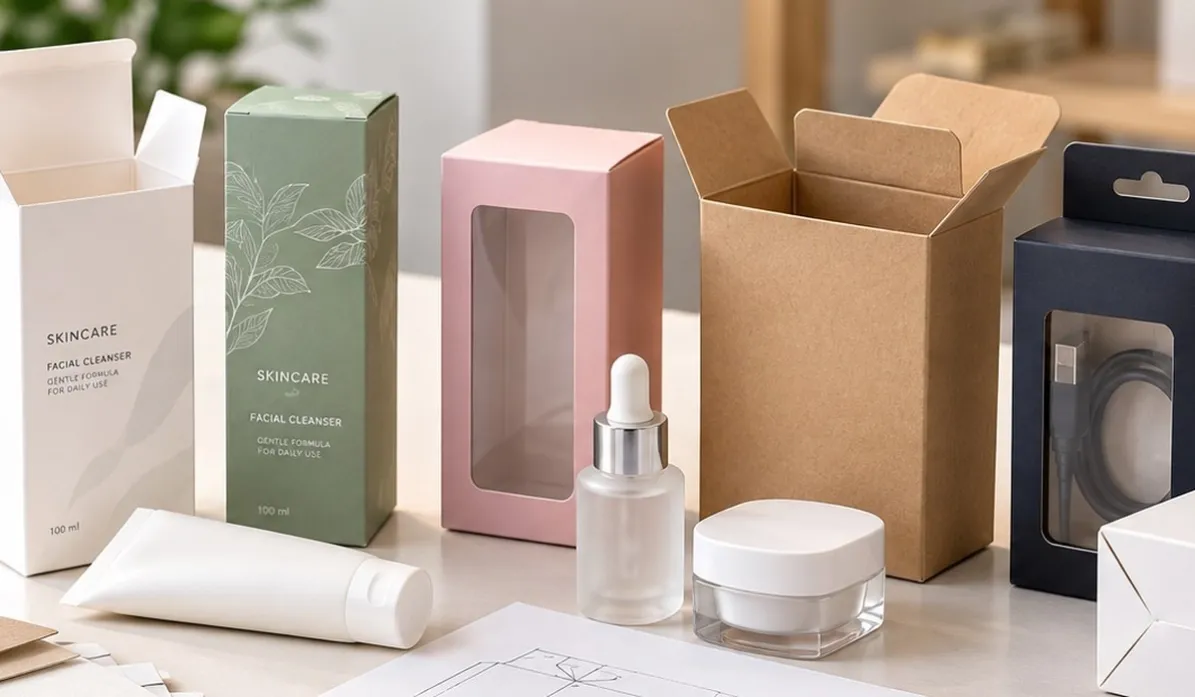
A buyer sends a packaging photo and asks:
“Can you make this box?”
Usually, the answer is yes.
But before copying the structure, there is a more useful question:
Is this folding carton structure actually suitable for the product and packing process?
Two cartons can look very similar after assembly but behave very differently during packing.
A simple tuck end carton may work perfectly for a lightweight skincare product.
A heavier bottle may need more bottom support.
A project involving thousands of cartons may benefit from a structure that reduces manual assembly time.
So choosing a folding carton structure should not begin with appearance alone.
A better process is:
Product → Weight → Carton Size → Packing Method → Structure → Paperboard → Sample
Start With the Product, Not the Box Style
Before deciding whether you need a tuck end, auto lock bottom or another folding carton structure, first understand what will actually go inside the box.
Useful information includes:
- Product dimensions
- Product weight
- Product shape
- Number of components
- Whether an insert is required
- How the product will be loaded
- How many cartons need to be packed
- Retail and shipping requirements
This matters because the carton is not an isolated object.
It needs to work with the actual product.
For example, a lightweight charging cable and a heavy glass cosmetic bottle may use cartons of similar dimensions, but they do not necessarily need the same bottom structure.
If you are still confirming the carton dimensions, our folding carton product fit guide explains why product dimensions and finished box dimensions are not always the same.
1. Tuck End Boxes: A Practical Starting Point
Tuck end boxes are among the most common folding carton structures.
They normally use tuck flaps to close the carton and are widely used for:
- Cosmetics
- Skincare
- Small electronics
- Personal care products
- Accessories
- Food and consumer products
- Other lightweight retail products
Two common versions are Straight Tuck End (STE) and Reverse Tuck End (RTE).
For many products, a tuck end carton is a practical starting point because the structure is relatively simple and the cartons can normally be supplied flat.
However, “simple” does not mean the structure can be selected without considering the product.
The tuck flaps, dust flaps, paperboard thickness and finished dimensions still need to work together after assembly.
2. When Does an Auto Lock Bottom Make Sense?
An auto lock bottom carton uses a pre-glued bottom structure.
When the flat carton is opened into shape, the bottom forms into position without requiring the packer to manually build the bottom flap by flap.
This can be useful when:
- Many cartons need to be assembled
- Faster packing is important
- The product places more load on the bottom
- A simple tuck bottom does not provide the preferred support
- The packing process involves repeated manual carton forming
Typical applications may include:
- Bottles
- Jars
- Candles
- Cosmetics
- Personal care products
- Small electronics
- Other retail products requiring additional bottom support
But an auto lock bottom is not automatically the better choice.
It has a more complex construction and additional gluing requirements.
For a lightweight product or a relatively small packing quantity, the additional structure may provide little practical benefit.
3. What About Snap Lock Bottom Boxes?
A snap lock bottom generally uses interlocking bottom flaps that are folded manually into position.
Unlike an auto lock bottom, the bottom is not designed to form automatically when the carton is opened.
This means the buyer should consider both:
Bottom Support + Assembly Time
A snap lock structure may provide useful bottom support without using the same pre-glued automatic bottom construction.
However, each bottom still needs to be assembled correctly.
For smaller production runs, this may not be a major issue.
For projects where thousands of cartons are packed manually, the additional assembly time can become more important.
This is why structure should be evaluated as part of the packing process rather than only by looking at the finished box.
4. Product Weight Can Change the Structure Decision
One of the first questions a packaging supplier should understand is:
How much does the packed product weigh?
Box dimensions alone do not provide this information.
Imagine two cartons with almost identical finished dimensions.
Carton A
Contains a lightweight skincare tube.
Carton B
Contains a glass bottle filled with product.
The dimensions may be similar.
The load placed on the carton is not.
Product weight can influence:
- Bottom structure
- Paperboard selection
- Insert requirements
- Gluing
- Carton stiffness
- Handling performance
This does not mean every heavier product automatically needs an auto lock bottom.
The complete packaging system still needs to be evaluated.
But product weight should be known before the structure is finalized.
5. Packing Quantity Matters More Than Buyers Sometimes Expect
A structure that is easy to assemble once may become inefficient when it needs to be assembled thousands of times.
Imagine two structures.
One takes approximately the normal amount of manual folding and locking.
Another reduces several repeated packing steps.
For 20 samples, the difference may seem insignificant.
For 10,000 cartons, it may become much more important.
This is why buyers should ask:
Who will assemble the cartons, and how will they actually be packed?

Consider whether packing will be:
- Manual
- Semi-automatic
- Automated
- Completed by your own factory
- Completed by a contract packer
- Completed at another supplier
If the carton will run on packing equipment, the equipment requirements should be discussed before finalizing the structure.
A carton should not only look good after assembly.
It should also fit the real production process.
6. Inserts Can Affect the Outer Carton Structure
The product may not sit directly inside the carton.
It may use:
- Paperboard inserts
- Corrugated inserts
- Molded pulp
- EVA or foam
- Plastic trays
- Custom die-cut holders
In that situation, the packaging should be developed as:
Product → Insert → Outer Carton
The insert can change:
- Internal dimensions
- Product position
- Loading direction
- Pressure on the side panels
- Bottom load
- Opening method
Selecting the outer carton first and designing the insert later can create unnecessary fitting problems.
For products where fit is important, the complete package should be tested together before mass production.
7. Do You Actually Need a Window?
A window is another structural decision rather than simply a graphic feature.
A window can help when seeing the actual product supports the customer's buying decision.
This is common for products such as:
- Electronic accessories
- Cables
- Earphones
- Beauty products
- Small retail accessories
But removing part of the paperboard also changes the carton.
Window size, position, product placement and remaining board area therefore need to be considered together.
Before adding a window, ask:
What does the customer gain by seeing the actual product?
If the answer is very little, a fully printed carton may be simpler.
8. Paperboard and Structure Should Be Selected Together
Another common mistake is:
Choose the structure first → choose the paper later.
These decisions are connected.
Paperboard thickness and stiffness can affect:
- Folding
- Creasing
- Tuck flap fit
- Locking areas
- Bottom assembly
- Finished carton dimensions
- Panel stiffness
A structure developed around one paperboard may behave differently if the board is changed later.
This is particularly important when buyers decide to increase the GSM because they want the carton to feel stronger.
Higher GSM does not automatically mean better carton performance.
The board still needs to work with the dieline, creasing and folding structure.
9. More Complicated Does Not Automatically Mean Better
Packaging buyers sometimes assume:
More complex structure = better packaging.
That is not necessarily true.
A more complicated carton can involve:
- More die-cutting details
- Additional gluing
- More assembly steps
- Higher production cost
- More potential failure points
If those features solve a real packaging problem, they may be worthwhile.
If they do not, the buyer may simply be paying for unnecessary complexity.
For example, a lightweight cosmetic tube may perform perfectly well in a simple tuck end carton.
Adding a complex bottom structure does not automatically improve the customer experience.
The objective should be:
Use the simplest structure that reliably meets the product, presentation and packing requirements.
A Simple Folding Carton Structure Comparison
Consideration | Tuck End | Auto Lock Bottom | Snap Lock Bottom |
|---|---|---|---|
Basic construction | Relatively simple | Pre-glued bottom | Interlocking bottom flaps |
Bottom assembly | Manual | Forms when carton opens | Manual locking |
Packing speed | Standard | Usually faster | More manual |
Bottom support | Depends on design | Additional support possible | Additional support possible |
Production complexity | Lower | Higher | Medium |
Typical use | Lightweight retail products | Repeated packing / more bottom load | Products needing stronger manual-lock bottom |
Cost consideration | Usually economical | Additional production/gluing | Between simple tuck and more complex automatic structures |
This table is only a starting point.
The final structure should still be evaluated according to the actual product, paperboard and packing process.
What Information Should You Send Before Choosing a Structure?
You do not need to know the exact carton structure before contacting a packaging supplier.
In many cases, it is more useful to provide the actual project information.
Send:
- Product dimensions
- Product weight
- Product photos
- Required quantity
- Existing packaging, if available
- Artwork or logo
- Preferred box size, if already known
- Insert requirements
- Retail or ecommerce use
- Packing method
- Any assembly requirements
- Reference packaging photos
If you already have a dieline, send it for review.
If not, the structure can be discussed before the artwork is finalized.
Test the Complete Carton Before Mass Production
A dieline can look correct on screen.
A flat die-cut sample can also look correct.
But the carton still needs to work after it is:
Folded → Assembled → Filled → Closed → Packed
Before approving mass production, test the carton with the actual product whenever possible.
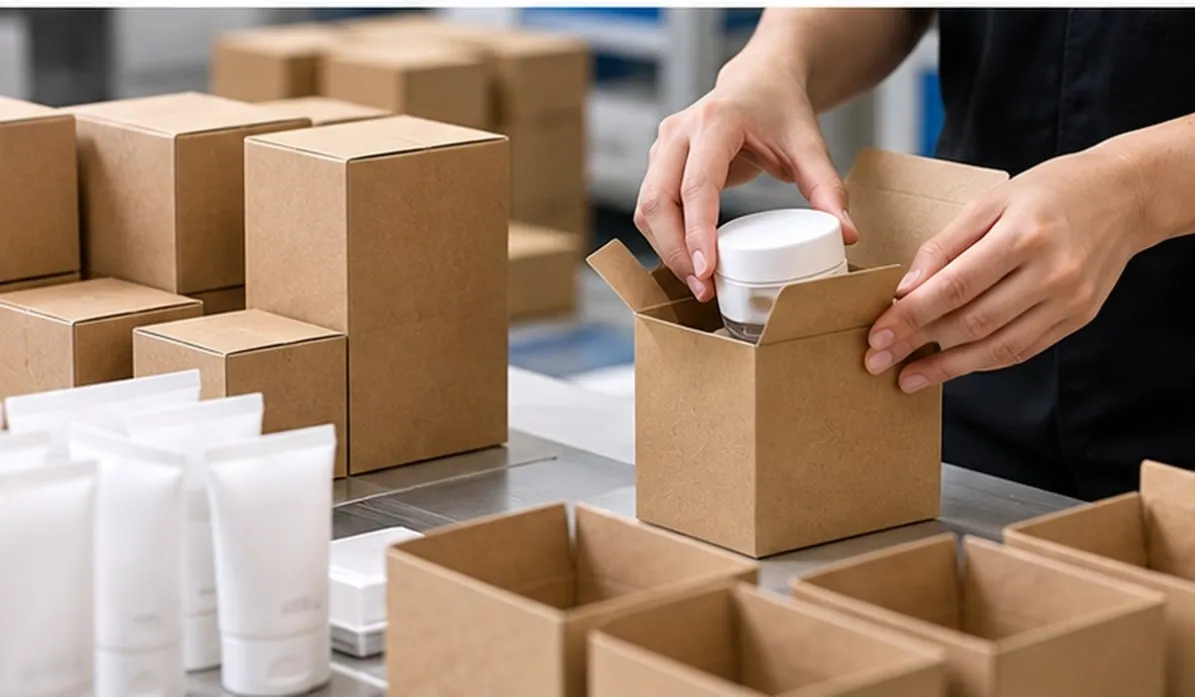
Check:
- Is assembly straightforward?
- Does the bottom form correctly?
- Does the product fit?
- Does the insert sit correctly?
- Do the flaps close naturally?
- Does the carton remain square?
- Are there visible gaps?
- Does the carton bulge after packing?
- Is repeated assembly practical?
Problems that appear during sampling are much easier to correct than problems discovered after thousands of cartons have been produced.
The Right Structure Depends on the Whole Packing Process
There is no folding carton structure that is best for every product.
A tuck end carton may be exactly right for one project.
Another product may benefit from an auto lock bottom.
A third may require a snap lock structure, window, insert or completely custom dieline.
Instead of asking:
“Which folding carton structure is best?”
Ask:
“Which structure works best for this product and the way it will actually be packed?”
The decision should balance:
Product → Protection → Presentation → Production → Packing → Shipping → Cost
That is much more useful than choosing a box because it looks similar to packaging used by another brand.
Need Help Choosing a Folding Carton Structure?
If you are developing custom folding boxes, send us your product dimensions, weight, photos, quantity and packaging requirements.
If you already have an existing box or reference photo, send that too.
We can review the product, carton structure, paperboard and packing requirements together before quotation and sampling.