
Oct 8, 2026Blog
Why Are Folding Cartons Difficult to Assemble?
Why are folding cartons difficult to assemble? Explore tuck flaps, creasing, board stiffness and packing methods that affect labor time and packaging costs.
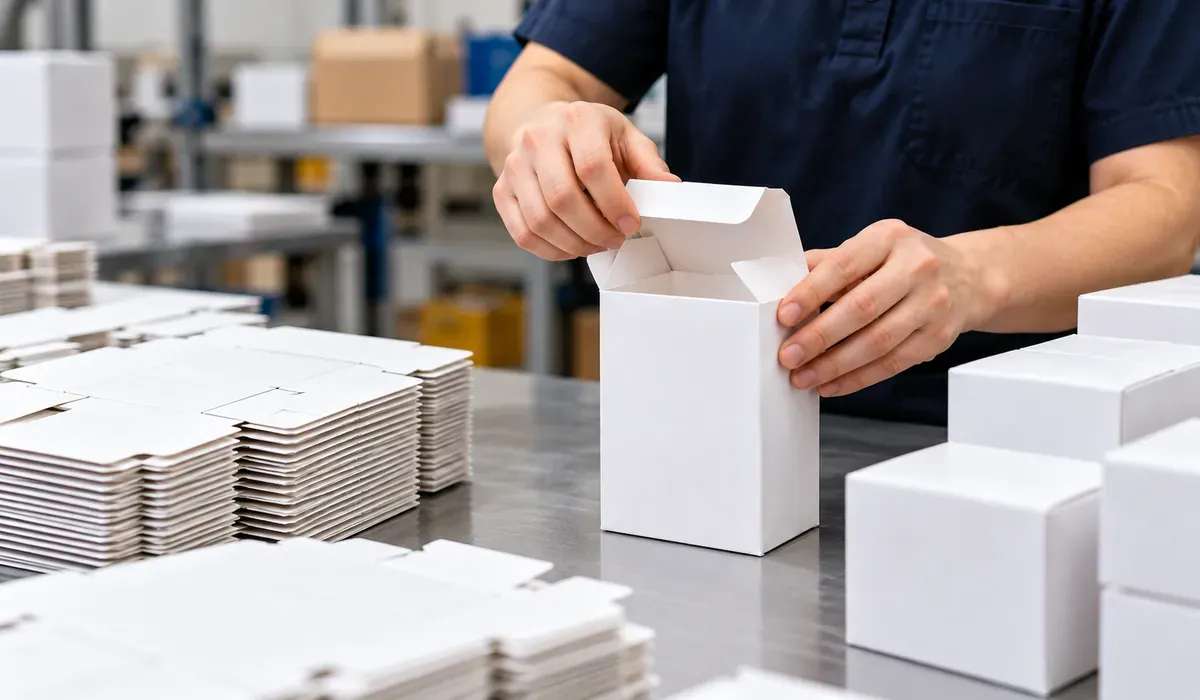
A folding carton can look perfect when you approve the sample.
The printing is clean, the dimensions seem correct, and the paperboard feels suitable.
But when bulk packing begins, workers may struggle to open the cartons, insert the products or close the tuck flaps. What looked simple during sampling becomes a slow, repetitive operation.
A good folding carton should not only look right. It should also be practical to assemble, fill and close.
Why Carton Assembly Efficiency Matters
The cost of packaging is not limited to the price of the empty carton.
A carton that costs slightly less per piece may require additional folding, adjustment or closing time. When repeated across thousands of units, these small delays can increase packing labor costs.
Before choosing a carton structure, consider how many units will be packed, whether the process is manual or automated, and how many handling steps each carton requires.
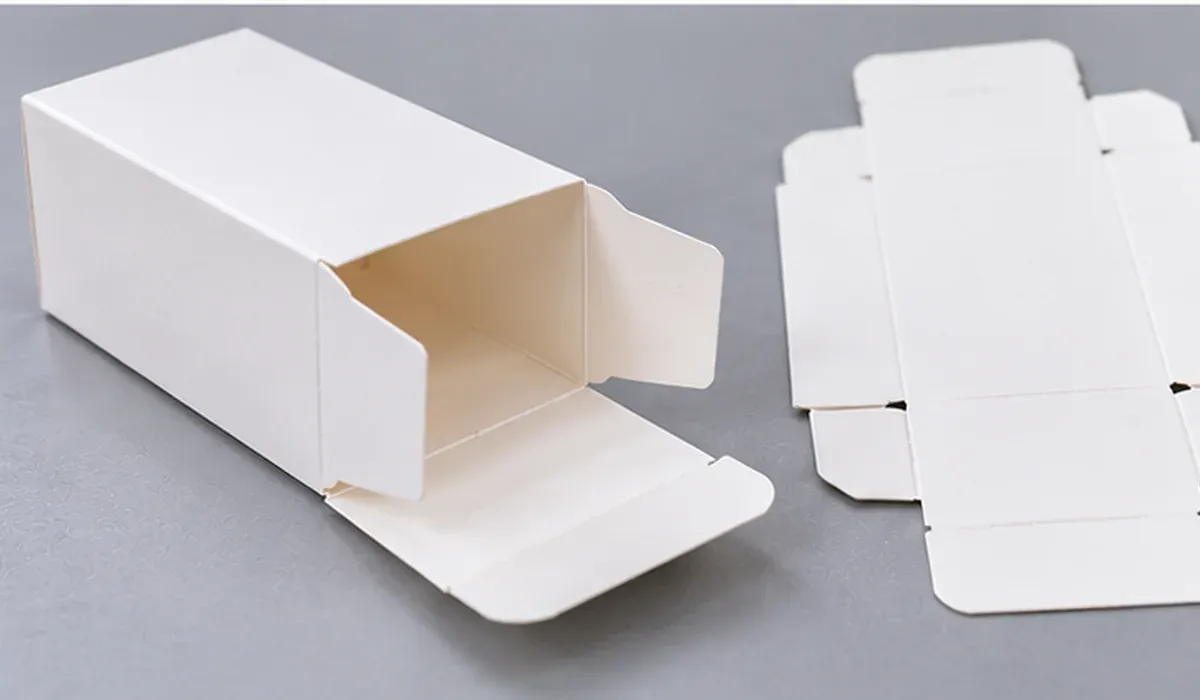
1. Tuck Flaps Are Difficult to Close
Tuck end boxes are widely used for cosmetics, electronics, accessories and other retail products.
However, the closure may become difficult when the tuck flap dimensions, crease positions or paperboard thickness do not work well together.
A flap that is too tight may need excessive force. A flap that is too loose may not stay closed reliably.
The objective is a closure that works consistently without unnecessary adjustment.
2. Paperboard Stiffness Creates Folding Resistance
Thicker paperboard does not automatically make a carton easier to assemble.
Depending on its construction, a stiff board may resist folding, especially around small flaps or tight corners.
The selected material should provide suitable panel stiffness while remaining compatible with the carton structure and creasing requirements.
3. Crease Lines Do Not Fold Consistently
Creasing helps paperboard fold at the intended position.
If the crease geometry does not suit the board thickness, grain direction or structure, the carton may resist opening or forming correctly.
Workers may need to pre-fold individual panels, adding time to the packing operation.
On automated equipment, inconsistent folding resistance can also affect feeding and carton erection.
The finished carton should therefore be tested using production-representative materials and converting conditions.
4. The Carton Requires Too Many Assembly Steps
Different structures require different packing operations.
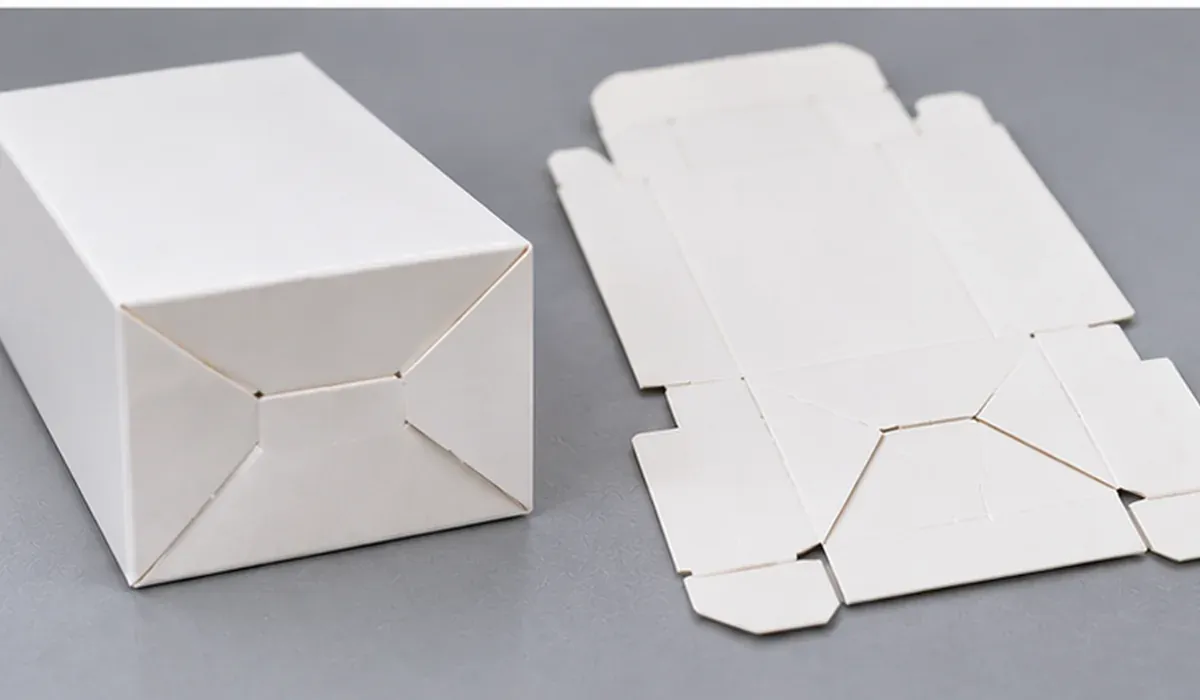
A conventional tuck end carton generally requires the bottom flaps to be closed before filling.
A snap-lock bottom carton requires the bottom flaps to be interlocked.
An auto-lock bottom carton uses a pre-glued construction that forms the bottom when the carton is opened, potentially reducing manual assembly steps.
However, auto-lock structures may involve additional converting costs and must still be evaluated for the product and packing method.
The best structure is not necessarily the one with the lowest empty-carton price.
5. Products or Inserts Interfere with Closure
Sometimes the empty carton opens and closes correctly, but problems appear after the product is inserted.
Possible causes include:
- Inserts extending beyond their intended position
- Product sleeves adding unexpected thickness
- Accessories pressing against the carton panels
- Booklets obstructing the top closure
- Insufficient internal clearance
The carton should be tested with the complete product arrangement, not only with the empty box.
Our article on folding carton product fit explains how internal dimensions, inserts and clearance affect the finished packaging.
6. Manual and Automated Packing Need Different Considerations
Manual Packing
For manual operations, buyers should consider:
- How easily the flat carton opens
- How many folding steps are required
- Whether the product can be inserted comfortably
- Whether the closure works without excessive force
- Whether the process remains consistent across multiple cartons
Automated Packing
Automated cartoning may require specific dimensional tolerances, feeding characteristics, carton orientation, crease performance and closure compatibility.
Not every folding carton works with every cartoning machine.
If automated packing is planned, the carton manufacturer should receive the machine requirements before the dieline is finalized.
Production-representative samples should ideally be tested on the actual equipment.
7. Samples Were Approved Without a Packing Trial
A visually attractive sample does not necessarily confirm assembly efficiency.
Before mass production, buyers should test several representative cartons with the actual products and inserts.
Check whether the cartons open consistently, whether the bottom and top close smoothly, and whether the packed products remain correctly positioned.
The people responsible for packing should participate whenever possible.
How Much Can Slow Assembly Add to Packing Costs?
Consider a simplified example.
If each carton requires five additional seconds of assembly time, an order of 10,000 cartons would require:
10,000 × 5 seconds = 50,000 seconds
That equals approximately 13.9 additional labor-hours.
At an illustrative labor rate of $15 per hour, the additional direct labor time would cost approximately $208.
This is not a standard industry rate or a quotation. Actual costs depend on the operation, staffing, line efficiency, rejects and rework.
The example simply illustrates why small assembly delays can become significant at larger quantities.
Tuck End vs. Auto-Lock Bottom: Which Is Better for Packing?
Factor | Tuck End Carton | Auto-Lock Bottom Carton |
|---|---|---|
Bottom assembly | Flaps closed during packing | Pre-glued bottom forms during opening |
Structure | Generally simpler | More complex |
Converting cost | Often lower | May be higher |
Manual packing | Additional bottom-closing steps | Can reduce bottom assembly time |
Best choice | Depends on product and volume | Depends on packing process and cost |
Neither structure is automatically better.
For smaller orders or lightweight products, a conventional tuck end carton may be practical.
For larger manual packing operations, reducing repeated bottom-closing steps may justify evaluating an auto-lock alternative.
What Should You Tell Your Folding Carton Manufacturer?
To help evaluate assembly efficiency, provide:
- Product dimensions and weight
- Required carton quantity
- Preferred carton structure
- Paperboard specifications, if known
- Product orientation
- Inserts and accessories
- Manual or automated packing method
- Expected packing volume
- Existing assembly problems
- Cartoning machine specifications, if applicable
An existing carton sample or a short packing video can also help identify the problem.
Final Thoughts
A folding carton should be evaluated as part of the complete packing process.
Paperboard stiffness, creasing, closure design, product fit and assembly steps can all affect efficiency.
A slightly lower unit price may not provide the lowest total packaging cost if the carton is difficult to pack.
If you are developing a new carton or experiencing assembly difficulties with an existing design, contact our team with your product specifications and packaging requirements.
We can review suitable materials, carton structures and production options before quotation and sampling.