
Oct 4, 2026Blog
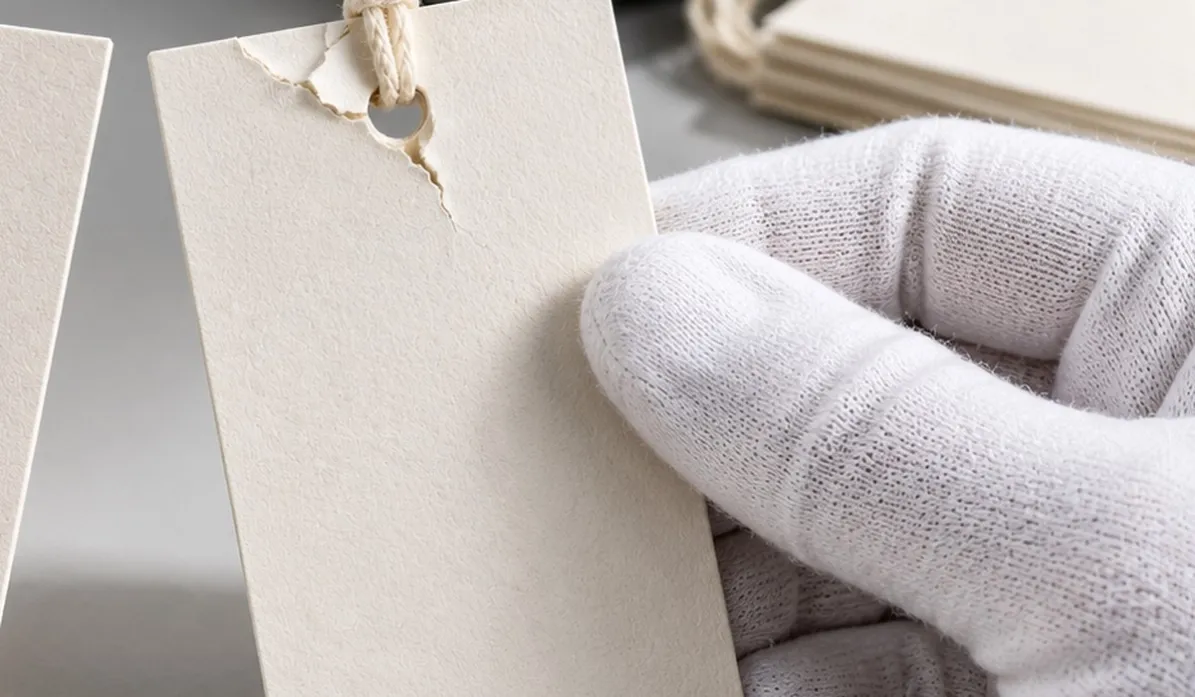
Why Do Hang Tags Tear Around the String Hole?
Why do hang tags tear around the string hole? Learn how paper, hole position, cord, tag size and eyelet reinforcement affect durability.

A hang tag can be beautifully printed, use premium paper and have a perfectly matched cotton string.
Then after repeated handling, something unexpected happens.
The string is still intact.
But the paper around the hole begins to split.
Eventually, the string pulls through the tag.
The first reaction is often:
“Should we use thicker paper?”
Sometimes thicker or stronger paper can help.
But the hole is a local stress point, so the problem should not be judged by paper GSM alone.
A hang tag attachment works as a complete system:
Paper + Tag Size + Hole + Hole Position + String + Reinforcement + Handling
If these details are not properly matched, even an attractive premium hang tag can tear around the attachment point.
Why Does a Small Hole Matter So Much?
A hang tag may have a relatively large paper surface, but the string transfers force through a very small area around the punched hole.
When the tag is:
- lifted
- pulled
- turned
- packed
- transported
- handled in a store
the string can repeatedly apply force around that opening.
The important question is therefore not simply:
“Is the paper thick enough?”
It is:
“Is there enough suitable material around the hole to handle the way this tag will actually be used?”
That distinction matters.
A string can remain completely undamaged while the paper around it becomes the weakest point.
1. Hole Position Can Be More Important Than It Looks
Designers often position the hole according to appearance.
For example, the hole may be moved close to the top edge to create more space for the logo or make the tag hang in a particular way.
But the closer the hole moves toward an edge, the less paper remains between the hole and the outside of the tag.
That remaining strip of paper helps resist the pulling force from the string.
If it becomes too narrow, tearing can begin at the hole and travel toward the edge.
This is especially worth reviewing on:
- small hang tags
- narrow tags
- custom die-cut shapes
- tags with large holes
- designs with offset hole positions
There is no single edge distance that should be copied onto every hang tag.
The appropriate position depends on the tag size, paper, hole diameter, attachment and intended use.
This is why the hole should be part of the structural design rather than added after the artwork is finished.
2. Hole Diameter and String Thickness Need to Work Together
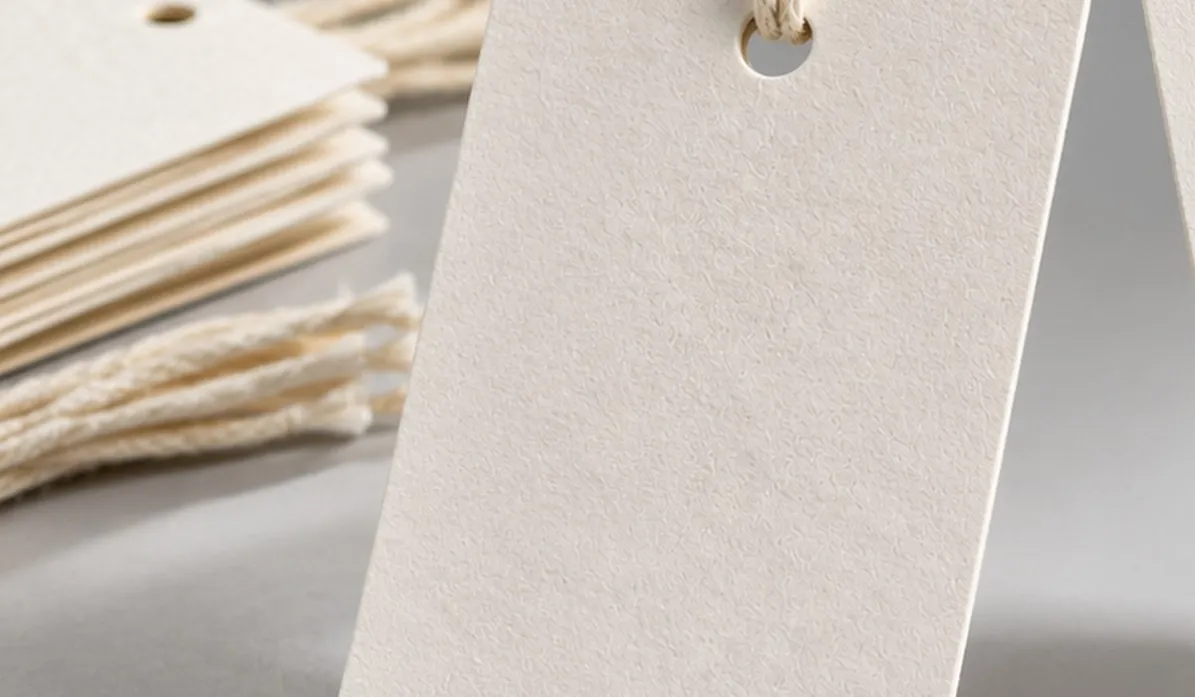
A very small hole with a relatively thick cord can create unnecessary friction and pressure around the paper edge.
A very large hole can create a different problem by removing more paper from the attachment area.
So bigger is not automatically better.
Smaller is not automatically stronger either.
The hole should provide practical clearance for the selected attachment while leaving an appropriate amount of paper around it.
When confirming a custom hang tag, check the actual combination:
Hole + String + Tag
rather than approving these three specifications separately.
This becomes particularly important when changing from:
- thin string to thick cotton cord
- string to ribbon
- cord to elastic
- plain hole to metal eyelet
Changing the attachment can affect the hole requirement.
3. Paper Thickness Is Only Part of the Answer
Paper thickness matters because the attachment needs enough material around the hole.
But GSM alone does not completely describe how a hang tag will behave.
Different papers can vary in:
- thickness
- density
- stiffness
- fibre structure
- surface
- flexibility
- tear behaviour
Two papers with similar GSM may not feel or perform exactly the same.
This is particularly relevant when comparing:
- coated paperboard
- uncoated paper
- textured stock
- kraft paper
- recycled paper
- specialty paper
The best paper should therefore be selected for the complete tag rather than simply choosing the highest GSM available.
A very thick paper can also change the feel, cost, finishing and proportions of a small hang tag.
The goal is not:
Maximum thickness
but:
Suitable paper + suitable attachment construction
4. Tag Size Changes the Relationship
Imagine the same hole and string used on two tags.
Tag A:
90 × 50 mm
Tag B:
35 × 20 mm
The attachment detail may look very different on the smaller tag.
A hole that feels visually and structurally comfortable on a larger tag can occupy a much greater proportion of a small tag.
This is why tag size, paper thickness and hole position should be considered together.
A small tag may need particularly careful spacing around:
- the hole
- logo
- foil
- embossing
- QR code
- barcode
- cut edge
Our clothing hang tag size guide explains why the finished size should be selected around both the artwork and practical attachment requirements.
5. Does the String Material Cause the Tear?
Sometimes.
But it is better to evaluate the interaction rather than automatically blaming the string.
Different attachments can contact the hole differently.
For example:
- soft cotton string
- waxed cord
- twisted cord
- elastic
- ribbon
- plastic fastener
do not all have the same thickness, stiffness or surface.
A relatively thin attachment may concentrate force differently from a wider, softer one.
Repeated movement can also matter.
A hang tag hanging quietly from a garment during presentation experiences a different use condition from one that is repeatedly pulled, twisted or moved during retail handling.
So the question is not only:
“Which string looks best?”
It is also:
“Does this attachment work properly with the selected tag and hole?”
This is one reason the string should not be treated as an afterthought.
Our guide on why some fashion hang tags look cheap even with a good design also explains how the attachment affects the overall presentation of the finished tag.
6. When Does a Metal Eyelet Make Sense?
A metal eyelet reinforces the punched area and changes the way the string contacts the hole.
It can also become part of the visual design.
Eyelets are particularly worth considering when:
- the tag will receive repeated handling
- the hole area needs additional reinforcement
- a premium metal detail suits the brand
- the selected cord and tag construction benefit from reinforcement
But an eyelet is not automatically required on every hang tag.
Many standard clothing hang tags work perfectly well with a plain punched hole when the paper, hole and attachment are suitable.
Adding an eyelet also changes:
- appearance
- cost
- production process
- hole construction
- finished weight
- metal color requirements
So the decision should be functional and visual.
Not simply:
“Premium tag = eyelet.”
For some minimalist fashion designs, a clean punched hole may fit the brand better.
For another project, a brass, silver, black or antique-finish eyelet may become an intentional part of the design.
7. An Eyelet Does Not Fix Every Poor Hole Design
This is an important point.
Adding metal around the hole can reinforce the immediate attachment area.
But it does not mean the rest of the tag design can be ignored.
For example, if the hole and eyelet are positioned extremely close to the tag edge, there may still be limited paper around the entire reinforced area.
Similarly, a poorly selected eyelet can look oversized on a small tag or interfere with nearby artwork.
When an eyelet is used, review:
Tag Size → Eyelet Size → Hole Position → Edge Space → Artwork → String
as one system.
Do not add the eyelet only after everything else has already been finalized.
8. Custom Die-Cut Shapes Need Extra Attention
Custom-shaped hang tags can make a brand more distinctive.
But unusual shapes can also create narrow areas around the attachment point.
Imagine a tag shaped like:
- a leaf
- a bottle
- a shield
- a narrow arch
- a logo silhouette
The most visually attractive place for the string may not always provide the best structural area for a hole.
Very narrow sections, sharp shapes or holes close to a curved edge deserve particular attention.
Before production, the supplier should review the final die-cut outline together with the hole position.
Our custom retail hang tags can be produced in different sizes, paper stocks, shapes and attachment configurations, so these details can be evaluated together before production.
9. Foil and Embossing Also Need Space Around the Hole
The hole is not only a structural consideration.
It is also part of the artwork layout.
If important finishing sits too close to the punched area, production variation or the attachment itself may interfere with the design.
Pay particular attention when the tag uses:
- foil stamping
- embossing
- debossing
- Spot UV
- borders
- small typography
- QR codes
- barcodes
A beautifully foiled logo loses its effect if the string or eyelet overlaps it.
This is why artwork approval should include the actual hole position rather than treating it as an invisible production detail.
Before approving production artwork, use our hang tag artwork checklist to review the cutting, hole, safe areas and finishing together.
10. Test the Finished Tag With the Actual Attachment
A PDF cannot tell you whether the hole area feels durable.
A flat printed sheet cannot tell you how the finished string will interact with the tag.
Whenever the attachment is important, inspect the completed sample.
Check:
- finished tag size
- paper
- hole diameter
- hole position
- distance from the edge
- string or ribbon
- eyelet if used
- knot or fastener
- overall hanging position
Then handle the tag realistically.
You do not need to deliberately destroy it.
The objective is to see whether normal pulling, movement and handling immediately cause:
- hole deformation
- paper fibres lifting
- elongation around the hole
- tearing toward the edge
- eyelet movement
- string damage
The sample should represent the finished attachment system, not only the printed paper.
What If Only Some Bulk Hang Tags Tear?
If the approved sample performed well but some production tags tear, compare the affected pieces with the approved reference.
Check whether the bulk production is consistent in:
- paper
- thickness
- hole diameter
- hole position
- die cutting
- eyelet application
- string
- attachment
Also look at where the tear begins.
If many tags fail in the same direction or location, the pattern may help identify what needs to be investigated.
A good sample proves that the intended result can be produced.
Bulk quality control is still needed to maintain that result across the order.
A Practical Hang Tag Attachment Checklist
Before approving production, review the complete attachment system.
Check | What to Confirm |
|---|---|
Tag Size | Suitable for the artwork and attachment |
Paper | Appropriate thickness, stiffness and construction |
Hole Diameter | Works with the selected string or attachment |
Hole Position | Leaves suitable material around the attachment area |
Edge Space | Hole is not unnecessarily close to the cut edge |
String / Cord | Suitable thickness, material and length |
Eyelet | Used where function or design justifies it |
Artwork | Important details remain clear of the hole |
Finishing | Foil, embossing or UV does not conflict with attachment |
Sample | Finished tag is tested with the actual attachment |
Bulk QC | Hole and attachment remain consistent in production |
The goal is not to make every hang tag heavier or more complicated.
It is to make sure the attachment detail is appropriate for the way the tag will actually be used.
The Hole Is Small — But It Is Part of the Structure
Buyers naturally spend most of their time discussing:
Paper → Printing → Logo → Foil → Embossing
Those details matter.
But a hang tag is still a physical object attached to a product.
The small hole near the top is one of the places where design and function meet.
A better development sequence is:
Tag Size → Paper → Artwork → Hole → Attachment → Finishing → Sample → Production
If the hole, paper and attachment work together, there is usually no reason to over-engineer the tag.
If they do not, simply using thicker paper may not solve the real problem.
Developing Custom Hang Tags?
If you are developing clothing or retail hang tags, send us:
- finished tag size
- quantity
- artwork
- preferred paper
- hole position if already defined
- string, ribbon or cord requirement
- eyelet requirement if any
- foil, embossing, debossing or Spot UV requirements
- reference photos
Jeeli Packaging can review the paper, printing, finishing, hole position and attachment together before sampling and bulk production.