
Packaging Knowledge
How Much Do Custom Rigid Boxes Cost in 2026? Price Ranges by Quantity, Size and Finish
Budget ranges for custom rigid boxes by quantity, size and finish, the factors that move the unit price, and what to send for a quote that holds.
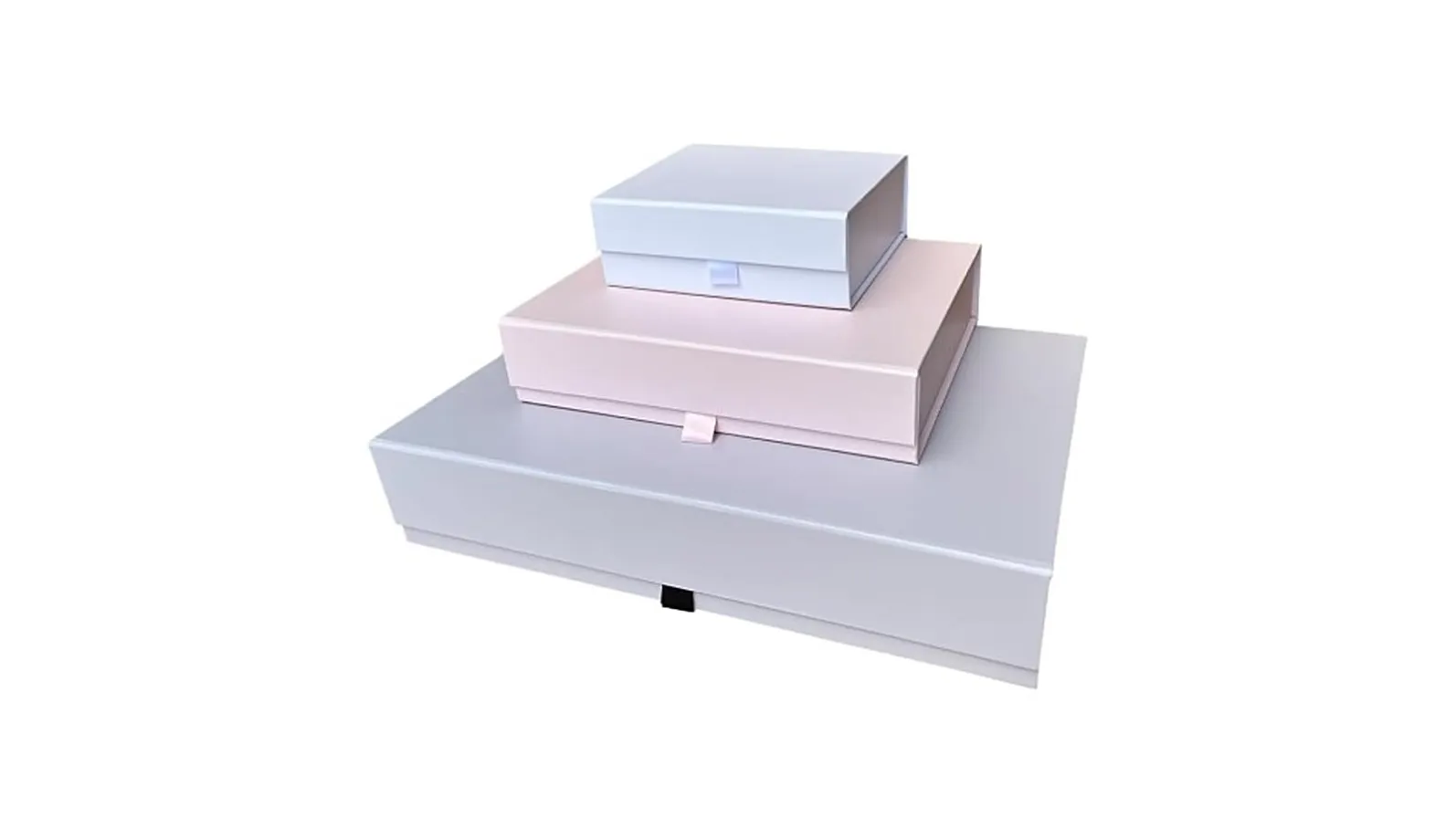
A custom rigid box usually lands between $2 and $12 per unit in 2026, and little of that spread is supplier margin. The same box at 500 pieces and at 10,000 pieces differs by a factor of three; one size up adds half again; one extra finishing pass adds 10 to 20 percent. Buyers who search this question want a single number, and the honest answer is a range with conditions attached.
Every figure below is a budgeting range taken from publicly quoted rigid box prices at US, EU and Chinese suppliers in 2025-2026. It is not a Jeeli price list. A rigid box is quoted from a specification, not from a product name.
How much does one custom rigid box cost per unit?
Across published quotes, a rigid box - grey board wrapped in printed paper, assembled by hand - falls into these bands:
- Small - jewellery, lipstick, 100 x 100 x 40 mm: about $2-7 at volume, $5-12 at low volume
- Medium - skincare, perfume, 200 x 150 x 60 mm: about $3-9 at volume, $6-14 at low volume
- Large - gift sets, footwear, 300 x 250 x 100 mm: about $4-14 at volume, $8-22 at low volume
- Magnetic and drawer boxes: 15-30 percent above a plain lid-and-base box of the same size, because the tray, magnets and wrap are hand-fitted
Those bands assume a printed wrap, one or two ink colours and a paperboard insert. Anything beyond that moves the number up, and the moves compound.
How much does quantity change the unit price?
Quantity is the biggest lever, because a rigid box carries fixed costs that only volume can absorb - a cutting forme, press set-up, a sampling round - on top of hand assembly, which is a per-piece labour cost that barely improves with volume.
- 500 pieces - the practical floor; tooling spread over the fewest units, so the highest price per piece
- 1,000 pieces - the usual first production order, and the first meaningful step down
- 5,000 pieces - better material buying and longer press runs; the saving against 1,000 is real but no longer dramatic
- 10,000 and above - the flattest part of the curve; further volume saves little against the cash and storage it ties up
Expect the unit price to fall by roughly a third to a half between 500 and 10,000 pieces, not by 90 percent.
How much does box size change the price?
Size drives board area, hand labour and freight at once. A box 30 percent longer on each side uses about 70 percent more material; wrapping a large lid takes longer and rejects more often; and assembled rigid boxes ship partly as air, so volumetric weight rather than actual weight usually sets the freight bill.
That is why a foldable rigid box - shipped flat, erected by the brand - is worth pricing on anything above roughly 250 mm in two dimensions: the box costs a little more and the freight costs a lot less. Our guide to what a gift box design really costs works through that trade-off.
What else moves the unit price?
- Structure - lid-and-base, book-style magnetic, drawer or shaped; each adds parts and assembly steps
- Grey board - 1.5, 2.0 and 2.5 mm are the common grades; thicker is stiffer and dearer
- Wrap paper - 128-157 gsm art paper is standard; textured or metallised papers cost more and print less predictably
- Print - one or two spot colours versus four-colour process, and whether a Pantone match is required
- Finishing - foil, emboss, soft-touch matt lamination or spot UV; each is a separate pass, and effects stack
- Insert - paperboard is cheapest; EVA and moulded pulp cost more, and pulp carries a mould charge
- Sampling - white sample, printed pre-production sample, and how many artwork rounds it takes
A magnetic box with foil, emboss and a foam insert can cost double the same box with print only. That compounding is why two buyers comparing quotes for "the same box" are often not comparing the same thing - and why one published price per box is a starting point, not a quote.
What should you send to get an accurate quote?
Five items turn a range into a number:
- External dimensions in millimetres - length x width x depth
- Structure, or a reference photo if the name is unclear
- Quantity per size, and whether reorders are expected
- What goes inside, its weight, and whether it must be held rigid or cushioned
- Finishing and artwork status - foil, emboss, lamination, and whether a dieline exists
A dieline or a reference sample shortens the loop further. Our RFQ checklist lists the fields worth filling in before you send anything, and what a rigid box is explains the structures before you start costing them.
Frequently asked questions
Is there a minimum order for custom rigid boxes? Yes - 500 pieces for a custom structure and print. Below that, stock boxes or a folding carton are the realistic options.
Why is it several times the price of a folding carton? Different manufacturing route: a carton is printed, die-cut and folded by machine from one sheet, while a rigid box is built from grey board and wrapped by hand. Our folding carton versus rigid box comparison covers when the extra cost earns its place.
Does a reorder cost the same? Less - the die and the set-up are already done and only the run repeats. That is the reason to keep the dieline and the approved sample on file.
How Jeeli can help
Send the size, structure, quantity, insert and finishing, and we quote each element as its own line so you can see what the box costs and what each upgrade adds. Minimum order is 500 pieces for rigid boxes, with sampling in 7-10 days and bulk production in 15-25 days. Reference structures are on our magnetic closure rigid box, lid-and-base rigid box and foldable rigid box pages.
Ready to start? Get a Custom Quote — send your specification, including size, quantity, material and print requirements. We reply within 24 hours.
Susan Hou is Business Development Director at Jeeli Packaging in Shenzhen. She has spent 13 years working with overseas customers, from home & lifestyle products to energy storage, and now helps brands with custom boxes, paper bags, hang tags and labels. Behind her is Jeeli's professional production team, who handle printing, structure and quality control, from sampling to bulk production.