
Packaging Knowledge
Custom Subscription Boxes: Sizes, Materials and Costs for E-commerce Brands
How subscription brands size a recurring shipment box, which board and structure to use, what drives unit cost from 500 to 10,000 pieces, and what to check on a sample.
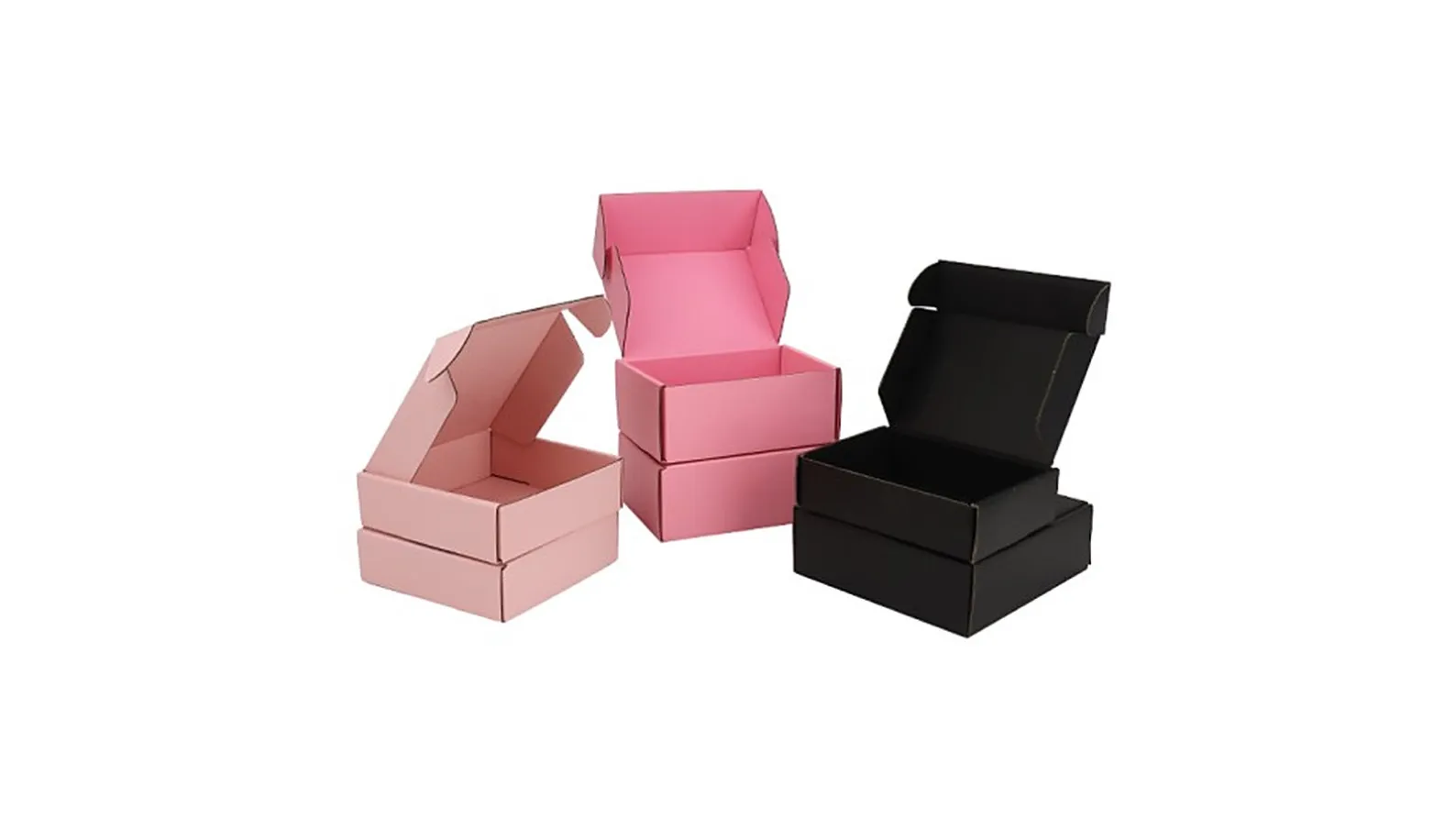
A custom subscription box is almost always a printed corrugated mailer: roughly 200 x 150 x 60 mm for a three-piece kit, up to 350 x 250 x 100 mm for a multi-item gift tier, and about $0.85 to $4.50 per unit at 1,000 to 5,000 pieces depending on flute, print and inserts. The size should come from the packed contents and the courier's volumetric weight rather than from a template, and the structure from how the box travels and how often the customer sees it.
Price bands here are ranges published by US, EU and Chinese suppliers in 2025-2026, used to show how cost moves. They are not a Jeeli price list: a subscription box is quoted from a specification, and the same drawing at 500 pieces and 5,000 pieces is two different prices.
What size should a subscription box be?
Work from the packed kit, not from the product alone. Lay the items out the way the customer will see them when the lid opens, measure that assembled block, then add 3-5 mm clearance per side for tissue or a paper wrap. Too much clearance and items slide, corners dent and the box is billed on volume; too little and the lid sits proud.
Volumetric weight is length x width x height in centimetres, divided by 5,000 (most express carriers) or 6,000 (some road services). On a 220 x 160 mm footprint, 10 mm of extra depth raises billable volume by about 17 percent - and depth is the dimension most often specified without a dummy pack in hand.
- 150 x 110 x 40 mm - one sample sachet, a single cosmetic, a supplement blister
- 220 x 160 x 60 mm - a three to five piece beauty or supplement set, the most common subscription footprint
- 280 x 200 x 80 mm - one folded apparel item plus a card, or a two-item home goods drop
- 320 x 240 x 100 mm - the gift or anniversary tier, with room for a divider and a printed insert card
The test takes an hour: pack one shipment as the warehouse will, weigh it, compute both weights and compare what the courier charges. If volumetric exceeds actual by more than about 40 percent, a shallower box pays for itself within the first run. Our guide to choosing a mailer box size works through the same measurement.
Mailer box, folding carton or rigid box for a subscription?
The default is a corrugated mailer, because a subscription ships direct to the customer and the box has to survive the parcel network on its own. The other two structures earn their place in narrower cases, and the trade-offs between the first two are in our folding carton versus corrugated box comparison:
- Corrugated mailer (E-flute) - ships alone, opens to a presentable interior, cheapest protection per unit of strength; the right answer for most monthly drops
- Folding carton - a retail shelf box, or an inner box inside an outer carton; it cannot ship alone, but it costs a fraction of a mailer and folds flat
- Rigid box - the anniversary or gift tier only, since it is heavy, hand-assembled and adds no shipping strength for the volume it occupies
Which board grade survives a monthly drop?
Match the flute to the packed weight, then check the result on a sample rather than on a specification:
- E-flute, about 1.5 mm - kits under roughly 1 kg; the standard subscription grade, prints well and folds crisply
- B-flute, about 3 mm - 1-3 kg, or anything containing glass; more cushioning, coarser print surface
- Double wall - above 3 kg, liquids, or multi-bottle sets that must not touch each other
Recycled kraft behaves differently from virgin board in humid weather: it takes up moisture, softens at the creases and loses stacking strength. The flute comparisons, including which grade holds up in a courier network, are in our E-flute versus B-flute guide.
What drives the unit cost at 500, 1,000 and 5,000 pieces?
Half of a subscription box quote is fixed cost that the run length divides: a cutting forme, a print set-up, a colour proof and a sample round cost the same at 500 pieces or 10,000, so the smaller the run the larger their share of the unit price.
- Print method - digital below roughly 2,000 pieces (no plates, higher per-sheet cost); offset above about 3,000; flexo printed directly on corrugated at volume
- Interior print - a second pass on the inside liner, not a free extra
- Finishing - matt lamination, spot UV or foil each add a separate pass, and the passes stack
- Inserts - a die-cut paperboard divider is cents; a moulded pulp tray is not
As a working range, published supplier prices in 2025-2026 put a printed corrugated mailer at about $0.85 to $4.50 per unit, a printed folding carton at $0.45 to $2.80, and a rigid gift box at $3.50 to $14.00, with quantity and finishing accounting for most of the spread. Between 500 and 5,000 pieces expect the unit price to fall by roughly a quarter to 40 percent, not by 80 percent, because material and packing labour do not shrink with volume.
How do you change the design every month without a new tool?
Recurring programmes need a new look per drop without a new die. Three routes, cheapest first:
- One plain base box plus a printed belly band or sleeve - only the band is reprinted, the box stays in stock
- Same die, new print each run - dimensions and structure stay fixed, so packing lines and courier rates do not change; the print minimum per run is what sets the cost
- A printed card and sticker set over a stock kraft mailer - lowest minimum, least premium, common for the first few months of a new programme
The rule is to freeze the die, the internal dimensions and the insert after the first approved sample: changing any of them mid-programme resets tooling, the packing SOP and the courier weight bracket at once.
What should you check on a subscription box sample?
- Pack the real contents and drop the box from 800 mm onto a corner, then onto the opposite edge; open it and look for dents and shifted items
- Open and close the lid twenty times; a crease that whitens or cracks on the fifth cycle will split in a customer's hands
- Leave a packed box at about 35 degrees Celsius for three days, then check for scuffing, print transfer and any scent or oil mark on the board
- Print a solid dark panel and inspect it under raking light - on E-flute the flute lines show through solid ink, and artwork approved on a flat proof often fails here
- Confirm the insert holds items through ten drops without rotation; a divider sized to the box but not to the product lets a bottle turn and hit a corner
Insert design is where most subscription boxes fail in transit rather than in print, and the sizing rules are in our packaging insert sizing guide.
What is a realistic first order?
At Jeeli the minimum is 1,000 pieces for mailers and folding cartons, and 500 for rigid boxes. Below that the fixed costs dominate, and a stock-size mailer with a printed label is the cheaper way to test a programme. The second order is always cheaper than the first because the die and the sample are already approved - which is the practical reason to keep the dieline and the signed-off sample on file.
Frequently asked questions
Is a subscription box different from a mailer box? Not structurally. The differences are commercial: recurring volume, interior print that the customer sees on every drop, and an opening sequence designed for a repeat audience rather than a one-off purchase.
Does a subscription box need an insert? Only if the contents can move. A snug kit with tissue needs nothing; two or more loose items, or anything glass, needs a divider or a die-cut collar. Inserts are covered in our guide to when packaging needs an insert.
Which structure is cheapest for a monthly drop? A one-colour E-flute mailer with no lamination and a paperboard divider - the version that spends money on strength rather than surface.
How Jeeli can help
Send the packed kit dimensions, the weight, the number of items and the monthly volume, and we will come back with a structure, a board grade and a costed quote rather than a price list. We manufacture printed mailer boxes, corrugated mailer boxes and custom folding boxes in our 12,000 sqm factory in Shenzhen, with FSC-certified paperboard; minimum 1,000 pieces, sampling in 7-10 days, bulk production in 15-25 days. Our mailer box quote checklist lists what to include so the first reply is a number.
Ready to start? Get a Custom Quote — send your specification, including size, quantity, material and print requirements. We reply within 24 hours.
Susan Hou is Business Development Director at Jeeli Packaging in Shenzhen. She has spent 13 years working with overseas customers, from home & lifestyle products to energy storage, and now helps brands with custom boxes, paper bags, hang tags and labels. Behind her is Jeeli's professional production team, who handle printing, structure and quality control, from sampling to bulk production.