
Packaging Knowledge
Embossing vs. Debossing vs. 3D Embossing: A Buyer's Guide
Embossing raises, debossing presses in, and 3D embossing means a multi-level die. Learn the terms factories use, what each costs, and how to specify them in an RFQ.
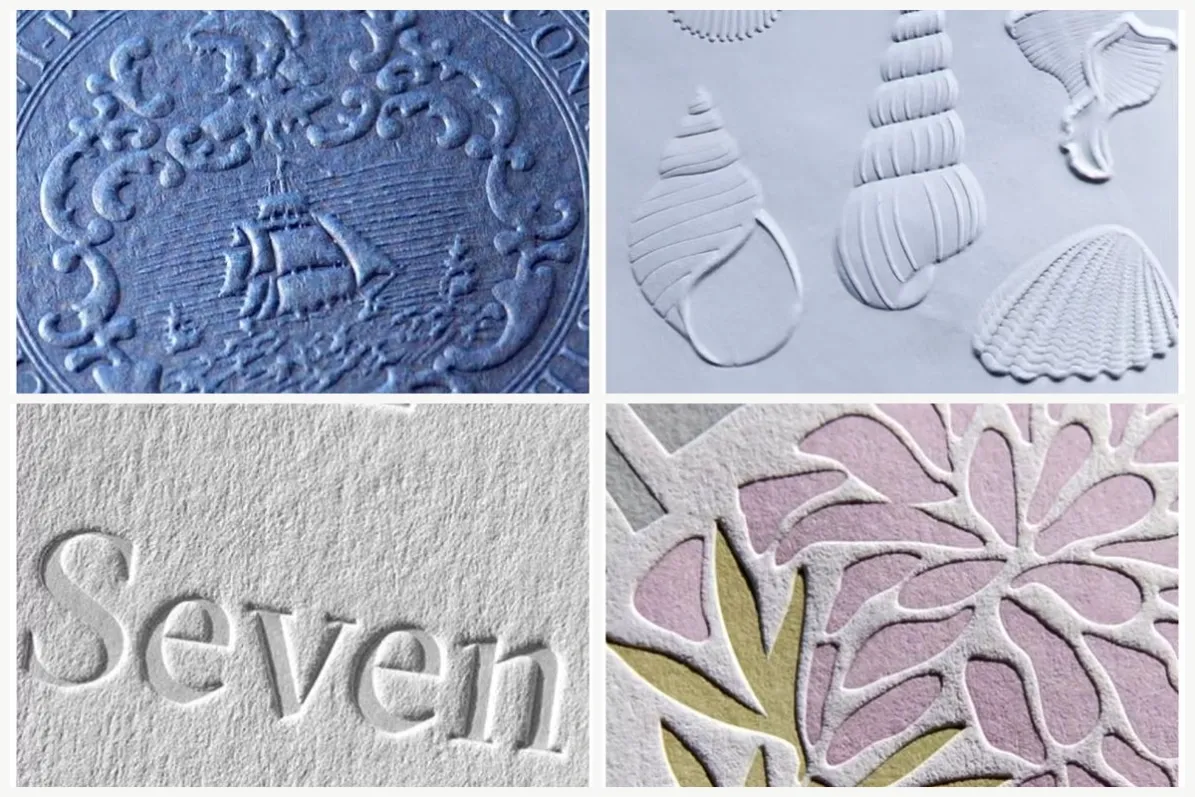
Embossing raises a design above the surface of the board; debossing pushes it below the surface. The third term, 3D or relief embossing, is not a separate process but a more complex die: instead of one flat raised level, the artwork is engraved into several heights, the way a relief sculpture is carved. The expensive mistake happens early - a buyer says "embossing" expecting the sculptured look from their mood board, the factory quotes the simple single-level version, and the difference only shows up on the sample, after the die is already cut.
This guide defines each term the way factories use it, gives you the exact wording to put in a request for quotation, and lists the checks that catch a wrong die before bulk production.
What is the difference between embossing and debossing?
The direction of the effect is the only real difference, and both use the same kind of tooling:
- Embossing: the artwork is raised above the board surface - you feel a bump on the front of the box or tag
- Debossing: the artwork is pressed into the board - you feel a depression on the front
- Both need a matched pair of dies (a male and a female counter-die) pressed into the sheet under pressure
- Embossing suits logos and marks that should catch light and fingers; debossing suits minimalist branding where the effect should be felt more than seen
- Neither needs ink or foil by default - embossing without any finish is called blind embossing
One physical note worth knowing: embossing deforms the back of the sheet. On an uncoated 300 gsm board the reverse shows a slight dish under strong light, which is why deep embossing is avoided on panels where the inside of the box is printed.
What is 3D embossing, and how is it different from standard embossing?
Standard embossing lifts the whole design to one flat height - a logo comes up as a single uniform bump. 3D embossing (also sold as relief embossing or sculptured embossing) uses a die engraved with graduated levels, so a petal can rise 0.4 mm while its edge rises 0.8 mm and the veins between them stay near the surface.
- Standard embossing: one level, simple flat dies, lowest tooling cost - fine for single-line logos and monograms
- Beveled embossing: one level with angled die edges that catch light along a slope - a step up in perceived finish
- 3D / sculptured embossing: multiple engraved levels, hand-finished brass dies, the premium look on cosmetics and spirits packaging
The rule that saves money: if your artwork has shading, gradients, or organic shapes, say "multi-level sculptured embossing" explicitly and attach a side-lit photo of the effect you want. If the artwork is a flat one-colour mark, standard embossing is the right tool and there is no reason to pay for a sculptured die.
What do Chinese factories actually call these processes?
Terminology drifts between markets, and the factory floor names are the ones your RFQ eventually reaches. In Chinese plants the three effects are usually:
- 击凸 (jī tū) - "struck raised": standard single-level embossing
- 击凹 / 压凹 (jī āo / yā āo) - "struck / pressed in": debossing
- 浮雕 (fú diāo) - "relief carving": multi-level 3D embossing, the same word used for relief sculpture
The trap sits in the middle: some plants read "3D embossing" in an English RFQ as standard embossing of 3D-looking artwork, not as a multi-level die. The fix costs one line in the RFQ - write "multi-level embossing die, graduated heights as per attached side-photo" alongside the English term. A factory that answers by describing die levels and engraving hours has understood you; one that replies with only a flat embossing price has not.
When should embossing be combined with hot foil stamping?
Shiny and raised at the same time means two processes on one area: the foil is pressed in with a heated die, and a second operation (or a combo die) raises the same artwork. Combination foil-and-emboss is standard on cosmetics cartons and luxury hang tags; foil on a debossed recess is rarer and mostly used for dark, minimalist designs.
- Blind emboss: raised, no foil, no ink - the cheapest premium effect and the most forgivable if the die is slightly off
- Foil + emboss: metallic finish with raised relief; needs tight registration between the foil die and the emboss die
- Registration tolerance to hold: foil and emboss artwork within 0.3 mm of each other, or the metal edge peeks out on one side
How foil behaves against dark laminated surfaces, and when spot UV is the better call, is covered in our hot foil stamping versus spot UV comparison.
How much does embossing cost compared with print alone?
The cost structure is almost all tooling. Expect a one-off die charge, then a fast press pass that adds little per-unit cost:
- Standard single-level die (magnesium or brass): the common one-off tooling line on a quote, reusable on every reorder
- 3D sculptured brass die: several times the standard die price, because engraving hours scale with the number of levels
- Per-unit add-on: small at production quantities; at 500-piece short runs it is noticeable and worth quoting both ways
- Timing: add 2-4 days for die making before the first press run, longer for a hand-finished sculptured die
Two ways to keep the first run cheap: emboss one panel instead of every face, and start with blind embossing - add foil on the reorder once the design has proved itself in market.
How do you specify embossing in an RFQ so the quote comes back right?
Quote requests fail on vague finishing lines. Three phrasings that get accurate quotes:
- "Blind embossing on the front panel, single-level die, no foil" - for the classic raised logo
- "Multi-level sculptured embossing on the front cover; include the sculptured die cost as a separate line" - for the 3D effect
- "Hot foil stamping combined with embossing on the same logo; quote foil die and emboss die separately" - for the shiny raised mark
Attach the artwork as vector (the die maker engraves from your file, so hairline detail in a JPEG becomes mush on brass), state the board grade and gsm, and say which side of the sheet the effect sits on. Our custom packaging RFQ checklist lists the full set of details worth including before you send.
How do you check embossing quality on a sample before approving bulk?
The die is cut before you see anything, so the sample stage is the last cheap place to catch problems. Five checks, all doable under a desk lamp:
- Rake light test: shine light across the surface at a low angle - on multi-level work you should see distinct heights, not one flat plateau
- Depth check: the raised height on 250-400 gsm board typically runs 0.3-0.6 mm; visibly flatter means the die was cut shallow or the press pressure is low
- Reverse-side check: flip the sheet - a deep dish on the back means the counter-die pressure is too high and the inside of the box will show it
- Registration check on foil combos: the metal edge should sit inside the raised area evenly all round; an exposed paper sliver on one side is a die-alignment fault
- Crack check: on coated board above 300 gsm, look for hairline cracks at the edge of the raised area under magnification - heavy coated stocks crack at sharp die edges
These fold naturally into the paper checks in our folding carton sample approval checklist; keep one approved sample as the retained standard for the bulk shipment.
If the embossed part is a hang tag rather than a box, our hang tag production process guide follows the same foil and emboss passes through die cutting, punching and stringing, station by station.
Frequently asked questions
Can you emboss corrugated board like E-flute? Shallow single-level embossing works, but fluted board compresses and loses fine detail, and deep sculptured effects do not survive the flutes. On E-flute or thicker, embossing is normally done on a litho-laminated paperboard surface rather than the corrugated liner itself.
Does embossing work on both sides of the sheet? One side per operation. Embossing raises the front and dishes the back slightly; a true two-sided effect means embossing the front and debossing a separate, differently placed design on the reverse.
Which board weights suit embossing best? 250-400 gsm is the comfortable range: light enough to take a crisp impression, heavy enough to hold the shape. Coated stocks above about 350 gsm need softer die edges to avoid cracking at the raise.
Get an embossing and debossing quote
Send the artwork (vector preferred), the board grade, and whether you want blind, foil, or sculptured multi-level work - we will come back with the die cost and a per-unit price as separate lines, MOQ from 500 pcs. See the effects in context on our embossed hang tags and debossed hang tags pages, or browse the structures they sit on via our folding carton manufacturing page. Ready to quote your design? Send the artwork here - quotes within 24 hours.