
Sep 1, 2026Blog
Packaging Material Selection: Design vs Production
Learn how packaging materials affect design, structure, production, cost and shipping, and why the best-looking material is not always the best choice.
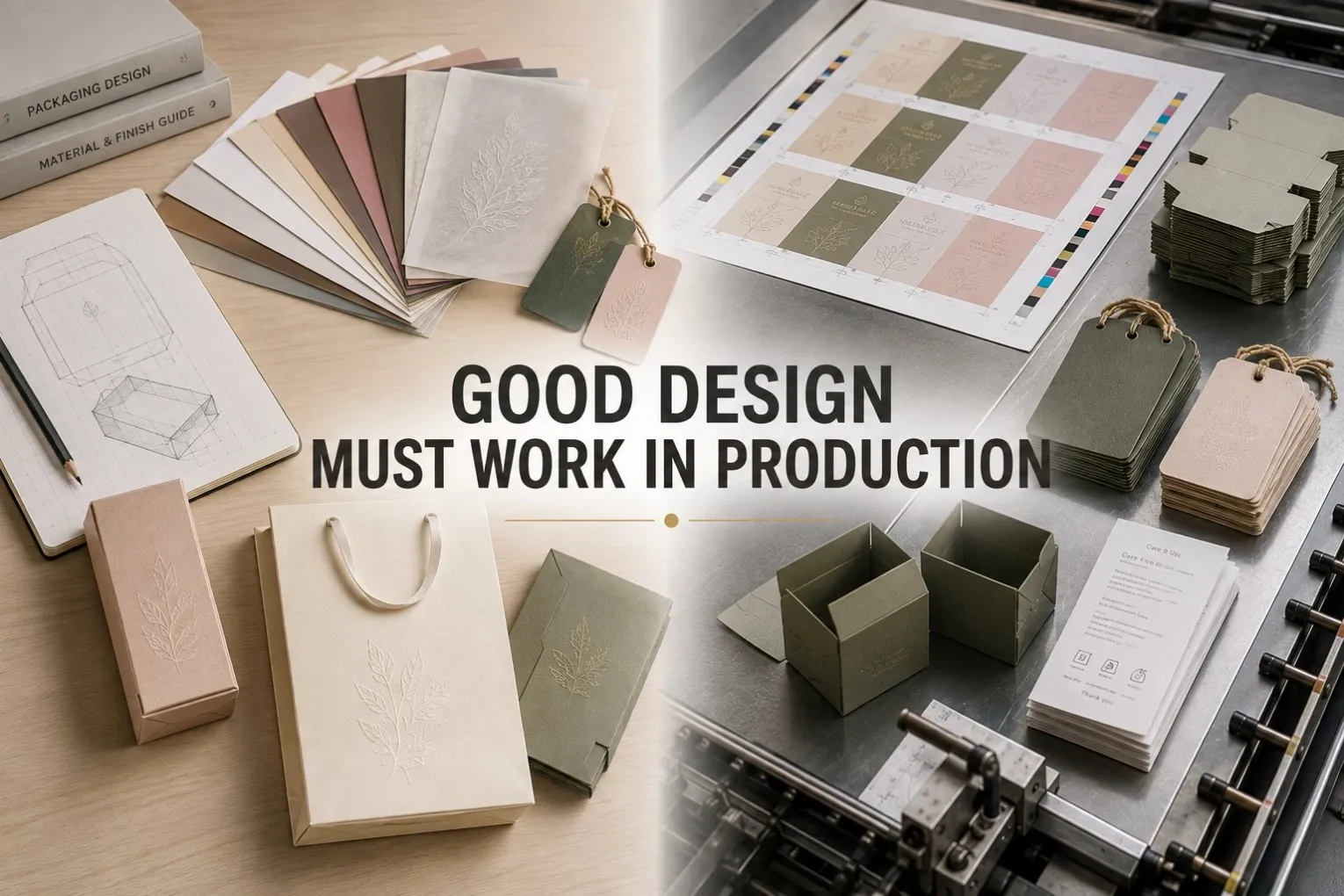
Packaging Material Selection: Why the Best-Looking Material Isn’t Always the Best Choice
Choosing packaging materials often starts with appearance.
A designer may prefer a certain paper because of its color, texture, transparency, thickness, or premium feel. A buyer may also have a reference sample and simply ask the packaging supplier to reproduce the same effect.
But there is another question that should be considered before production:
Will this material actually work well with the packaging structure and production process?
At Jeeli Packaging, we believe material selection should balance design, structure, production, cost, durability, and actual use — not appearance alone.
A Recent Packaging Development Example
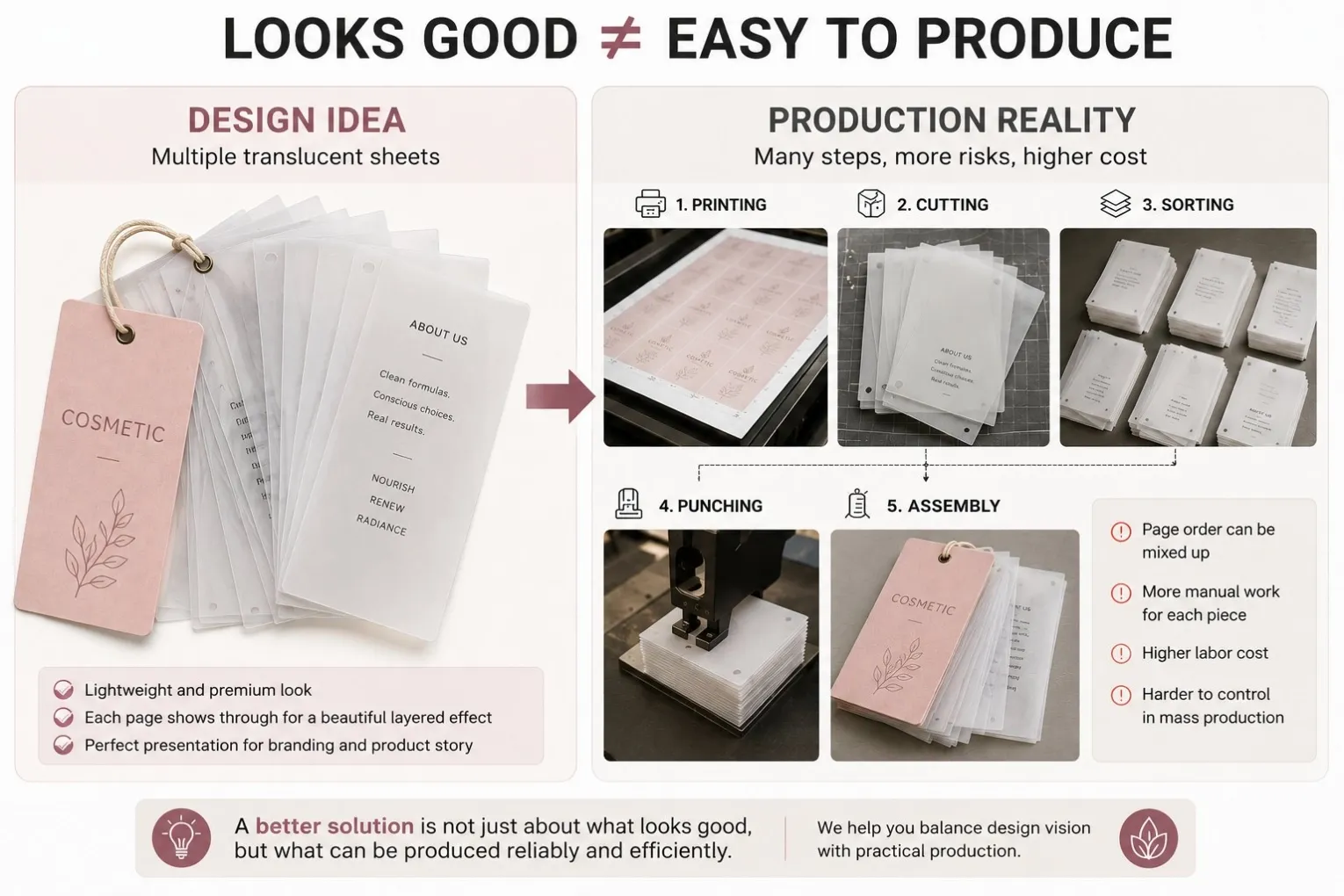
We recently worked on a packaging accessory that included a premium cardstock cover and several inner information pages.
The original design direction called for multiple thin translucent sheets.
Visually, it was a beautiful idea.
The translucent paper created a lightweight, layered and premium presentation.
But when we reviewed the design from a production perspective, several practical issues appeared.
Each individual sheet would need to be:
- printed
- cut separately
- sorted in the correct order
- aligned
- punched
- assembled manually
For a prototype, this is manageable.
For mass production, however, repeating these steps for every piece can significantly increase manual work and production cost.
It also creates more opportunities for mistakes during assembly.
So instead of simply asking:
“Which material looks better?”
we also needed to ask:
“Which solution can achieve the desired appearance while remaining practical for production?”
Good Packaging Design Must Work in Production
This situation is not limited to hang tags.
The same principle applies to almost every type of custom paper packaging.
A material or structure can look excellent in a rendering or prototype but become difficult, expensive, or unstable when thousands of pieces need to be produced.
That is why packaging development should consider both the design perspective and the manufacturing perspective.
Folding Cartons: Paper Must Match the Structure
But the paper also needs to work with:
- die cutting
- creasing
- folding
- gluing
- lamination
- embossing or debossing
- foil stamping
- automatic or manual assembly
A thicker paperboard is not automatically better.
If the material is too thick for a small or complicated carton structure, folding areas may crack or become difficult to form.
Similarly, some specialty papers look beautiful but may require additional testing before printing, gluing or applying certain finishes.
The right material should support both the visual design and the carton structure.
Rigid Boxes: Premium Appearance Can Affect Production and Shipping
But structure is just as important as material.
A fully assembled rigid box may look excellent, but it can occupy considerably more shipping volume than a foldable structure.
For large orders, this difference can affect:
- packing quantity per carton
- warehouse space
- shipping volume
- freight cost
- final packaging cost
Sometimes a foldable rigid box can achieve a similar premium appearance while improving transportation efficiency.
The best solution depends on the product, order quantity, presentation requirements and supply chain.
Paper Bags: GSM Is Only Part of the Decision
But paper weight, bag dimensions, handle type and intended load should be considered together.
For example, changing from 120gsm to 180gsm kraft paper does not simply make the bag “better.”
It also changes:
- material cost
- bag stiffness
- folding performance
- overall appearance
- packing weight
The correct GSM should therefore be selected according to the actual product and application rather than simply choosing the thickest paper available.
Hang Tags and Packaging Accessories: Small Details Can Create Extra Work
Hang tags, booklets, sleeves and other packaging accessories may appear relatively simple, but material choices can have a major impact on production.
Very thin papers, translucent sheets, multiple loose pages, special cords, eyelets or unusual assembly methods can all add extra processes.
This does not mean these materials cannot be used.
It means their production method should be evaluated before the final design is approved.
Sometimes a small adjustment to the structure can preserve most of the original design concept while making mass production much more practical.
Labels: The Material Must Match the Application
A label can look perfect on a sample sheet but perform differently once it is applied to the actual product.
Before choosing a label material, it is important to consider:
- the surface it will be applied to
- indoor or outdoor use
- moisture exposure
- temperature
- required durability
- adhesive performance
For labels, appearance is only one part of the decision.
The material must also perform correctly throughout the product's actual use.
Prototype-Friendly Does Not Always Mean Production-Friendly
This is one of the most important points in custom packaging development.
A designer can manually create one beautiful prototype.
A packaging factory needs to determine how that same design can be produced consistently across hundreds, thousands or tens of thousands of pieces.
Those are two different challenges.
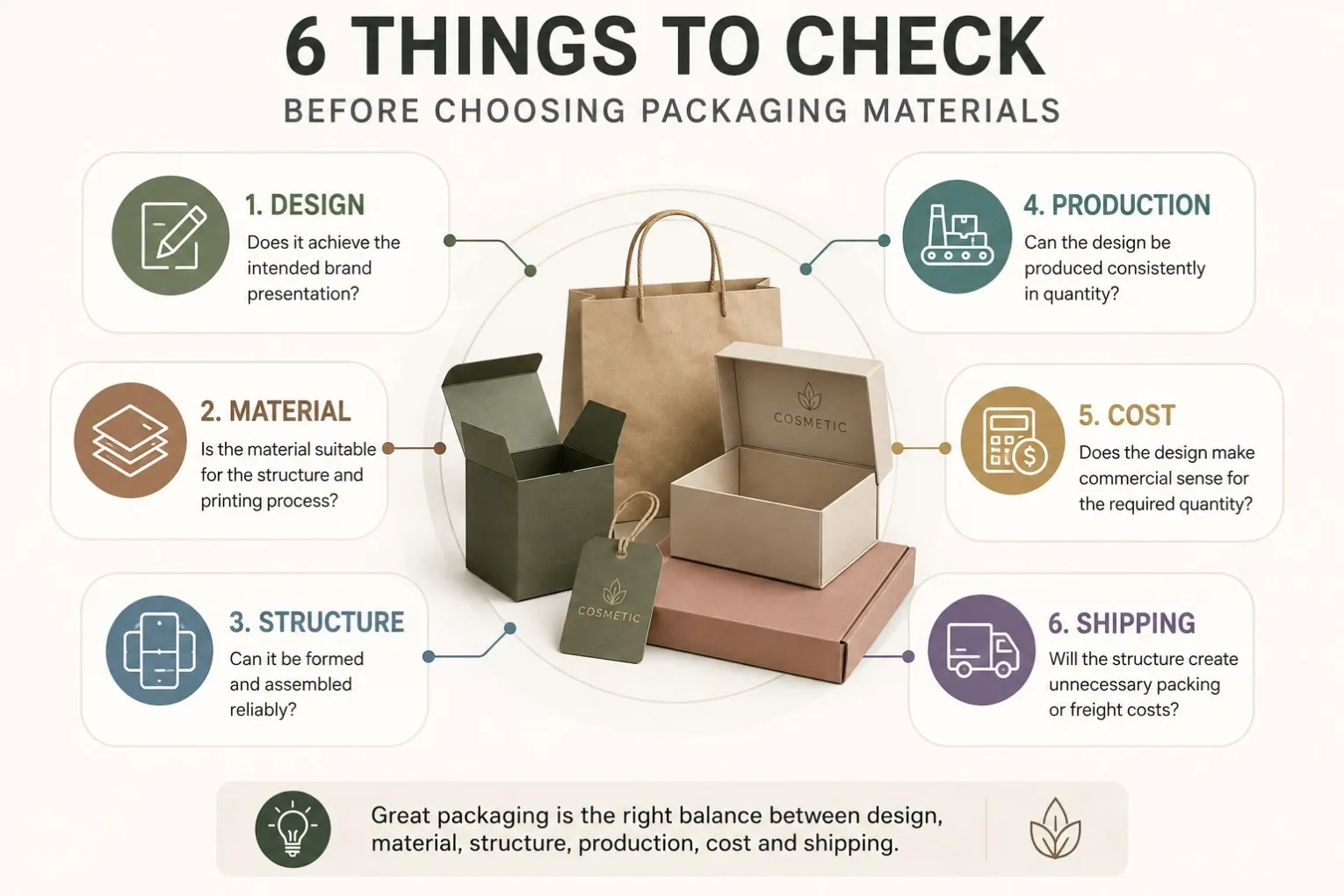
Before approving a packaging design for production, we recommend reviewing:
- Appearance – Does it achieve the intended brand presentation?
- Material – Is the material suitable for the structure and printing process?
- Structure – Can it be formed and assembled reliably?
- Finishing – Are the selected printing and finishing processes compatible?
- Production – Can the design be produced consistently in quantity?
- Assembly – Does it require unnecessary manual operations?
- Usage – Will the finished packaging perform properly?
- Cost – Does the design make commercial sense for the required quantity?
- Shipping – Will the structure create unnecessary packing or freight costs?
Looking at these factors early can help prevent expensive changes after sampling or production has already started.
The Goal Is Not to Simplify Every Design
Production efficiency does not mean every packaging design should become basic.
Premium papers, translucent materials, foil stamping, embossing, debossing, special structures and other decorative processes can all be valuable when they support the brand and product.
The goal is simply to understand the consequences of each design decision.
Sometimes the original concept is already suitable for production.
Sometimes the material should be changed.
Sometimes the material can remain while the structure is adjusted.
And sometimes a small production change can reduce cost without noticeably changing the final appearance.
That is where communication between the brand, designer and packaging manufacturer becomes important.
Design for Appearance. Develop for Production.
Good packaging should look good.
But successful packaging also needs to be practical to manufacture, assemble, pack, ship and use.
That is why material selection should not happen independently from structure and production.
At Jeeli Packaging, we work with customers to review packaging materials, structures, printing and finishing options before mass production.
If you already have a packaging design, reference sample or material idea, send us the details. We can help evaluate the material and structure and suggest a practical solution for production.