
Sep 23, 2026News
London Packaging Week 2026: 5 Packaging Questions Buyers Should Ask
London Packaging Week 2026 puts packaging innovation in focus. Here are 5 practical questions buyers should ask before choosing materials and box structures.
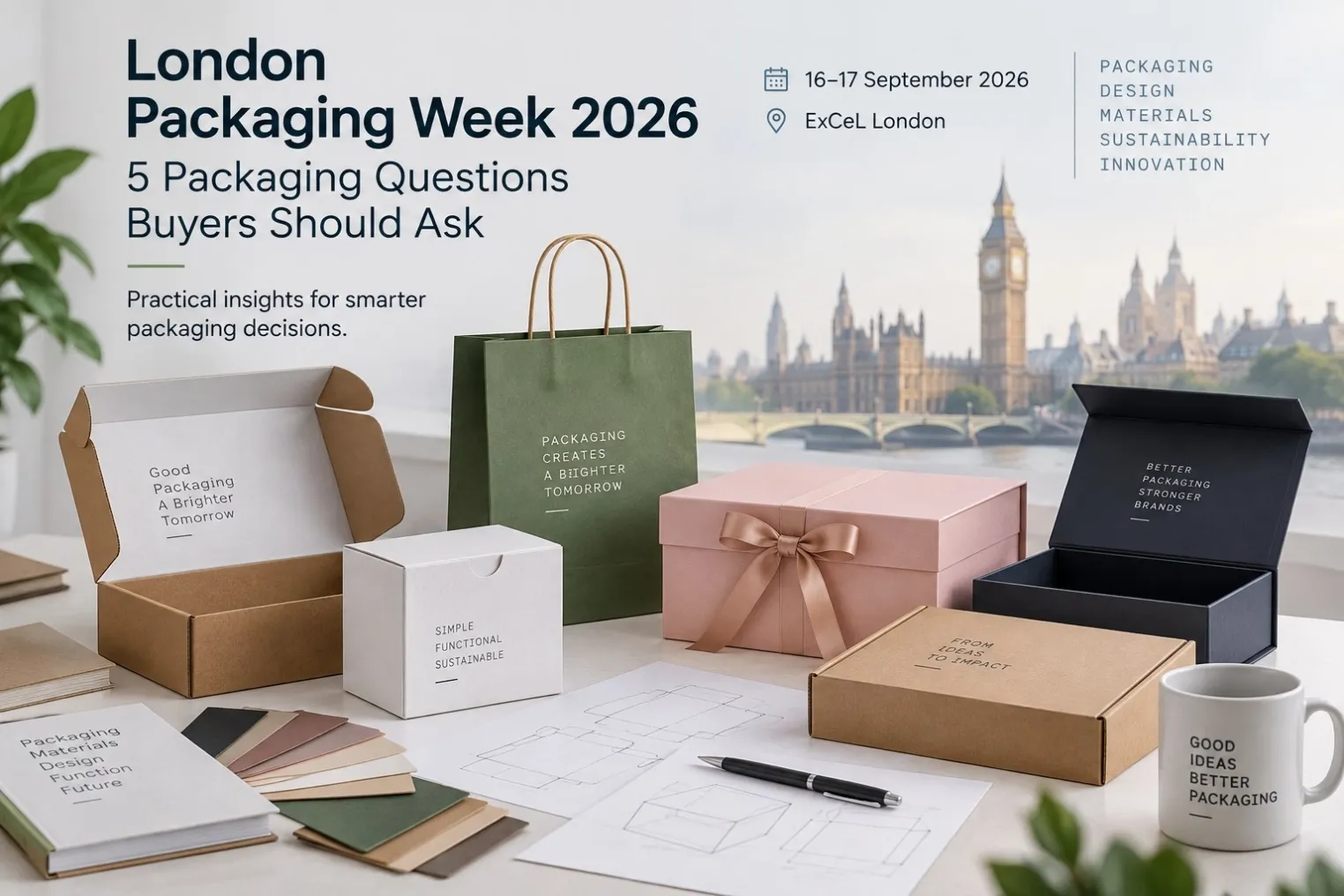
London Packaging Week 2026 takes place on 16–17 September at ExCeL London, putting packaging design, materials, sustainability and innovation back in the spotlight.
This year's event brings together packaging suppliers, brands, designers and industry professionals across luxury, beauty, drinks and FMCG.
At packaging exhibitions, it is easy to focus on new materials, finishes and eye-catching box designs.
But when a packaging project moves into production, buyers also need to think about product fit, assembly, packing, shipping and cost.
For packaging buyers, innovation is not simply about choosing a new material, adding another finishing process or creating a more impressive box.
The more practical question is:
Does the packaging actually work for the product, packing process, shipping requirements and budget?
Before starting your next packaging project, here are five questions worth considering.
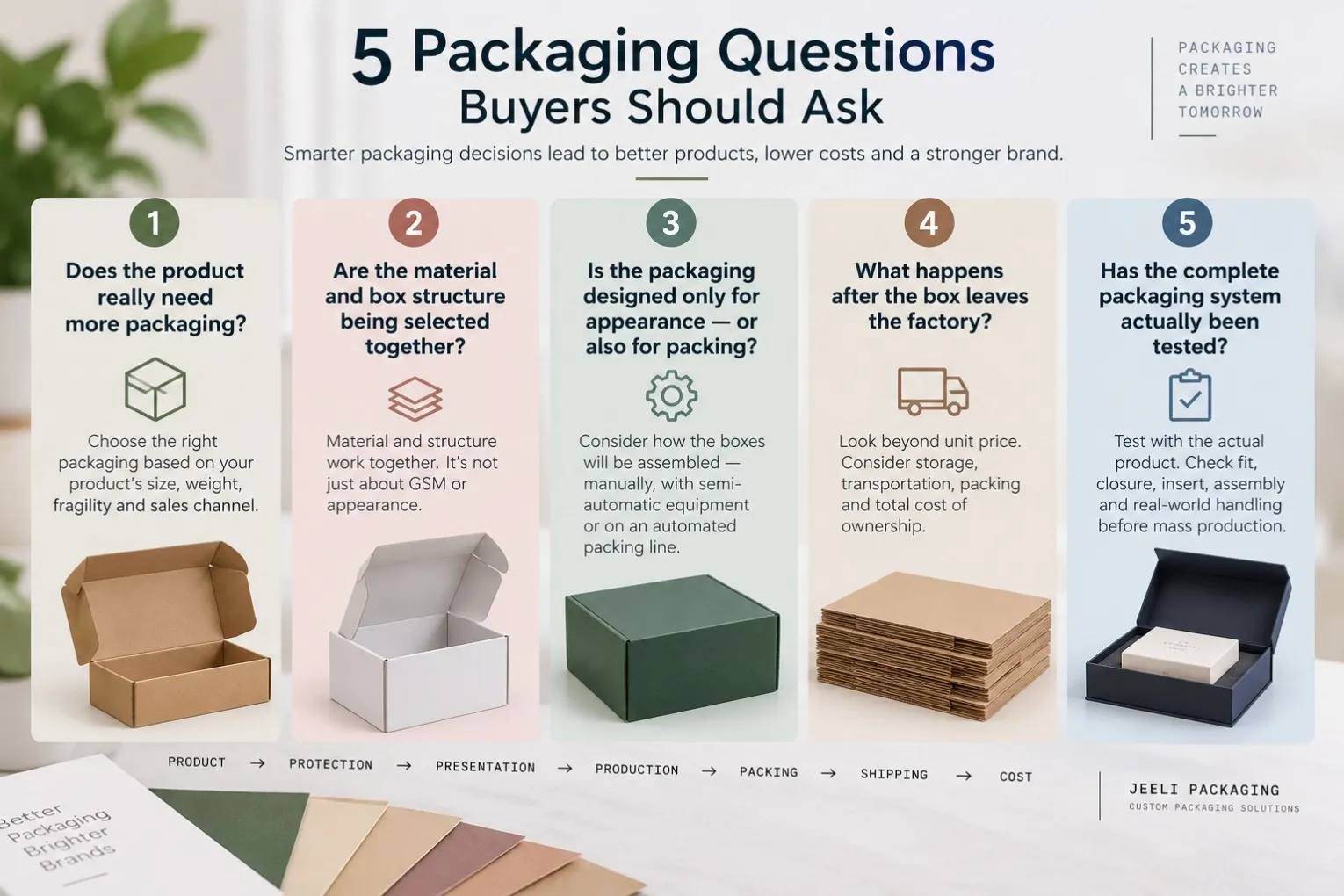
1. Does the Product Really Need More Packaging?
Premium packaging can improve presentation, but more material and a more complex structure do not automatically create a better packaging solution.
The first question should always be:
What does the product actually need from its packaging?
A premium gift set may justify a rigid box.
The correct choice depends on several factors:
- product size
- product weight
- fragility
- retail or e-commerce use
- presentation requirements
- packing method
- shipping conditions
Starting with the product rather than the box helps avoid unnecessary packaging complexity.
2. Are the Material and Box Structure Being Selected Together?
One of the most common mistakes in packaging development is choosing the material and box structure as two separate decisions.
They are closely connected.
Paperboard thickness can affect:
- folding performance
- crease quality
- panel stiffness
- tuck flap fit
- final box dimensions
A structure that works well with one paperboard may behave differently when the material changes.
The same applies to rigid boxes and corrugated packaging.
Material thickness, stiffness, construction and surface characteristics can all influence how the final package performs.
The material needs to work with the structure, product and production process.
3. Is the Packaging Designed Only for Appearance — or Also for Packing?
A packaging sample can look excellent on a presentation table and still create problems during actual packing.
This becomes particularly important when hundreds or thousands of boxes need to be assembled.
Consider two common folding-carton structures.
A tuck end box is relatively simple, but the tuck flaps, crease lines and panel dimensions still need to work correctly during assembly.
An auto lock bottom box uses a pre-glued bottom structure that forms as the carton is opened, which can be useful when the packing process requires quicker box forming.
Neither structure is automatically better.
The right choice depends on:
- product weight
- carton dimensions
- packing quantity
- assembly method
- production requirements
- budget
Before approving a packaging structure, it is therefore worth asking:
Who will assemble this box, and how will it actually be packed?
It is also worth considering whether the boxes will be packed manually, with semi-automatic equipment or on an automated packing line.
The best carton structure may change depending on the actual packing process.
A good packaging design needs to work beyond the computer screen.
4. What Happens After the Box Leaves the Packaging Factory?
Unit price is important, but it is only one part of packaging cost.
The finished packaging also needs to be:
- packed
- stored
- transported
- assembled
- filled with the product
- shipped again
This is particularly relevant with premium packaging.
For example, a conventional rigid gift box normally keeps its three-dimensional shape during transportation and storage.
The foldable structure may be more complex to manufacture, so it should not automatically be considered the cheaper box.
But when comparing packaging options, buyers may also need to consider storage and shipping volume rather than looking only at the unit manufacturing price.
The same principle applies to folding cartons and corrugated packaging.
The lowest unit price does not always mean the lowest total packaging cost.
5. Has the Complete Packaging System Actually Been Tested?
Another common mistake is approving the box without testing it with the actual product.
A carton may look correct when empty but behave differently after the product or insert is added.
The product may:
- push against the side panels
- interfere with tuck flaps
- sit too loosely
- compress an insert
- change how the box closes
This is why packaging development should ideally evaluate the complete system:
Product + Insert + Box
rather than treating each component separately.
Before mass production, a physical sample can help confirm:
- product fit
- closure
- assembly
- insert positioning
- material performance
- overall presentation
Before mass production, the sample should be checked with the actual product whenever possible.
Photos and videos can help with visual confirmation, but they cannot fully replace physical testing when product fit, closure, material stiffness or insert performance is critical.
A small dimensional issue that is difficult to notice on a dieline can become much more obvious once the actual product is packed inside.
What London Packaging Week 2026 Tells Us About Packaging Development
Events such as London Packaging Week are useful because they bring new materials, structures, technologies and design ideas together in one place.
Packaging innovation does not always mean adding a new material, structure or finishing process.
Sometimes the better decision is simply to improve how the packaging works.
That may mean:
- using a simpler structure
- reducing unnecessary material
- selecting a material that folds more reliably
- improving product fit
- making assembly easier
- reducing unnecessary shipping volume
- choosing the right box for the actual distribution channel
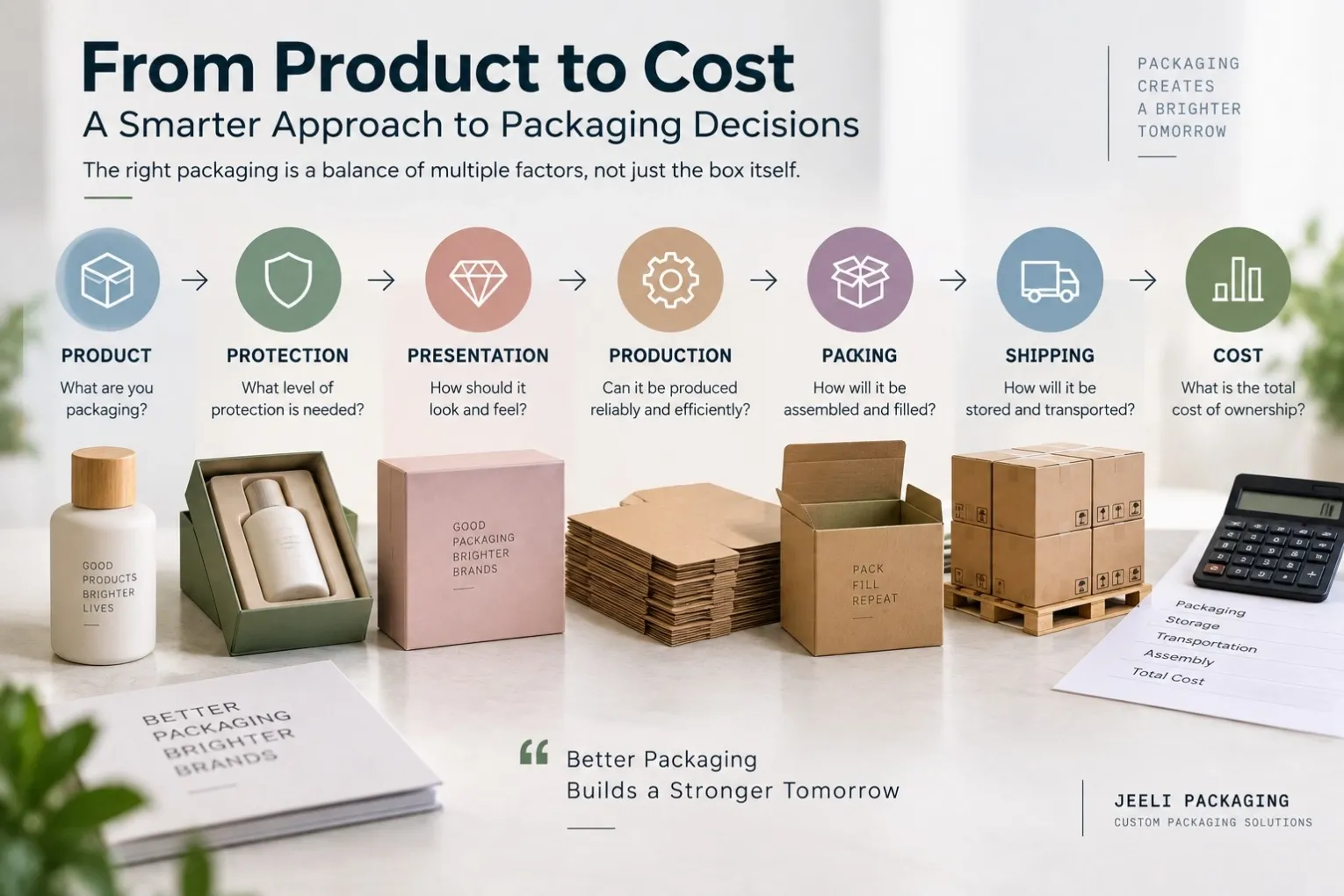
The best packaging decision is usually a balance between:
Product → Protection → Presentation → Production → Packing → Shipping → Cost
That process may lead to a folding carton, mailer box, rigid box, paper bag or another packaging structure.
The important part is understanding why that structure is being selected.
Before Starting Your Next Packaging Project
If you are developing new packaging, try to provide your supplier with more than just a reference photo.
Useful information includes:
- product dimensions
- product weight
- product photos
- required box size
- expected quantity
- artwork or logo
- preferred material
- printing and finishing requirements
- insert requirements
- packing method
- shipping requirements
The more clearly the product and packing process are understood, the easier it becomes to evaluate the appropriate material and structure.
At Jeeli Packaging, we develop custom paper packaging including folding cartons, rigid boxes, mailer boxes, paper bags, hang tags and labels.
If you have a current packaging project, send us the product details and packaging requirements for review.