
Buying Guides
PDQ Display Dimensions: How to Size One Before You Print
Measure the shelf, the load and the stack height before artwork. Sizing rules for counter and shipper PDQ displays, with board grades matched to packed weight.
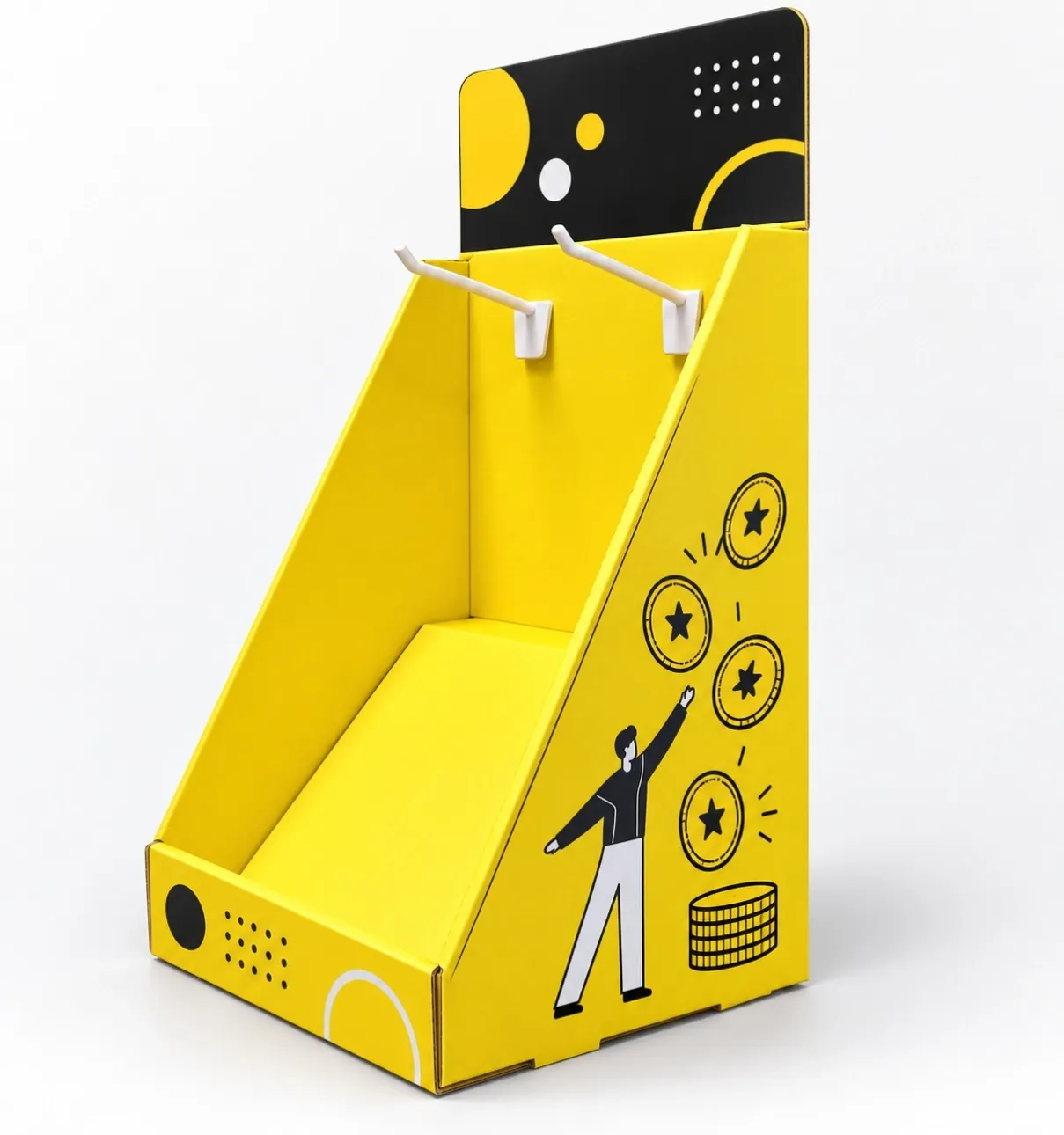
A PDQ display has to fit three things before it can look good: the retail shelf it sits on, the product it carries, and the case it ships as. Miss the shelf depth by 20 mm and the unit overhangs, blocks the aisle and gets pulled by the store. Get the board grade wrong and it sags under its own stack in the warehouse long before a shopper sees it. Sizing is the part that decides whether the display sells or comes back as a complaint.
Below are the numbers we ask for before quoting a PDQ, the ranges that actually work in drugstore and big-box channels, and the checks to run on the sample. Everything is in millimetres, because a display drawn in inches and converted at the factory is how 3 mm errors become 15 mm errors.
What are the standard PDQ display dimensions?
There is no single standard, but the formats cluster tightly because shelves and pallets do. Start from the category rather than from a design.
- Counter PDQ: 150–300 mm wide, 120–250 mm deep, 200–400 mm tall, plus a header of 150–200 mm
- Shelf or shipper PDQ: 300–400 mm wide, 250–350 mm deep, 150–250 mm tall, opening to the shelf front
- Half-pallet display: 800 × 1200 mm footprint (Euro pallet), 1200–1500 mm tall
- Full-pallet display: 1000 × 1200 mm footprint, 1200–1800 mm tall, wrapped and shipped as one unit
Counter units are the ones buyers get wrong most often, because a designer works to the screen and not to the till. A counter PDQ taller than 400 mm hides the customer’s hands from the cashier and gets turned sideways within a week.
How do you measure the shelf before you specify a display?
Four numbers decide the whole structure: internal width, internal depth, clear height between shelves, and the height of the front lip or price rail. Measure them in a real store, not from a planogram PDF, because planograms are drawn for the ideal fixture and stores are not ideal.
- Depth: keep the PDQ at least 25 mm shallower than the shelf, so it does not overhang the aisle
- Height: product plus header must sit at least 40 mm below the shelf above, or shoppers cannot reach the back row
- Front lip: a 30–50 mm price rail eats depth at the front; a display that ignores it tips forward when loaded
- Aisle clearance: anything projecting more than 50 mm past the shelf edge fails most retail compliance checks
The verification step costs nothing: cut the footprint out of scrap board at 1:1, take it to a store with the same fixture, and set it on the shelf. If it overhangs or the header fouls the shelf above, you have found the problem before the dieline is final.
How much product should a PDQ hold?
Size the display to the reorder cycle, not to the pallet. A PDQ that holds three months of stock looks empty for eleven of those weeks, and an empty display sells less than no display at all.
- Target fill: two weeks of store sales, times 1.5 for safety
- Counter PDQ: 12–48 units, one to three facings deep
- Shelf or shipper PDQ: 24–72 units, single facing, refilled from the outer case
- Half-pallet and pallet: 200–600 units, sized so the top layer is still reachable
Ask the buyer for the rate of sale per store before you fix the count. If they cannot give it, build the display so a refill pack fits inside the same outer case — that single decision removes most of the “display looks dead” complaints we see.
What board grade does the packed weight require?
A PDQ carries two loads at once: the product inside, and every identical case stacked on top of it in the warehouse or on the pallet. Design for the stack, not for the shelf.
- Packed weight under 3 kg, single layer: E-flute, about 1.5 mm, best print surface
- 3–8 kg, stacked two high: B-flute, about 3 mm, the usual workhorse grade
- 8–15 kg, or three or more cases stacked: BC double wall, 6–7 mm, plus a reinforced base
- Pallet display carrying the pallet above: double wall with corner posts, not a heavier single wall
The rule of thumb we quote is five times the packed weight, which covers three cases in the warehouse plus two in transit. Board grade changes print quality as well as strength, and the difference between profiles is bigger than most buyers expect — our A-flute vs B-flute comparison covers the numbers.
Flat-packed or shipped loaded?
This one decision often costs more than the printing. Flat-packed, a counter display collapses to roughly one eighth of its assembled volume, so a 40HQ container carries several times as many units. Shipped loaded, the store saves ten minutes of labour per display but you pay freight on air.
- Under 200 stores, or a heavy product: flat-packed, assembled by the store or a 3PL
- Over 200 stores, or a low-value impulse product: shipped loaded and shrink-wrapped, labour is the bigger cost
- Either way, confirm the packed carton passes a drop test before the run, not after
Whichever route you take, the display is also the shipping case, so it has to survive the journey before it can merchandise anything. Our guide to shelf-ready packaging and shipping walks through that trade-off, and the printing options are compared in flexo, digital and litho lamination.
What should you check on the sample before bulk?
Five checks catch nearly every failure we see, and none of them needs a lab. Do them with the real product, not with a placeholder weight.
- Load it to the planned count, then press the top with a flat hand: the base should not rack or the sides bow
- Stack five loaded units and leave them 24 hours; measure the height loss, anything over 3 mm is a warning
- Tear the perforation three times on three samples: a clean edge, no torn print, no board fibres lifting
- Drop a loaded unit from 800 mm onto a corner, the simplest version of a transit test
- Lay a loaded unit on its side for two hours, then check the product has not shifted out of its slots
Photograph each check and keep the photos with the approved sample. When a store or a freight forwarder complains later, that record is what separates a structure problem from a handling problem.
What should be in a PDQ brief?
Suppliers quote what they are told, so an incomplete brief comes back as a cheap price on the wrong structure. Send all of this in the first email.
- Product dimensions and weight, including inner packaging
- Units per display, facings, and refill plan
- Shelf internal width, depth, clear height and front lip height
- Retail channel and any display compliance rules the buyer has sent
- Artwork status, and whether photographic print quality is required
- In-store date, so sampling and shipping time are protected
Then ask three questions of every quote: which board grade is priced, how many units high it is designed to stack, and whether a pre-production sample is included. Quotes that cannot answer those three are not comparable, whatever the unit price says.
Custom PDQ displays from Jeeli Packaging
We make counter PDQs, shelf and shipper displays and pallet units at our Shenzhen factory, in E-flute, B-flute and double wall, printed flexo, direct offset or litho-laminated. The PDQ display boxes page covers the formats we ship pre-packed, counter display boxes covers the checkout sizes, and cardboard display stands covers the floor units. For help choosing between formats, start with floor display vs counter display.
Send your shelf measurements, packed weight and units per store through the contact form and we will come back with a structure proposal, board grade and quotation.