
Oct 4, 2026Blog
Why Does a Folding Carton Glue Seam Pop Open?
Why does a folding carton glue seam pop open? Learn how board surface, glue application, compression, creasing and carton alignment can affect the final bond.
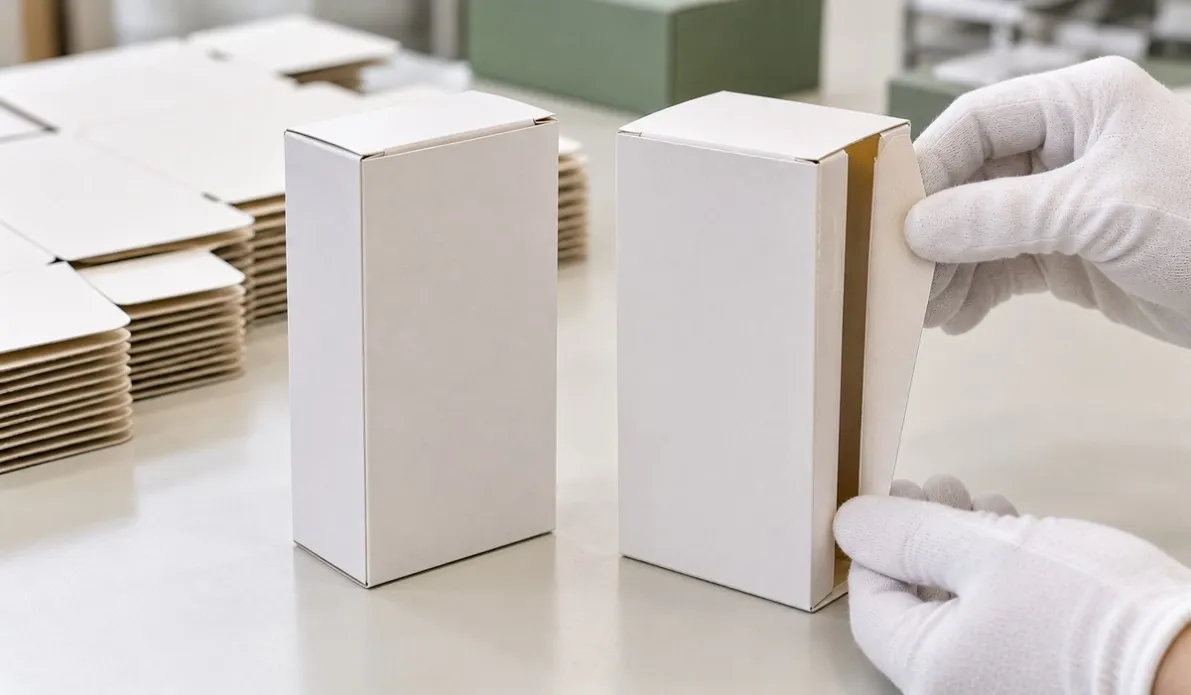
A folding carton arrives flat and looks completely normal.
Then it is opened for packing.
The glued side seam begins to separate.
Sometimes the seam opens immediately. Sometimes the carton holds together at first but starts to come apart after assembly, packing or storage.
The first reaction is often:
“Was the wrong glue used?”
Possibly.
But an open glue seam does not automatically mean the adhesive itself is defective.
A reliable carton bond depends on several things working together:
Paperboard + Surface + Glue Area + Adhesive Application + Folding + Compression + Setting
If one part of that system is not suitable for the job, the side seam may become the place where the problem finally becomes visible.
So before changing the adhesive, it is better to identify how and when the seam is failing.
What Is the Glued Side Seam on a Folding Carton?
Many folding cartons are produced from a flat die-cut paperboard blank.
One narrow panel — often called the glue flap or manufacturer's joint — is bonded to the opposite side panel during the folding and gluing process.
This creates a flat folded carton that can later be opened into its three-dimensional shape.
The glued seam therefore has an important job.
It needs to remain secure while the carton is:
- stored flat
- opened
- erected
- filled
- closed
- packed
- handled
- transported
If the seam separates, the carton may lose its shape or become difficult to pack consistently.
But the visible opening is only the symptom.
The first question should be:
Where is the bond actually failing?
1. Look at the Failed Seam Before Blaming the Glue
A failed seam can provide useful clues.
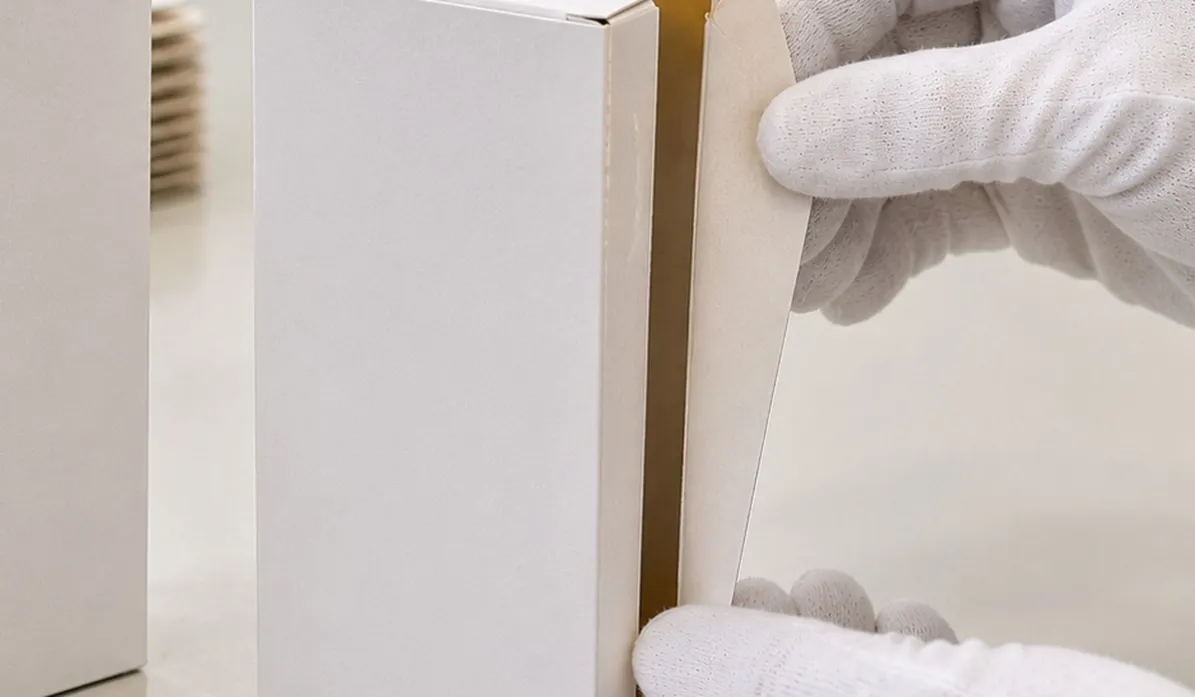
Carefully open an affected carton and look at both sides of the bonded area.
You may see different situations.
The Surfaces Separate Relatively Cleanly
If the two surfaces separate with little paper fiber damage, the adhesive may not have formed a sufficiently strong bond with the surface.
Possible areas to investigate include:
- surface finishing
- glue placement
- adhesive compatibility
- contamination
- compression
- setting conditions
This does not prove which one caused the failure.
It simply tells you that the bond interface deserves further investigation.
Paper Fibers Tear When the Seam Is Pulled Apart
This is different.
If paper fibers remain attached across the bonded area when the seam is deliberately pulled apart, it suggests the bond has engaged with the paper surface strongly enough that the paper itself is being damaged during separation.
That observation can be useful when diagnosing whether the problem is really an adhesive-to-surface failure.
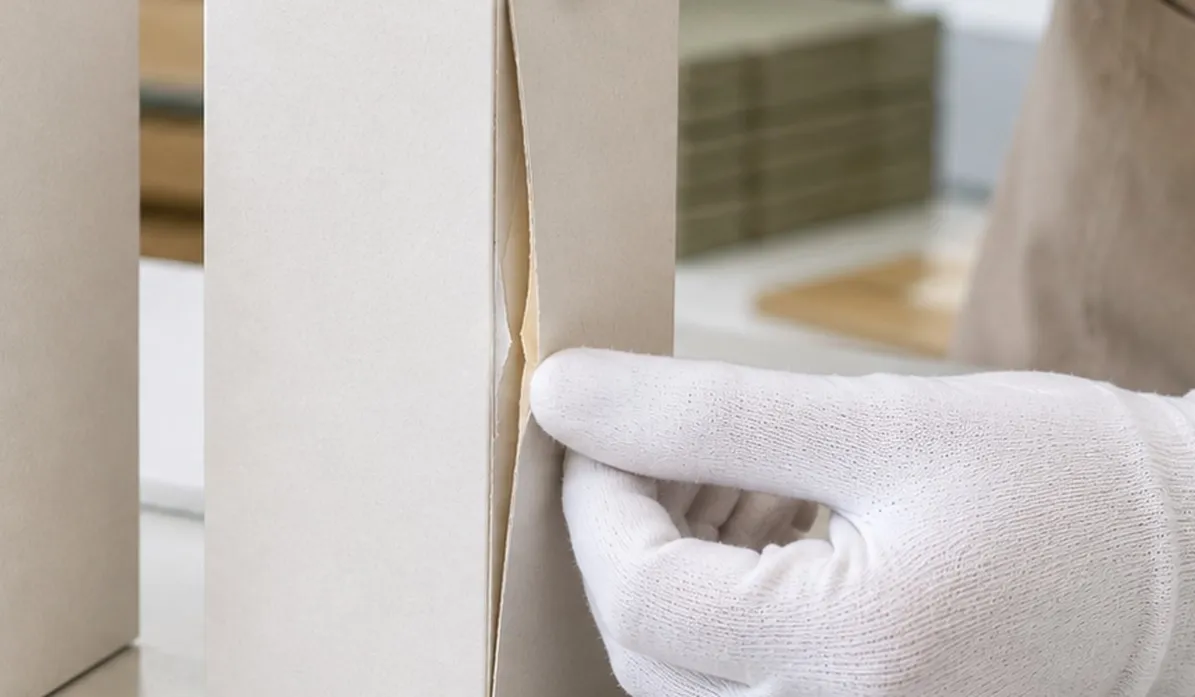
Glue Is Missing From Part of the Flap
If some areas of the glue flap show little or no adhesive, application consistency should be checked.
The problem may be related to glue position, coverage or the converting process rather than the adhesive formulation itself.
The important point is:
Do not diagnose a glue seam only from the fact that it opened.
Look at how it opened.
2. Surface Finishing Can Affect the Glue Area
A folding carton may include:
- printing
- varnish
- aqueous coating
- UV coating
- matte lamination
- gloss lamination
- soft-touch film or coating
These finishes can improve appearance or provide other surface properties.
But the glue area also needs to be considered.
Adhesive that works well directly on an appropriate paperboard surface may behave differently when the bonding area is covered by a coating, film or other low-absorbency surface.
This is why the glue flap should be considered during artwork and finishing development rather than treated as an unimportant hidden panel.
Depending on the material and finishing system, the production team may need to review how the bonding area is prepared and which adhesive system is suitable.
The correct solution depends on the actual substrate and finish.
It should not be assumed that one adhesive will perform identically on every surface.
3. More Glue Does Not Automatically Mean a Stronger Seam
When a seam opens, adding more glue can sound like an obvious solution.
But adhesive quantity needs to be controlled rather than simply maximized.
Too little adhesive may create incomplete coverage.
Poorly positioned adhesive may miss part of the intended bonding area.
Excess adhesive can also create production problems such as squeeze-out, contamination or cartons sticking where they should not.
What matters is a suitable and consistent glue application for the selected:
Paperboard + Surface + Glue Flap + Production Process
When investigating a problem, compare several cartons.
Ask:
- Is the glue line in the same position?
- Is coverage consistent?
- Does the failure happen across the whole seam or only one section?
- Do all cartons fail in the same way?
A repeated pattern can provide much more useful information than looking at one failed carton.
4. Compression and Setting Time Matter Too
Applying adhesive is only part of the gluing process.
The two surfaces also need to remain in suitable contact while the bond develops.
On a folder-gluer, the carton is folded and passes through a compression section.
If the surfaces are not held together appropriately, the bond may not develop as intended before the carton leaves the machine.
This becomes especially relevant when the paperboard naturally tries to spring back after folding.
Think of the process as:
Apply → Fold → Contact → Compress → Set
If the carton tries to reopen before the bond has developed enough holding strength, the side seam may begin separating.
This is why gluing performance needs to be considered together with the converting process rather than treating glue as a separate raw material.
5. Paperboard Spring-Back Can Put Stress on the Seam
Paperboard does not become three-dimensional without resistance.
After being creased and folded, the material may naturally try to return toward its flatter state.
This is sometimes described as spring-back.
The amount of resistance can vary with:
- paperboard type
- thickness
- stiffness
- grain direction
- crease quality
- surface finishing
- carton geometry
A thicker or stiffer board does not automatically cause glue failure.
But if the folding and creasing are not well matched to the material, additional stress may remain in the finished carton.
That stress can work against the glued seam.
This is another reason why choosing paperboard by GSM alone is not enough.
Our guide to choosing paperboard for folding cartons explains why thickness, stiffness, structure and converting performance need to be considered together.
6. Creasing Can Influence Gluing Indirectly
At first, creasing and gluing may seem like separate operations.
They are not completely independent.
A crease controls where and how the paperboard folds.
If the fold does not form naturally, the carton panels may resist their intended position.
That can increase stress around the glued joint.
For example:
Poor fold → panel resistance → additional opening force → more stress on glued seam
This does not mean every glue failure is caused by the crease.
It means the complete carton geometry should be reviewed when a seam repeatedly opens.
If the paperboard is also cracking or whitening along the fold, see our guide to folding carton crease cracking.
7. A Glue Seam Problem and an Alignment Problem Are Not the Same
There is another important distinction.
Sometimes the glue bond itself remains secure, but the side seam has been glued slightly out of position.
The carton may then:
- stand out of square
- twist after assembly
- develop uneven panel gaps
- have top or bottom flaps that do not align correctly
That is primarily an alignment or carton geometry issue.
A true bond failure is different:
the bonded surfaces themselves begin separating.
The two problems can sometimes appear together, but they should not automatically be diagnosed as the same defect.
If the seam remains bonded but the assembled carton has visible gaps or looks skewed, see why folding cartons have gaps after assembly.
8. When Does the Seam Open?
This is one of the most useful questions a buyer can ask.
It Opens Before the Carton Is Assembled
If flat cartons are already separating, review the bond itself and the gluing/converting process.
It Opens While the Carton Is Being Erected
The stress created when the carton changes from flat to three-dimensional may be revealing a weak bond or excessive structural resistance.
Check the seam together with the creases, paperboard and carton geometry.
It Opens Only After the Product Is Inserted
Now product fit also becomes relevant.
If the product, insert or internal components push outward against the carton walls, the side seam may experience additional stress.
The packaging system should then be checked as:
Product + Insert + Carton
rather than evaluating the empty carton alone.
It Opens Later During Storage or Distribution
If cartons initially appear acceptable but separate later, the investigation should include the actual storage and distribution conditions as well as the original bond.
The timing of the failure helps narrow down where to look.
9. Product Fit Can Put Unexpected Pressure on the Side Seam
Imagine an empty folding carton that assembles perfectly.
The seam remains closed.
Then the product is inserted.
The carton begins to bulge slightly.
After some time, the side seam starts opening.
In this case, simply changing the adhesive may miss the real problem.
The carton may be too tight for the complete packed product.
This can happen when the original size calculation did not fully consider:
- actual product dimensions
- insert thickness
- accessories
- internal wrapping
- paperboard thickness
- structural overlaps
- packing direction
For close-fitting packaging, test the actual product rather than approving only an empty carton.
Our folding carton product fit guide explains why the finished packaging needs to be evaluated as a complete system.
10. Why Can the Sample Be Fine but Some Bulk Cartons Fail?
This is a particularly useful diagnostic question.
Suppose the approved sample had a secure side seam.
Then some cartons in mass production begin opening.
Before changing the specification, compare the sample and affected production pieces.
Check whether they use the same:
- paperboard
- surface finish
- glue area
- carton structure
- folding direction
- production specification
Then look at the pattern of the problem.
Every Carton Fails in a Similar Way
This suggests a systematic issue deserves investigation.
Only Some Cartons Fail
Consistency becomes particularly important.
Compare:
- glue position
- glue coverage
- seam alignment
- folding
- affected production batches
A problem affecting only part of the production run should not automatically be diagnosed from one carton.
Several samples can reveal whether the defect is consistent or intermittent.
How Should Buyers Check a Glued Folding Carton Sample?
Do not inspect only the outside appearance.
Use the carton.
Step 1 — Inspect the Flat Carton
Check whether the glued seam is aligned and remains fully closed.
Step 2 — Open the Carton Normally
Erect it as it would be used during packing.
Watch whether the seam shows movement or begins separating.
Step 3 — Check Squareness
Does the carton stand naturally?
Or does it twist or pull toward one side?
Step 4 — Insert the Actual Product
Whenever possible, test:
Product + Insert + Carton
together.
Step 5 — Close the Carton
Check whether the product creates outward pressure or makes the carton difficult to close.
Step 6 — Inspect the Seam Again
Look for:
- lifting
- partial opening
- distortion
- stress around the joint
Step 7 — Compare More Than One Sample
One good carton does not tell you everything about production consistency.
Before bulk production, our folding carton sample approval checklist provides a broader review of size, structure, paperboard, printing, finishing, creasing and gluing.
What Information Helps a Supplier Diagnose an Open Glue Seam?
If you receive cartons with an adhesion problem, avoid sending only:
“The glue is bad.”
Instead, provide useful evidence.
Send:
- photos of the closed carton
- close-up photos of the failed seam
- photos of both surfaces after separation
- affected quantity
- whether all cartons or only some cartons are affected
- when the seam opens
- whether the carton is empty or filled when it happens
- product and insert information
- storage or handling conditions if relevant
A short video showing how the carton opens can also be useful.
This allows the supplier to investigate the failure rather than guessing from a general complaint.
Before Changing the Adhesive, Find the Failure Point
A folding carton glue seam is part of a complete converting system.
The visible failure may involve:
Surface → Adhesive Application → Folding → Compression → Setting → Product Fit → Handling
So when a carton pops open, do not immediately conclude:
“Use stronger glue.”
A better sequence is:
Observe → Compare → Identify the Failure Point → Review the Process → Test the Correction
Sometimes the adhesive system needs to change.
Sometimes the bonding surface needs attention.
Sometimes application or compression needs adjustment.
And sometimes the glued seam is only revealing a structural or product-fit problem that started somewhere else.
The correct solution depends on the actual cause.
Developing Custom Folding Cartons?
If your project uses coated, laminated, heavily printed or specialty paperboard — or the carton needs to hold a relatively heavy or close-fitting product — the side seam should be considered together with the material, structure and packing requirements.
Send us:
- product dimensions and weight
- required carton size
- carton structure or reference
- paperboard preference
- artwork
- surface finishing
- quantity
- insert requirements
- packing method
Jeeli Packaging can review the paperboard, structure, printing, finishing and converting requirements before sampling and bulk production.