
Oct 5, 2026Blog
Why Does a Folding Carton Top Flap Keep Popping Open?
Why does a folding carton top flap keep popping open? Learn how tuck design, paperboard, creasing, product fit and assembly can affect carton closure.
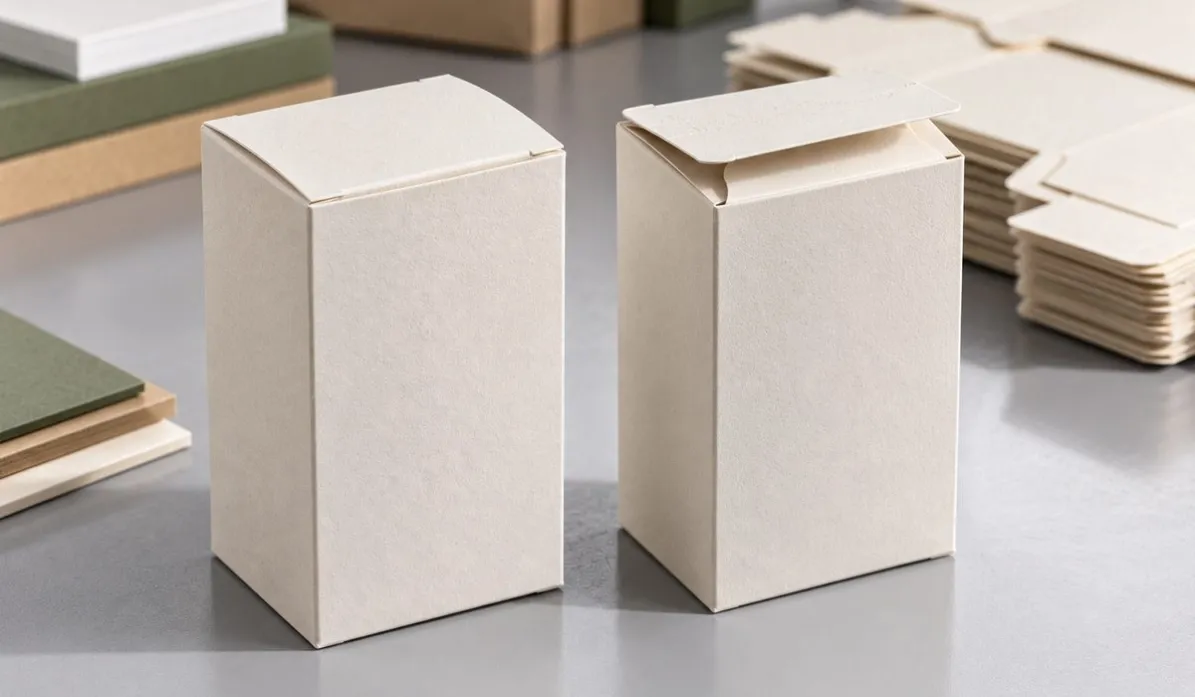
A folding carton looks completely normal when it is flat.
You assemble it, insert the product and tuck the top flap into position.
Then the flap slowly lifts back up.
You push it down again.
A few seconds later, it pops open.
The first reaction is often:
“Should the tuck flap be tighter?”
Possibly.
But a folding carton closure is a small system rather than a single flap.
The way the carton stays closed can depend on:
Dieline + Paperboard + Creasing + Tuck Flap + Dust Flaps + Product Fit + Assembly
So before adding tape, changing the paperboard or making the flap longer, it is better to identify what is actually pushing the carton open.
How Does a Tuck End Carton Stay Closed?
A typical tuck end folding carton uses a main tuck flap together with side dust flaps.
The tuck flap folds over the opening and is inserted inside the carton.
Depending on the structure, the closure may rely on friction, flap geometry or an additional locking feature to help hold it in position.
That means the top does not stay closed simply because:
“There is a flap.”
Several dimensions and folds need to work together after the carton is converted into its final three-dimensional shape.
This is why a dieline that looks perfectly reasonable on screen can still need adjustment after physical sampling.
1. First Check Whether the Carton Pops Open Empty or Only After Packing
This is one of the most useful diagnostic tests.
Assemble an empty carton and close the top.
Does it stay closed naturally?
Now insert the actual product and close it again.
If the Empty Carton Also Pops Open
The issue is more likely to involve the carton itself.
Areas worth reviewing include:
- tuck flap geometry
- closure fit
- paperboard
- creasing
- folding
- carton squareness
If It Stays Closed Empty but Opens After the Product Is Inserted
Now product fit becomes especially important.
The product, insert or internal components may be applying outward or upward pressure to the carton.
That pressure eventually reaches the top closure.
In other words:
The top flap may be where the problem appears — without being where the problem started.
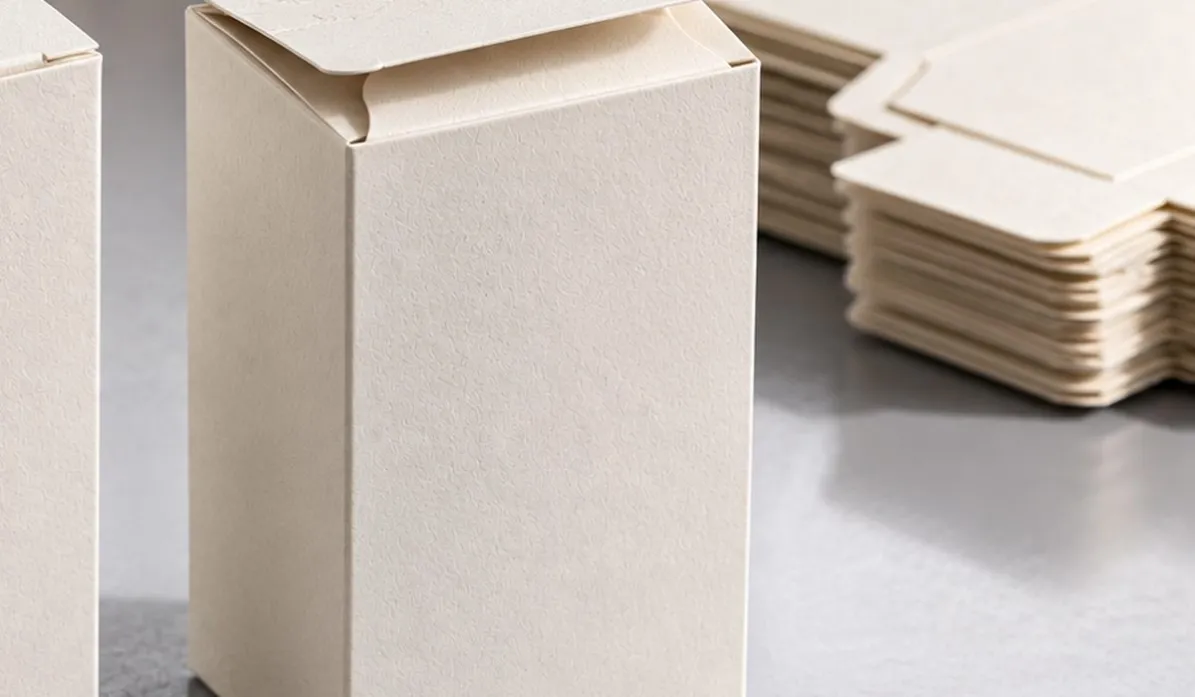
2. A Product That Fits Too Tightly Can Push the Top Open
Imagine a bottle fits inside the carton with almost no vertical clearance.
The carton can still technically be closed.
But when the top dust flaps and tuck flap are folded into position, the product presses against them from below.
The result may be a top panel that:
- bows upward
- feels unusually tight
- needs force to close
- slowly lifts after closing
- repeatedly pops open
The same thing can happen when an insert sits slightly too high inside the carton.
This is why finished box dimensions should not simply copy the maximum product dimensions.
The complete packed system may also need to consider:
- product clearance
- insert thickness
- paperboard thickness
- internal wrapping
- accessories
- folding overlaps
Our folding carton product fit guide explains why the actual product should be tested before final dimensions are approved.
3. Paperboard Thickness Can Change How the Tuck Closure Fits
Suppose a dieline was originally developed using one paperboard.
Then the material is changed to a thicker or stiffer board.
The printed dimensions may not have changed.
But the physical folding behavior can.
Paperboard occupies space.
As the material becomes thicker, folds, overlaps and tuck areas may behave differently.
Stiffer board may also create more spring-back after folding.
This does not mean:
“Thicker board makes cartons pop open.”
It means the dieline and paperboard should be developed together.
A closure designed around one material should not automatically be assumed to behave identically with another material.
This is another reason why GSM alone is not enough when choosing folding carton paperboard.
See our guide to choosing paperboard for folding cartons for a broader explanation of thickness, stiffness, structure and converting performance.
4. Creasing Affects How Naturally the Flaps Fold
A carton closure depends on several folds.
If those folds resist their intended position, the paperboard can create spring-back.
Imagine bending a stiff sheet of paper and releasing it.
It naturally tries to move back toward its original position.
A folding carton behaves in a more controlled way because the crease lines are designed to guide the fold.
But if the relationship between the paperboard and crease is not suitable, the flaps may resist sitting flat.
This can affect:
- top panels
- tuck flaps
- dust flaps
- bottom flaps
So when a top repeatedly rises, do not inspect only the tuck tongue.
Also look at how the surrounding panels are folding.
If you also see whitening or cracking along the crease, that is a different but related converting issue. See our guide to folding carton crease cracking.
5. The Tuck Flap Can Be Too Loose — or Too Tight
A loose tuck flap may not create enough holding engagement.
But making it extremely tight is not automatically better.
If the closure is too tight, the packer may need excessive force to insert the flap.
That can lead to:
- difficult assembly
- damaged flap edges
- distorted panels
- slow packing
- inconsistent closure
The objective is not maximum tightness.
It is:
A closure that can be assembled consistently and remains appropriately closed during its intended use.
The correct relationship depends on the actual carton design, paperboard and application.
This is why physical samples are more useful than trying to approve closure fit from the dieline alone.
6. Dust Flaps Are Part of the Closure Too
The smaller side flaps near the top of a tuck carton are often treated as minor details.
But they contribute to the complete closure.
Their shape and folding position can affect how the main top panel sits.
If they interfere with the product, insert or each other, the top closure may not settle naturally.
When diagnosing a carton that pops open, watch the complete closing sequence:
Dust Flaps → Main Panel → Tuck Flap → Final Position
Do the dust flaps sit comfortably?
Does one side resist more than the other?
Does the main flap sit flat before the tuck is inserted?
Observing the sequence can reveal more than simply pushing the top closed repeatedly.
7. Carton Squareness Can Affect the Top Closure
A tuck flap is designed around a carton with a particular finished geometry.
If the assembled carton is twisted or out of square, the opening may no longer match the intended closure geometry.
You may notice:
- one corner sits higher
- the top panel looks diagonal
- one dust flap fits differently from the other
- the tuck flap feels tighter on one side
- visible gaps appear around the opening
In that situation, changing only the top flap may not solve the problem.
The carton geometry itself should be reviewed.
If the carton has visible gaps or looks distorted after assembly, see why folding cartons have gaps after assembly.
8. Straight Tuck and Reverse Tuck Still Need the Same Basic Review
Straight Tuck End (STE) and Reverse Tuck End (RTE) cartons differ in the direction of their top and bottom tuck closures.
But neither structure is automatically immune to closure problems.
The finished performance still depends on:
- carton dimensions
- product
- paperboard
- crease quality
- flap geometry
- packing method
Choosing STE instead of RTE — or RTE instead of STE — should therefore be based on the overall packaging requirement rather than assuming one will automatically stay closed better.
9. Should You Add a Locking Feature?
Some tuck closures use additional slit or locking features to provide more positive engagement.
These can be useful when the application benefits from a more secure mechanical closure.
But a locking feature should not be used to hide another problem.
For example, if the product is too tall and continuously pushes upward against the top, adding a stronger lock may address the symptom without correcting the poor product fit.
Before changing the closure, ask:
Why is the flap trying to open?
If the answer is simply that the current friction closure is not suitable for the intended handling, a different closure detail may be appropriate.
If the product, insert or distorted carton is creating the force, solve that issue first.
10. Do You Need a Sticker, Seal or Adhesive?
Sometimes yes.
Some carton structures are intentionally designed to use:
- security labels
- tamper-evident seals
- stickers
- tape
- adhesive
A secondary seal can be completely appropriate when it is part of the packaging specification.
But there is an important difference between:
A carton designed to require a seal
and:
A tuck carton that should close normally but needs a sticker only because something is wrong.
Do not automatically add a sticker to compensate for a closure problem without understanding why the flap is opening.
Why Can the Sample Close Correctly but Bulk Cartons Pop Open?
If the approved sample worked properly but some bulk cartons do not, compare them carefully.
Check whether the production cartons use the same:
- paperboard
- thickness
- structure
- crease positions
- finished dimensions
- insert
- packing configuration
Then determine whether the problem affects:
Every carton
or:
Only part of the production run
A repeated problem across most cartons may point toward a systematic specification or production issue.
An intermittent problem may require a closer look at production consistency.
Do not diagnose the entire order from one carton.
Compare several affected and unaffected pieces with the approved reference.
How Should Buyers Test a Tuck Closure Before Mass Production?
The test does not need to be complicated.
Step 1 — Assemble the Empty Carton
Check whether it forms squarely.
Step 2 — Close the Empty Carton
Does the top stay closed without unusual force?
Step 3 — Insert the Actual Product
Include the real insert, accessories or internal wrapping whenever possible.
Step 4 — Close It Again
Does the product change how the top behaves?
Step 5 — Open and Close Several Times
Check whether the closure remains practical and consistent.
Step 6 — Compare Several Samples
Do not rely on only one perfect sample.
Step 7 — Observe the Complete Packed Carton
Look for:
- bulging
- bowing
- raised corners
- flap lift
- visible gaps
- distortion
The important question is not:
“Can I physically force this box closed?”
It is:
“Does the complete packed carton close naturally and consistently?”
Our folding carton sample approval checklist covers the broader checks buyers should make before bulk production.
What Information Helps a Supplier Solve the Problem?
If an existing carton keeps popping open, send more than a photo of the raised flap.
Useful information includes:
- finished box dimensions
- product dimensions
- product weight
- product photos
- paperboard specification
- insert details
- photos of the empty assembled carton
- photos after the product is inserted
- dieline if available
- a short video showing the closing process
Also explain:
Does it open while empty, after filling, or later during handling?
That one detail can significantly change the investigation.
The Top Flap May Be the Symptom, Not the Cause
When a folding carton will not stay closed, it is tempting to immediately change the tuck flap.
But the better diagnostic sequence is:
Empty Carton → Product Fit → Paperboard → Creasing → Carton Geometry → Closure
The actual cause may be:
- unsuitable closure fit
- material behavior
- poor folding
- carton distortion
- product pressure
- insert interference
- a closure style that does not match the application
So instead of asking:
“How can we make the flap tighter?”
start with:
“What is pushing the flap open?”
That question usually leads to a more useful packaging decision.
Developing Custom Tuck End or Folding Cartons?
If you are developing a new folding carton, send us:
- product dimensions and weight
- product photos
- required box size
- quantity
- paperboard preference
- artwork
- insert requirements
- packing method
- existing dieline or reference box if available
Jeeli Packaging can review the product, paperboard, carton structure and closure together before sampling and mass production.